

College Baseball Recruiting Video Guide
A college baseball recruiting video often decides whether a coach keeps reading your email or moves on. Coaches watch the first 15-20 seconds before deciding whether the rest is worth their time.
That means the order and structure of a college baseball recruiting video matters as much as the plays themselves. This covers exactly how to build one that holds a coach’s attention, for the full process, see the college baseball recruiting guide.
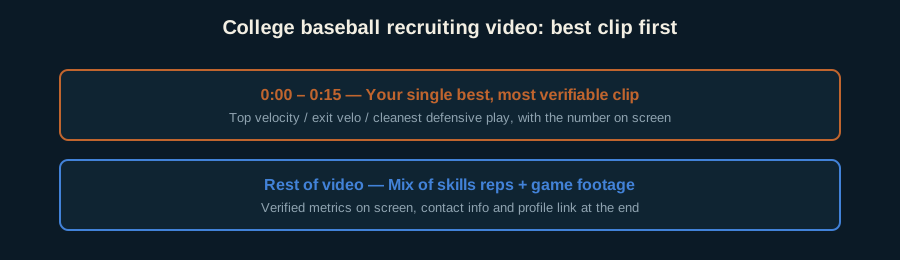
Quick answer: A college baseball recruiting video should open with your single best, most verifiable clip in the first 15 seconds, include verified metrics displayed on screen, mix skills reps with uncut game footage, and end with contact info and a link to your recruiting profile, kept short (2-3 minutes) rather than long and chronological.
The diagram below shows how a college baseball recruiting video should be ordered.
Key takeaways
- Every profile needs two things: a skills college baseball recruiting video and uncut game footage.
- Best clip first: a coach decides on a college baseball recruiting video in seconds, not minutes.
- Put verified numbers on screen; claims without a readout get discounted.
- What a college baseball recruiting video shows differs by position.
- One link that opens instantly, with no login or download.
- Update the college baseball recruiting video whenever your numbers genuinely move.
The two college baseball recruiting video types every profile needs
- A skills video: a few reps at game speed with a measured number on screen: velocity, exit velo, a stopwatch time. A handful of clean, verified reps beats a long unverified reel.
- Game video: how you actually play under real conditions. At least one full game, or a real set of uncut at-bats or innings. Shows approach, not just highlights.
What to show, by position
The table below covers what a college baseball recruiting video needs to show at each position.
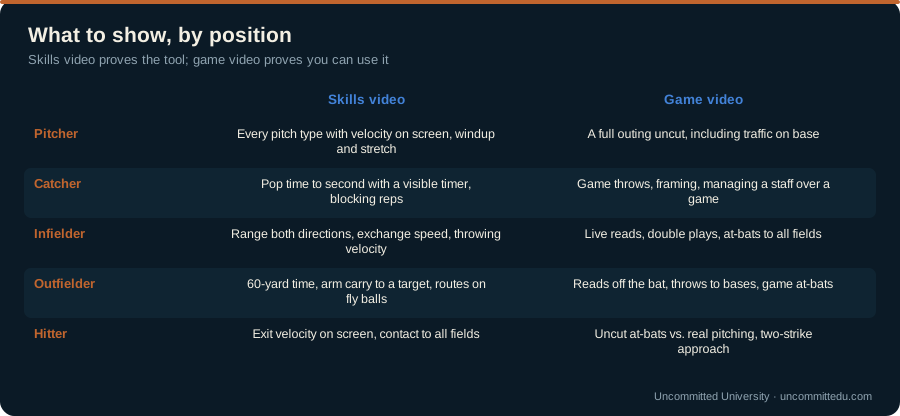
| Position | Skills video should show | Game video should show |
|---|---|---|
| Pitcher | Every pitch type with velocity on screen, both a windup and stretch look | A full outing or several innings uncut, including how you handle traffic on base |
| Catcher | Pop time to second with a visible stopwatch or timer, blocking reps | Game throws, framing, and how you manage a pitching staff over a full game |
| Infielder | Range in both directions, exchange speed, throwing velocity across the diamond | Live game reads, double plays, and at-bats showing contact to all fields |
| Outfielder | 60-yard time, arm strength/carry to a target, routes on fly balls | Reads off the bat in real games, throws to bases, at-bats in game context |
| Hitter (any position) | Exit velocity on screen, contact to all fields in batting practice or a cage setting | Uncut at-bats against real pitching, including two-strike approach |
How to make a baseball recruiting video on YouTube, step by step
Film on a phone from a tripod, pull your best reps into a free editor like CommitCut, put the single best one first, add a five-second title card with your name, grad year, position, school and a number, upload it unlisted to YouTube with a descriptive title, and paste the link on your profile. The whole job is an afternoon and costs nothing. Here is the sequence a coach’s inbox rewards.
- Film the reps. Phone on a tripod or fence mount, landscape, 1080p at 60 frames per second, no zoom during the rep. Two angles per skill, the ones in the shot list below. Get the radar or launch monitor in frame when you can.
- Pull the clips. From your camera roll, or export game clips from GameChanger, Hudl or the tournament’s video service. Trim each to the rep plus one second either side. Ten to twenty clips is plenty.
- Cut it in a free editor. CommitCut, our free video maker, does it on your phone: pick your GameChanger clips and it cuts each one to the play, puts your name and a card for every play on it, and saves the reel to your profile. No slow motion, no music.
- Order it. Best rep first, then the rest of your primary skill, then the secondary skill, then two or three game clips. A coach decides in the first twenty seconds whether to keep watching.
- Add the title card. Five seconds at the start, plain text: name, grad year, position and handedness, high school and travel team, height and weight, GPA, one verified number, your email or your profile link. Repeat it as a one-line caption at the end.
- Upload it unlisted. Title it the way a coach would search: name, grad year, position, the number, the season. Put the same details and your contact in the description. Unlisted means anyone with the link can watch without an account and it does not show up in search, which is what you want.
- Add chapters. Timestamps in the description for each skill, so a pitching coach can jump to the changeup. YouTube turns them into chapters automatically.
- Put the link where it works. On your recruiting profile, in the first line of every coach email, and in the bio of the social account coaches will check. Then refilm it after your next real jump.
Skip the recruiting video services that charge $300 to $1,000 for this. They sell editing, and the editing is the part that does not matter.
Structure: put your best clip first, always
Coaches decide whether to keep watching in the opening seconds. Put your single best, most verifiable clip in the first 15 seconds, not buried six minutes in.
A coach who isn’t hooked immediately rarely scrolls to find the good part later.
What to actually include in a college baseball recruiting video
- Your name, grad year, position, and height/weight as an on-screen title card at the start
- Verified metrics on screen the moment they happen: a radar reading, an exit velo number, a stopwatch time
- A mix of reps: multiple pitch types for pitchers, contact to all fields for hitters, range plays in both directions for fielders
- Contact info and a link to your full profile at the end
No profile to link to yet?
Create a free recruiting profile so your video, verified metrics, and contact info live at one link, the same one you’ll paste into every coach email.
Common mistakes that undercut a good college baseball recruiting video
The checklist below is what keeps a coach watching a college baseball recruiting video past the first fifteen seconds.
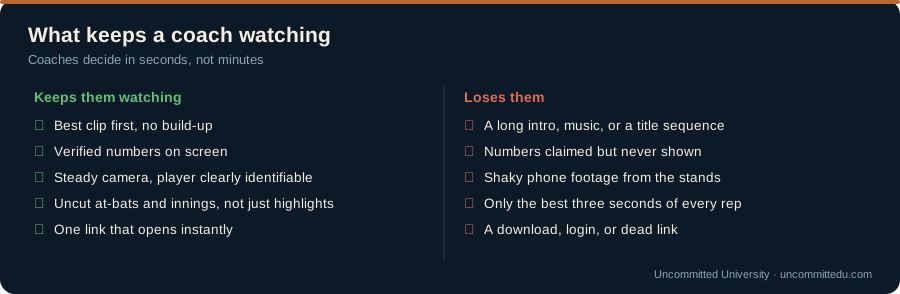
- Burying the best clip. Chronological footage loses most viewers before they get to the good part.
- Music louder than the content. A dramatic soundtrack doesn’t fix unclear footage or missing metrics.
- Letting the college baseball recruiting video go stale. Re-cut it whenever you hit a new personal best.
- Poor camera angle or shaky footage. A stable, well-zoomed angle beats production value every time.
How your college baseball recruiting video should change over the timeline
A freshman’s video and a senior’s video shouldn’t look the same, because the job each one has to do is different.
- Freshman/sophomore: A short, simple clip is enough: a handful of clean reps with a number on screen. The goal is just to have something real behind your profile, not a polished production.
- Junior year: This is when a full skills-plus-game video pays off. Coaches are actively building their board, and a thorough, current video makes you easy to evaluate quickly.
- Senior year: Keep a “current form” clip up front. Coaches deciding late in the process want to see your most recent outing or at-bats, not last year’s numbers.
- After any big performance: A new personal-best number or standout game is worth its own short update clip, even outside a full re-cut. It signals to coaches who already have your link that something changed.
How coaches actually watch a college baseball recruiting video
Most coaches watch on a phone, in short bursts, between other tasks. A few patterns show up consistently:
- They decide within the first clip whether to keep watching, a slow intro or a highlight reel-style montage loses attention fast.
- They skip ahead if the pacing drags, so front-loading your best material isn’t optional, it’s the difference between being seen and being skipped.
- They re-watch a clip when a number is genuinely surprising, which is exactly why an on-screen, verifiable metric matters more than commentary or music.
- They trust a game clip more than a skills clip alone, since a skills rep in a controlled setting doesn’t prove how you perform live.
Building the video around how it’s actually going to be watched (quickly, on a phone, with low patience for filler) beats building it to look impressive in isolation.
Shot list and camera angles by position
Every position has two angles that show the skill and a rep count that shows consistency. Film both angles, keep the reps that look like each other, and cut everything else.
| Position | Angle one | Angle two | Reps to keep |
|---|---|---|---|
| Pitcher | Directly behind the mound, slightly to the arm side, catcher in frame | Open side, the whole delivery from set to finish | 8 to 10 fastballs, 4 to 5 of each secondary pitch, from the windup and the stretch, velocity on screen |
| Catcher | Behind the pitcher’s mound, framing the catcher square on | Side angle from the dugout for blocking and the exchange | 6 to 8 throws to second with the stopwatch visible, 6 blocks, 6 receiving reps, 4 game throws |
| Infielder | Behind the fungo hitter, showing the full play to first | From the first-base side, showing feet and exchange | 4 routine, 4 to the glove side, 4 to the backhand, 2 slow rollers, 2 double-play turns, throws timed or velocity shown |
| Outfielder | Behind the fungo hitter for reads and routes | From behind the outfielder for arm carry to the base | 4 fly balls each direction, 4 ground balls with a throw through, the 60 with a visible clock |
| Hitter | Open side, hip height, the whole swing and the flight | Behind the catcher or the L-screen, showing the path through the zone | 10 to 12 swings, contact to all fields, exit velocity on screen, then 4 to 6 uncut game at-bats |
Two rules cover every row. Show the whole rep from a fixed angle before any close-up, and keep the same angle across the reps so a coach can compare them. A clip that changes angle every swing reads as hiding something.
Filming setup that actually works
You don’t need professional equipment. A phone camera on a tripod or fence mount is enough. Steadiness matters more than resolution.
Film in landscape. Keep the frame wide enough to see the whole play. And make sure the radar or measuring device is actually readable on screen.
How long should a college baseball recruiting video be?
Shorter is almost always better. A tight 2-3 minute skills video with your best reps up front, paired with a link to a longer game video, beats one long video that buries the good stuff.
Think of the short video as the trailer. The full game film is what an interested coach watches next.
Where to host a college baseball recruiting video
Use a platform that loads instantly, with no login or app download required. A coach skimming dozens of recruits on his phone won’t wait through a slow load.
Hudl or a plain YouTube upload both work. What matters is a short, direct link you can paste straight into an email.
Updating your college baseball recruiting video as you improve
A recruiting video is never really “finished.” Treat it as a living asset.
After a strong showcase, a velocity jump, or a big game, re-cut the opening clip so it always reflects your current best. Coaches who look twice will notice a video that’s kept current.
Equipment checklist
Keep it simple. You need:
- A phone with a good camera, most recent phones are more than enough
- A tripod or fence mount to keep the shot stable
- A radar gun or exit-velo device with a visible display
- A free editor to trim clips and put your best one first (CommitCut runs on the phone)
That’s it. Coaches care about what they can see and verify, not what you filmed it with.
What coaches say when a college baseball recruiting video works
The most common feedback isn’t about production quality. It’s that they could immediately tell what they were looking at.
A clean angle, a visible number, and a fast-loading link beat any transition effect. When in doubt, cut anything that isn’t a rep, a number, or contact information.
How do coaches verify a college baseball recruiting video?
They look for the things that are hard to fake. A college baseball recruiting video is a claim, and a staff working through hundreds of them has learned which claims check out.
- The measuring device in frame. A radar readout or a bat-speed number visible in the same shot as the swing is worth far more than the same figure typed onto a title card.
- Uncut sequences. One full at-bat, or a complete inning, shows approach, tempo and recovery. A cut between every pitch hides all three, and coaches know it.
- A consistent camera angle. The same angle across several reps lets a coach compare them. Switching angle every clip reads as hiding something, whether or not it is.
- Third-party footage. Event or game video a program can trace to a real date and a real opponent carries more weight than anything self-produced.
- The date. An undated college baseball recruiting video gets treated as old footage. Put the month and year on it.
The practical consequence is worth stating plainly. A rougher college baseball recruiting video with verifiable reps beats a polished one a coach cannot check, which is also why editing spend is the last thing to worry about rather than the first.
Editing tips that make a real difference
Keep the edit simple. A few small choices make a big difference:
- Trim dead time. Cut the walk-up, the wind-up between pitches, anything that isn’t the actual rep.
- Overlay the number. If your device doesn’t show velocity on screen, add a text overlay so the coach doesn’t have to guess.
- Keep clips in order of impact, not chronological order. Best first, then everything else.
- Export at a normal resolution. 1080p is plenty. A huge file that loads slowly costs you more than it gains in quality.
College baseball recruiting video vs. showcase event video: not the same thing
Players sometimes assume the video a showcase or scouting service provides is the same as a recruiting video. It isn’t, and mixing the two up costs opportunities.
- A showcase video is usually one uncontrolled clip (a single at-bat, a single inning) filmed by someone else, on their schedule, without your input on angle or editing.
- Your recruiting video is something you control end to end: which reps go in, what order, what metrics are visible, and how current it stays.
- Use showcase footage as one more clip to pull from, not as a replacement for a video you’ve built and structured yourself.
- Don’t wait for an event to hand you footage. Film your own skills reps on a normal practice day. You don’t need a showcase to have something worth sending.
A sample shot list for a filming day
The shot list below produces both halves of a college baseball recruiting video in one filming day.
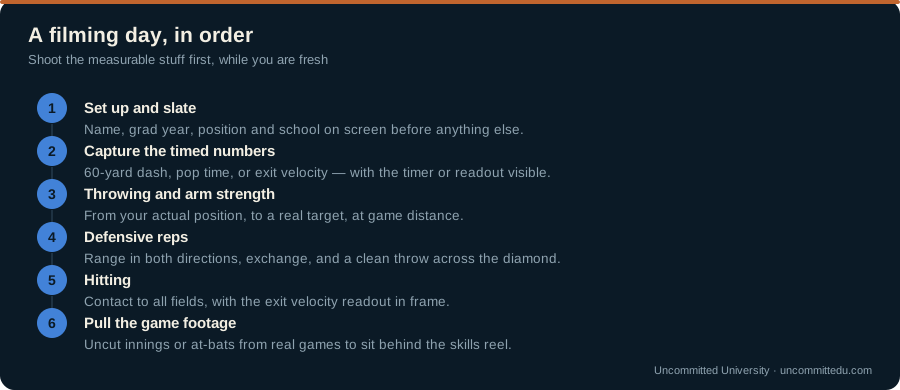
If you’re not sure where to start, this order gets you everything you need in one session:
- Warm-up reps first (don’t use these). Let the first few throws or swings just be warm-up. Start recording once you’re loose.
- Best-effort reps with the measuring device visible. Radar, exit velo unit, or stopwatch clearly in frame or overlaid after. Get at least five to ten clean reps to choose from.
- Variety reps second. Different pitch types, different pitch locations for hitters, range plays to both sides for fielders, enough to show you’re not a one-trick clip.
- A short game-context clip if possible. Even a single live at-bat or inning adds real credibility next to the controlled reps.
- Review before you leave. Check that the numbers are actually readable on screen before you break down the equipment, it’s much easier to re-shoot the same day than to schedule another session.
What’s worth paying for, and what isn’t
Families sometimes assume a good recruiting video requires hiring a videographer or a paid production service. It rarely does.
- Worth paying for: a radar gun or exit-velo device if you don’t have access to one through your team, since verified numbers are the single biggest driver of credibility.
- Usually not worth paying for: a professional editor or cinematic production package. Coaches care about clean reps and visible metrics, not transitions or color grading.
- Sometimes worth paying for: a hitting or pitching lab session that happens to include recorded metrics, useful if you get usable footage out of it, not just a report.
The honest test: if a video choice makes the metrics clearer or the footage steadier, it’s worth it. If it only makes the video look more polished, it isn’t.
The technical settings that make a college baseball recruiting video usable
A coach is not grading your camera work. But bad footage genuinely hides the things they need to see, and that costs you evaluations.
Shoot in landscape, always. A vertical phone video wastes most of the frame and crops out the ball flight that a coach is actually watching.
Film at the highest frame rate your phone offers. Mechanics happen fast. Standard frame rates smear the exact moments (foot strike, contact, release) that an evaluator freezes on.
Keep the camera still and let the play move through the frame. Zooming and panning mid-pitch is the most common flaw in a college baseball recruiting video, and it makes swing path impossible to read.
Show the whole action from a fixed angle before you show any close-up. Coaches want to see the unedited rep first, then the detail.
Include a slate at the front with your name, graduation year, position and contact details, and put the same information in the video description. A college baseball recruiting video that gets forwarded without its email loses all context otherwise.
Finally, do not add music. It does not help, and it makes a coach reach for the mute button before they reach for the play button.
Angles matter as much as settings, and they differ by position. For a hitter, film from the open side and from behind the catcher so both swing path and pitch recognition are visible.
For a pitcher, film from behind the mound at arm-side and from the side at hip height. Those two together show extension, direction and arm slot, which is most of what a pitching coach is grading.
For an infielder, shoot wide enough to keep feet, glove and the throw in one frame. Cutting the release out of the shot is the single most common framing mistake in a college baseball recruiting video.
Catchers should include pop times filmed from behind, and outfielders should include at least one full-effort throw to a base with the target in frame.
Do not edit out the misses. A reel of nothing but perfect reps reads as selective, and experienced coaches discount it automatically.
Frequently asked questions
These come up constantly once a player starts putting a college baseball recruiting video together.
What type of video is best for college baseball recruiting? Two videos, not one. A skills video of two to three minutes, best rep first, with numbers on screen, and a separate uncut game video of full at-bats or full innings. The skills video gets the coach to open the game video. A highlight reel with music and slow motion is the type that gets closed, because it shows a coach what you chose, not what you do.
Can I make a recruiting video from GameChanger clips? Yes, for the game half. GameChanger, Hudl and the tournament video services export clips you can trim and stitch, and an uncut at-bat or inning from a real game is exactly what the game video should be. Their angle is usually high and behind the plate, which is fine for game context and poor for mechanics, so film the skills video yourself from the angles above.
Should I pay for a recruiting video service? No. The services charge $300 to $1,000 and deliver editing, graphics and hosting, none of which a coach is evaluating. What a coach evaluates is the rep, the angle and the number on screen, and a phone on a tripod gets all three. Spend the money on a radar gun or a showcase where the numbers get measured instead.
Should I put my metrics on screen in a recruiting video? Yes, and show the source in the same shot wherever you can. A radar readout visible behind the pitch is a verified number. The same figure on a title card is a claim, and coaches discount claims.
How long should a college baseball recruiting video be? A tight 2-3 minute skills video with your best reps up front works best, paired with a link to a longer, uncut game video for coaches who want to see more.
What should be the very first clip in the video? Your single best, most verifiable clip. Coaches decide whether to keep watching in the first 15-20 seconds, so chronological order almost always undersells a player.
Do I need professional equipment to film a recruiting video? No. A phone camera on a tripod or fence mount is enough. Steadiness and a readable radar or measuring device matter far more than production value.
Should I include music or graphics in my recruiting video? Keep it minimal. A dramatic soundtrack or heavy graphics package doesn’t fix unclear footage or missing metrics, and can distract from the actual reps a coach needs to evaluate.
How often should I update my recruiting video? After any meaningful jump: a new velocity number, a strong showcase, or a standout game. Coaches who look twice will notice a video that’s kept current versus one that’s a year old.
Where should I host my recruiting video? Use a platform that loads instantly with no login required, like Hudl or a plain YouTube upload. What matters most is a short, direct link you can paste into an email.
The short version: a college baseball recruiting video is an evaluation tool, not a highlight reel. Lead with your best rep, keep the numbers visible, and back the skills work with uncut innings or at-bats against real pitching. A plain, well-structured college baseball recruiting video from a phone on a tripod beats an edited production that hides the things a coach is actually trying to see.
The short version
A college baseball recruiting video exists to answer one question fast: can this player do the thing at this level? Lead with your best three reps, keep it under four minutes, and make every angle honest.
Uncommitted University sees more players lose evaluations to unwatchable footage than to a lack of ability.
Refilm your college baseball recruiting video at least once a year. Coaches discount footage that is obviously two seasons old, and a body that has changed since is the whole reason they wanted the video in the first place.
Your next step
Pair your video with real verified metrics: see where those metrics put you across D1 through JUCO. Send it as part of a real outreach email using the templates for emailing a college baseball coach.
Get your free profile set up first, so the link is ready the moment your video is cut.
Written by Wayne Keeton, founder of Uncommitted University.