

College Baseball Recruiting Timeline
The college baseball recruiting timeline confuses most families the first time through. It doesn’t work like a school calendar with a fixed start date.
What actually changes, year by year, is what coaches are allowed to do, what you should be doing, and how many spots are still open.
This breaks the process down by grad year. For the full picture, start with the college baseball recruiting guide. This post goes deep on the timeline.
Quick answer: The college baseball recruiting timeline runs freshman year (build a profile), sophomore year (start a target list, attend camps), junior year (the busiest year: email coaches, get evaluated), to senior year (visits and closing a decision, or expanding to NAIA/JUCO if D1/D2 rosters have filled).
Key takeaways
- The college baseball recruiting timeline gives each grad year one main job: skipping one is what puts players behind.
- Junior year is where the college baseball recruiting timeline peaks, because direct coach contact opens up.
- A college baseball recruiting timeline runs on your outreach, not on coaches finding you.
- The college baseball recruiting timeline shifts by level: D3 offers commonly land latest of the NCAA levels.
- Being behind the college baseball recruiting timeline is recoverable; not knowing where you stand is not.
The college baseball recruiting timeline at a glance
The chart below reduces the college baseball recruiting timeline to one job per grad year, if you only take one thing from this page, take this.
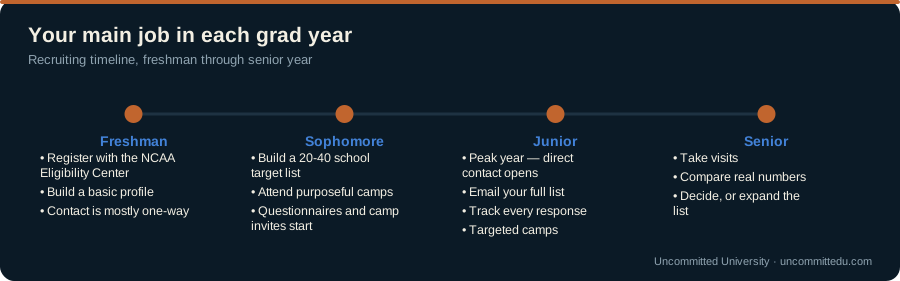
| Grad year | Coach contact | Your main job | Red flag if missing |
|---|---|---|---|
| Freshman | Mostly one-way: you reach out, coaches rarely reply directly yet | Register with the NCAA Eligibility Center, build a basic profile | No online profile at all by end of year |
| Sophomore | Occasional camp invites, general questionnaires | Build a 20-40 school target list, attend purposeful camps | Still no target list by summer |
| Junior | Direct contact opens up: this is the peak year | Email full list, track every response, attend targeted camps | Sent fewer than 15-20 emails by spring |
| Senior | Visits, offers, and closing conversations | Take visits, compare real numbers, decide or expand list | No visits scheduled by October of senior fall |
The 2026-27 NCAA Division I baseball recruiting calendar, dated
Coaches can be off campus watching and talking to recruits August 1 to 16, September 11 to October 11, and March 1 to July 31, 2027. From October 12 to February 28 they can only meet you on their own campus. Two recruiting shutdowns, November 24 to 29 and December 22 to 27, stop every form of contact, including email and texts. This is the NCAA’s published Division I baseball calendar for 2026-27, updated July 30, 2026, read 2026-09-12. Put the dates on your own calendar before you read a coach’s silence as an answer.
| Dates | Period | What a coach may do | What it means for your emails |
|---|---|---|---|
| Aug 1 to 16, 2026 | Contact | Off-campus contact and evaluation, campus visits, calls, texts | The August 1 wave for 2028 recruits. Your best video should already be live. |
| Aug 17 to Sep 10 | Quiet | Contact only on the coach’s campus; calls and emails fine | Unofficial visit season. Ask in the follow-up email. |
| Sep 11 to Oct 11 | Contact | Coaches back on the road at fall showcases and scout days | Send your fall schedule now, not after. |
| Oct 12, 2026 to Feb 28, 2027 | Quiet | On-campus only, with four interruptions below | Coaches are on campus recruiting from film and email. The winter email gets read. |
| Nov 9 to 12 | Dead | No in-person contact anywhere; calls and email still allowed | Signing week. Silence is the rule, not a verdict. |
| Nov 24 to 29 | Recruiting shutdown | No contact of any kind, including email, text and calls | Do not send anything. It cannot be answered and it sinks in the inbox. |
| Dec 22 to 27 | Recruiting shutdown | No contact of any kind | Same. Send your winter update December 28 or later. |
| Jan 7 to 10, 2027 | Dead | No in-person contact; the ABCA convention week | Emails land, replies come the following week. |
| Mar 1 to Jul 31 | Contact | Full off-campus recruiting through the college season and summer | Your spring season on video, sent as it happens. |
| May 31 to Jun 7, Jun 19 to 21, Jul 3 to 5 | Dead | No in-person contact around selections, the College World Series and the July 4 weekend | Coaches are watching their own teams. Email works, camps do not. |
Two rules sit on top of the calendar. A Division I coach may not contact a recruit at all, in any period, before August 1 before the recruit’s junior year, and Division II opens on June 15 after sophomore year with a simpler calendar of its own. Division III, the NAIA and junior colleges do not run recruiting calendars. The NCAA reissues this calendar every summer; check the current one on ncaa.org before you plan a trip around it.
Freshman year: build the foundation
Freshman year isn’t too early to start. Three things matter:
- Register with the NCAA Eligibility Center if D1 or D2 is on the table. It’s free, and confirms your core courses are on track early.
- Build a simple online profile. A name, grad year, position, basic stats, and one usable video clip is enough: create one free and update it as your numbers improve.
- Play as much as you can, everywhere you can. Freshman year is about development. Coaches evaluate trajectory, not just a single number.
Sophomore year: start showing up on lists
Sophomore year is when a player should start building a real target list, not waiting to be noticed.
- Attend camps with a purpose. Check who’s coaching before you pay. The biggest-name event isn’t right if none of your target schools send coaches there.
- Start a target list of 20-40 schools across levels: see the D1 vs. D2 vs. D3 vs. NAIA vs. JUCO breakdown for how to spread it realistically.
- Update your video and metrics regularly. A stale video undersells a player who’s since improved.
Junior year: the busiest recruiting year
For most players, junior year is when the college baseball recruiting timeline peaks. Coaches can begin certain direct contact, and rosters start filling.
- Email your full target list, not just your top choices: see how to email a college baseball coach for a template that gets replies.
- Attend camps at schools showing real interest. A camp invite from a specific program beats a generic showcase.
- Track every conversation. School, contact, date, response, next step. A spreadsheet turns a chaotic process into a manageable one.
Senior year: closing the process
Senior year is about converting interest into a decision, or expanding the list if you don’t have one yet.
- Take visits. Unofficial early, official once a program has real interest. Ask about roster fit, scholarship numbers, and depth chart timing.
- Don’t panic if D1/D2 offers haven’t come by fall. NAIA and JUCO rosters commonly fill later, and both are legitimate paths.
- Decide with real numbers in front of you. Compare actual scholarship dollars against total cost, not just prestige.
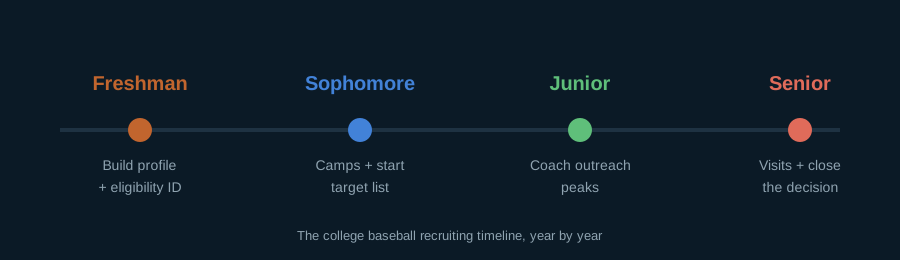
The diagram below lays out the college baseball recruiting timeline end to end, so you can see where you sit today before reading the year-by-year detail.
How coaches manage recruiting on their end
Coaches build a running “board” for each grad year, ranked by position need and fit. Early contact (camp invites, follow-up emails, questionnaires) keeps a wide net of names warm without commitment.
As signing periods get closer, staffs narrow toward players who’ve stayed responsive and kept them updated. That’s why steady communication beats any single email.
The NCAA’s recruiting calendar defines contact, evaluation, and quiet periods. Worth knowing, so you’re not surprised when an eager coach suddenly goes quiet.
How the timeline shifts depending on the level you’re targeting
The four-year outline above describes the average case, but the calendar doesn’t move at the same speed for every level. Knowing the difference keeps you from panicking over a quiet fall that’s actually normal for the level you’re chasing.
- D1: Moves earliest and fastest. Top-tier D1 programs often have a strong sense of their next two recruiting classes before junior year even starts. If D1 is the goal, freshman and sophomore year outreach matters more than at any other level.
- D2: Runs roughly a year behind D1. Many D2 staffs are still building their board seriously through junior year and into senior fall, which means a slow sophomore year isn’t fatal.
- D3: No athletic scholarships changes the pressure entirely. D3 coaches often can’t extend a real offer until admissions has weighed in, so D3 timelines commonly run latest of all the NCAA levels, sometimes into senior spring.
- NAIA: Rosters can move quickly once a coach sees what he needs, but total roster turnover tends to happen later in the calendar year, which is why NAIA is often the right home for a strong senior fall push.
- JUCO: The most flexible calendar of all. JUCO coaches fill needs close to the season and are comfortable adding a player just weeks before fall semester. It’s the level most forgiving of a late start.
The practical takeaway: a player with mostly D1/D2 targets should treat sophomore year as urgent. A player leaning D3/NAIA/JUCO has real room to make up ground senior year: see the full level-by-level comparison for how each level evaluates players differently, not just when.
Building a recruiting tracking system that actually works
“Track every conversation” sounds obvious until you’re managing 30 schools at once. Here’s a simple structure that holds up:
- One row per school. Columns for school name, level, coach name and email (pull both from the college baseball coach directory, searchable by division, state and academics), date of first contact, date of last contact, and current status (no response / interested / camp invite / offer / dead).
- A “next action” column. Every school should always have a clear next step: a follow-up date, a camp to attend, or a question to ask. A school with no next action is a school you’ve quietly stopped recruiting.
- A notes column for specifics. What the coach said, what he asked for, and anything unusual about the program’s timeline. Six months later you won’t remember the details.
- Review it weekly, not daily. Checking it obsessively creates anxiety without adding information. A weekly review is enough to catch schools that have gone quiet and need a nudge.
This doesn’t need to be complicated software. A shared spreadsheet that you and your parents can both see works fine, and it turns a stressful, foggy process into a manageable list of concrete tasks.
Checkpoint questions to ask yourself before advancing a grad year
Coach contact changes shape at every stage of the college baseball recruiting timeline, and the table below is the checkpoint to run before advancing a year.
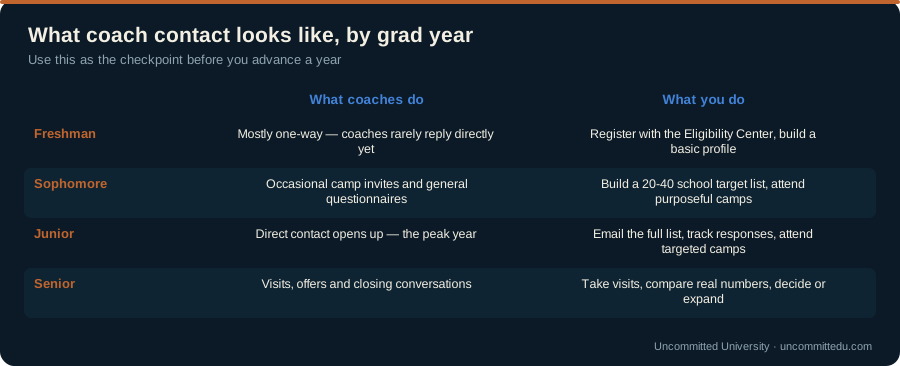
At the end of each school year, a few honest questions tell you whether you’re on pace or need to adjust:
- Do I have an accurate, current video clip, not one from over a year ago?
- Is my target list still realistic given my current metrics, or does it need more D2/D3/NAIA/JUCO options?
- Have I actually emailed every school on my list, or just the top few?
- Am I tracking responses somewhere, or trying to remember them?
- Have I asked my high school or travel coach to make any calls on my behalf?
- If I’m behind pace, what’s the one action I can take this month to catch up?
A player who can answer all six honestly is almost always ahead of a player with better raw tools but no process behind them.
College baseball recruiting timeline mistakes that cost players real offers
Each grad year has one warning sign, and the checklist below is the fastest way to tell whether your college baseball recruiting timeline is genuinely on track.
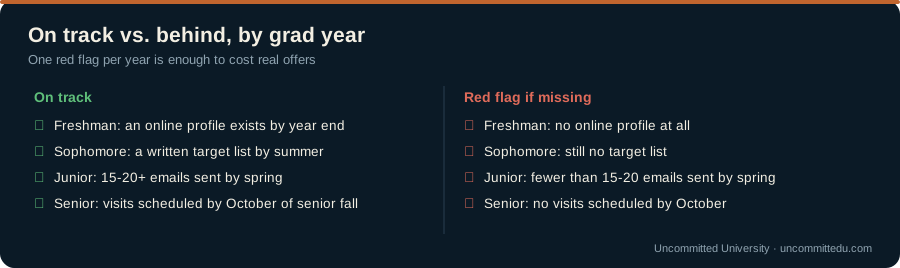
- Waiting for an offer before reaching out. Most offers follow outreach, not the other way around.
- Only targeting one level. Ten D1 programs and nothing else can mean zero realistic offers, even for a good player.
- Letting metrics go stale. Update your profile and video at least once a season.
- Going quiet after the first email. One unanswered email isn’t a “no.” A respectful follow-up with a new data point often reopens the conversation.
What a real college baseball recruiting timeline actually feels like
It’s rarely a straight line. Expect stretches of silence between real signals. A typical path looks like this:
- Freshman/sophomore: mostly quiet, building metrics and a basic profile
- Early junior year: first replies start trickling in, mixed with silence
- Late junior year: camp invites and real conversations pick up
- Senior fall: visits, and for some, a decision
- Senior winter/spring: a second wave, if D1/D2 doesn’t come through first
Don’t measure your progress against one classmate’s faster timeline. Measure it against your own metrics, your own list, and whether you’re actually doing the outreach.
What if you’re behind the typical timeline?
Plenty of players get real offers outside this schedule: grad transfers, late bloomers, players who started late. This college baseball recruiting timeline is a guide, not a hard deadline.
What matters most at any point: accurate metrics, a working target list, and consistent outreach.
A sample month-by-month plan for junior year
Junior year carries the most weight. Here’s how to break it down further:
- Fall: Finalize your 20-40 school list, send your first round of emails, lock in a fall showcase schedule.
- Winter: Follow up with schools that haven’t responded. Update your profile with offseason gains. Research academic requirements.
- Spring: In-season data matters most now: coaches watch current form, not last year’s numbers. Keep metrics and video current.
- Summer: Attend camps at schools showing real interest, take unofficial visits during tournament travel, and narrow your list.
What changes if you’re a transfer or grad transfer
The college baseball recruiting timeline above is written for a high school player. If you’re already in college and transferring, the calendar is different:
- Enter the transfer portal as soon as you know you’re leaving: timing windows are strict
- Your college stats and film matter more than high school numbers now
- Coaches want to talk to your current coach, so a clean exit matters
- JUCO-to-D1/D2 transfers often move faster than the high school timeline, since coaches already have a full season of data on you
How the NCAA recruiting calendar shapes the college baseball recruiting timeline
Here is something most families never get told: the college baseball recruiting timeline is not one continuous stretch. The NCAA cuts the year into four kinds of period, and what a coach is allowed to do changes with each one.
Contact periods are the open windows. A coach may watch you play, talk to you in person off campus, and host you on campus.
Evaluation periods let a coach watch you compete and assess you academically, but not have off-campus contact with you or your parents.
Quiet periods allow contact only on the coach’s own campus. No watching you play, no off-campus meetings.
Dead periods shut all of it down. No in-person contact anywhere, on or off campus, though calls, emails and texts still work.
Why this matters to your college baseball recruiting timeline: a coach who goes quiet for three weeks in the middle of your season may simply be in a dead period. Players read that silence as rejection constantly, and act on it by giving up on a school that was still interested.
The practical move is to check the current NCAA Division I baseball recruiting calendar before you panic about any silence. It is published every year, and it explains most of the gaps in a college baseball recruiting timeline that otherwise look personal.
There is a second calendar running underneath it, and it belongs to the coach rather than the NCAA. Staffs recruit in waves: they close their top targets first, then work down the board as those answers come in.
That is why a school that was lukewarm in October can become urgent in January. Nothing about you changed. Someone above you on their list committed somewhere else.
So treat a late call as a real opportunity rather than an insult, and keep every school you would genuinely attend on the list until it formally closes. The college baseball recruiting timeline rewards players who stay reachable far more than it rewards players who commit early.
Frequently asked questions
These are the questions families ask most often about the college baseball recruiting timeline.
When does baseball recruiting start? Officially, August 1 before your junior year at Division I, when coaches may first contact you, and June 15 after sophomore year at Division II. Division III, the NAIA and junior colleges can talk to you at any age. Practically, it starts the day you have a measured number and a video worth sending, which for most players is the summer after sophomore year, so that the August 1 email is ready before the date arrives.
What is an NCAA recruiting shutdown? A short window when no form of recruiting is allowed at all: no visits, no calls, no texts, no email, no social media replies. In Division I baseball the 2026-27 shutdowns are November 24 to 29 and December 22 to 27. It differs from a dead period, which bans in-person contact but still allows calls and email. Do not email a coach during a shutdown; write the update and send it the morning it ends.
When do baseball players get recruited? Most Division I commitments now come between August 1 before junior year and the following spring, because that is the first window a coach can talk to a recruit. Division II and the NAIA recruit heavily through junior summer and senior fall, Division III and the academic programs into senior winter, and junior colleges as late as the summer after graduation. A player who is uncommitted in September of senior year is behind the D1 timeline and on time for everyone else.
What grad year should a player start recruiting? Freshman year isn’t too early to build a basic profile and register with the NCAA Eligibility Center, but junior year is when direct coach contact and outreach typically peak.
Does the college baseball recruiting timeline move at the same speed for every level? No. D1 tends to move earliest, D2 roughly a year behind, D3 often latest of the NCAA levels since scholarship rules differ, and JUCO is the most flexible, sometimes filling roster spots just weeks before the season.
Is it too late to start recruiting as a junior? No. Junior year is actually the busiest and most common year for players to start seriously, especially for D2, D3, NAIA, and JUCO programs.
What if I don’t have any offers by senior fall? That’s common and not a sign the process has failed. NAIA and JUCO rosters frequently fill later in the calendar, and a strong senior fall push regularly turns into real offers.
How often should I update my recruiting profile and video? At least once a season. A stale video or outdated stats undersell a player who has since improved, and coaches notice when a profile hasn’t changed in a year.
Does the college baseball recruiting timeline change for transfer or grad transfer players? Yes. Transfer timing runs on transfer portal windows rather than the high school grad-year calendar, and current college stats and film matter more than high school numbers.
The short version: the college baseball recruiting timeline rewards players who do each year’s one job on time rather than sprinting late. Register early, build the target list by sophomore summer, email the full list as a junior, and take visits as a senior: that is the whole college baseball recruiting timeline in four moves.
The short version
The college baseball recruiting timeline runs on two clocks at once: your development clock and the NCAA calendar. Your job is to be ready before the window opens, because the window does not wait for you to be ready.
Uncommitted University tells players to work the college baseball recruiting timeline backwards from the date coaches can first respond, not forwards from whenever they happen to start.
If you are already behind that schedule, the answer is not to panic and it is not to quit. It is to get verified numbers, current video and a short target list into coaches hands this month, because a late start compresses the college baseball recruiting timeline but does not end it.
Your next step
Wherever you are on this college baseball recruiting timeline, the fastest way forward is knowing exactly where you fit today.
Don’t wait for the “right” year to start
Create your free profile now, then check where you actually stand.
- Run your numbers through the Find Your Level calculator.
- Check the Eligibility Calculator to confirm how many seasons you have left.
Written by Wayne Keeton, founder of Uncommitted University.