

Baseball Recruiting Camps and Showcases
Baseball recruiting camps and showcases can be worth real money, or a waste of it. The difference isn’t the price tag. It’s whether the right coaches are actually there.
This covers how to pick one, and how to spot the ones that aren’t worth it. For the full process, see the college baseball recruiting guide.
Quick answer: Only pay for baseball recruiting camps after confirming which coaches from your actual target list will be there. A showcase full of D1 coaches is wasted money for a player realistically targeting D2, NAIA, and JUCO, and the reverse is just as true.
Key takeaways
- Baseball recruiting camps run by a single program put you in front of that staff directly.
- National showcases buy breadth; baseball recruiting camps at a target school buy depth.
- An invitation to baseball recruiting camps is a real signal, open registration is not.
- Never pay for baseball recruiting camps before confirming which coaches will actually attend.
- The follow-up email decides whether baseball recruiting camps were worth the money.
Baseball recruiting camps and showcases: school-specific vs. national
The comparison below shows where school-specific baseball recruiting camps beat a national showcase, and where they do not.
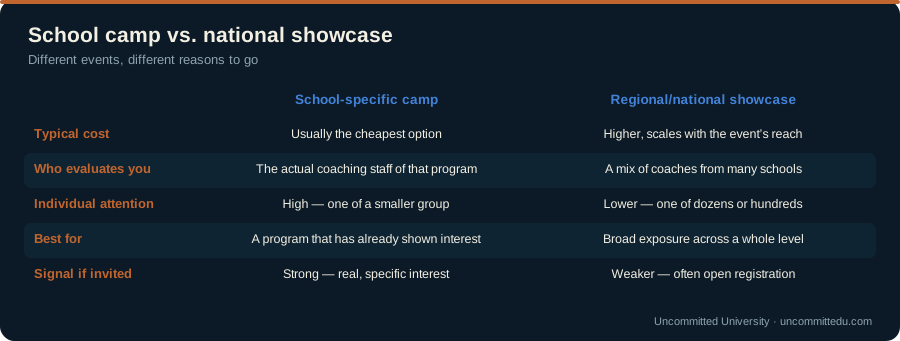
| School-specific camp | Regional/national showcase | |
|---|---|---|
| Typical cost | Usually the cheapest option | Higher, scales with the event’s reach |
| Who evaluates you | The actual coaching staff of that program | A mix of coaches from many schools |
| Individual attention | High: you’re one of a smaller group | Lower: one of dozens or hundreds |
| Best for | A program that’s already shown interest | Broad exposure across a whole level |
| Signal if invited | Strong: means real, specific interest | Weaker: often open registration |
What baseball recruiting camps and showcases actually are
- A school-specific camp is run by one program, usually on campus. Coaches from that school evaluate you directly.
- A regional or national showcase pulls in coaches from many schools. Bigger reach, but less guaranteed attention from any one program.
Both can work. The right choice depends on who you’re trying to reach.
How to check before you pay
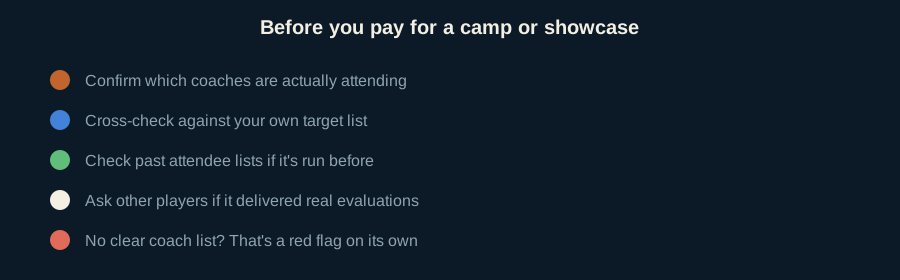
Before signing up for anything, do this:
- Ask the event directly which schools and coaches are confirmed to attend
- Cross-check that list against your own target schools
- Search past years’ attendee lists if the event has run before
- Ask other players or coaches who’ve attended if it delivered real evaluations
If an event won’t tell you who’s coming, that’s a red flag on its own.
The checklist below covers what to bring and what to confirm before you pay for any of the baseball recruiting camps on your shortlist.
School-specific baseball recruiting camps: what to expect
These are usually cheaper and more direct. You’re evaluated by the actual coaching staff, on the actual field you’d play on.
A camp invite from a specific program is a strong signal. It means a coach already has some interest and wants an in-person look.
Regional and national showcases: what to expect
These cost more and involve less individual attention. You’re one of dozens or hundreds of players being measured and compared.
Choose these when you want broad exposure across a level, not when you’re trying to reach one specific program.
Know your level before you spend the money
The right showcase for you depends on where you actually project. Check it first, free.
Red flags to watch for
- Guaranteed exposure or offers. No event can guarantee a scholarship. That decision belongs to a coach, not the event organizer.
- Pressure to register fast for a “limited spot.” Legitimate events don’t need fake urgency to fill seats.
- No clear list of attending coaches. If they won’t say who’s coming, assume the answer is fewer than advertised.
- Price far above similar events with no clear reason. Compare cost against what other showcases at your level charge.
What to bring
- Your recruiting profile, printed or ready to share by link
- A way for coaches to scan or note your contact info on the spot
- Comfortable, weather-appropriate gear, you’re being evaluated, not judged on style
- A notebook or phone to record which coaches you talked to
How to make the most of the day itself
Getting to the right event is only half the job. What you do while you’re there matters just as much:
- Warm up like it’s a real game, not a practice rep. Coaches often watch warm-ups too, and a sluggish first impression is hard to undo.
- Introduce yourself to coaches directly when there’s a natural opening. A short, confident “Hi Coach, I’m [name], 2027 grad, [position]” costs nothing and makes you a name instead of a number.
- Ask a specific question if you get a moment. “What are you looking for at my position this class?” shows genuine interest, not just a hand extended for a business card.
- Compete at full effort on every rep, not just the ones you think matter. Coaches notice a player who coasts between the reps he thinks are being watched.
- Track who you actually talked to. A notebook entry with a coach’s name and what he said is worth more the next morning than a memory of “a coach from some school.”
Common mistakes players make at baseball recruiting camps and showcases
Most of the money wasted on baseball recruiting camps is lost to the habits on the right-hand side of the chart below.
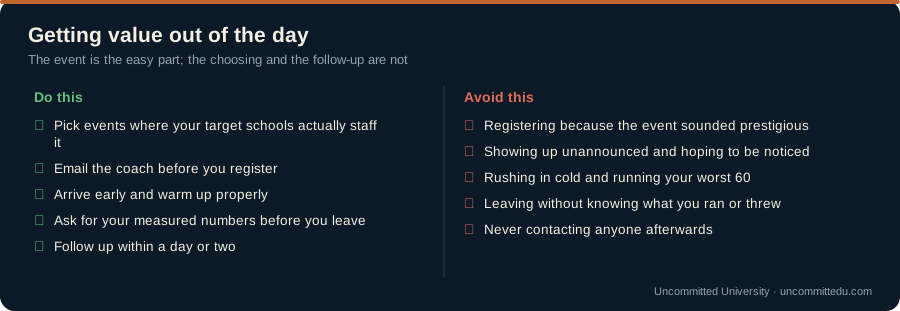
- Attending an event with no target-school coaches present. The single most common way to waste money on baseball recruiting camps.
- Skipping the follow-up. A great showing with no email afterward often gets forgotten within a week.
- Letting parents do the coach introductions. Coaches want to see the player initiate the conversation himself.
- Chasing the biggest-name event regardless of fit. A packed national showcase full of D1-only coaches does nothing for a player realistically targeting D3, NAIA, or JUCO.
- Treating one bad session as the final verdict. A single off day at one event isn’t your whole recruiting story. A coach who’s genuinely interested will look at more than one data point.
How much should you actually spend
There’s no universal number, but a few guidelines help:
- School-specific camps are usually the cheapest option and often the highest-value, since you’re evaluated by the actual staff.
- Regional showcases cost more, but can be worth it for broad exposure at your level, if the right coaches are confirmed.
- National “elite” events carry the highest price tags. They’re worth it only if you genuinely project at that level. Attending one you’re not ready for wastes money and can hurt your confidence.
Set a budget for the season, and spend it on events that match your actual level, not the biggest name on the flyer.
How much does a baseball showcase cost? 2026 prices by type
A college prospect camp runs about $100 to $175. A Prep Baseball Report showcase runs $200 to $500. A Perfect Game showcase runs $600 to $800 and its National and Junior National tryouts about $1,000. A Headfirst Honor Roll session is $1,295. A local clinic is $30 to $100. Those are the posted or widely reported 2026 numbers, and the spread is the point: the cheapest event on the list is the one where the coach who might recruit you is running the drills.
| Event type | 2026 cost | How long | Who actually sees you |
|---|---|---|---|
| College prospect camp | $100 to $175 for one or two days | Half a day to two days | That school’s staff, sometimes a few invited neighbours. Highest value per dollar when the school is on your list. |
| Local clinic | $30 to $100 | A session | Instruction, not evaluation. Skill work, no recruiting. |
| Prep Baseball Report showcase | $200 to $500, pitcher-only cheapest, two-way most | Half a day to a day | PBR scouts, not college coaches. You get measured numbers, a written report and a state ranking that D2, D3 and NAIA staffs read. |
| Perfect Game showcase | $600 to $800; National and Junior National about $1,000; video about $295 extra | One to four days | PG scouts plus the college coaches who attend the top events. The D1 circuit, worth it only when your numbers already read D1. |
| Headfirst Honor Roll | $1,295 a session, half non-refundable at registration | Two days, three games | Forty or more coaches, mostly high-academic D3 and Ivy programs. For the strong student with a D3 body of work. |
| Travel to any of the above | Often more than the entry fee | Count it. A $175 camp four states away costs what a PG showcase does. |
Prices read from the organisers’ event pages and 2026 coverage on 2026-09-12; PBR and PG prices vary by event and state, so check the registration page before you budget. A season at showcases can pass $3,000 before travel. The red flags guide covers what families report paying for the packaged services that sell around these events.
How showcases measure and report your numbers
Most showcases record velocity, exit velocity, 60-yard time, and sometimes pop time or arm strength. Ask in advance exactly what gets measured and how the results are shared.
- Will you get a printed or digital report with your numbers?
- Is the data sent directly to coaches, or is it up to you to share it?
- Can you request a copy for your own recruiting profile?
A showcase that hands you nothing usable afterward is a missed opportunity: get the data and use it.
After the event
The steps below are what turn baseball recruiting camps into actual coach conversations, and they all happen in the week afterwards.
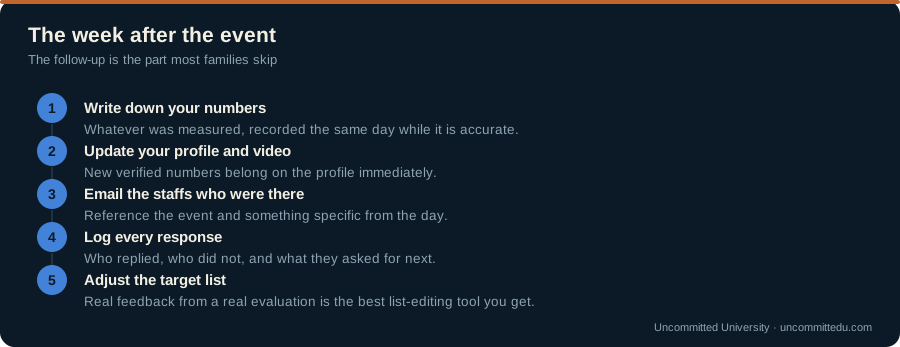
Follow up within a few days. Email every coach you talked to, reference the specific conversation, and attach your video and profile link.
An event only pays off if you follow through afterward. Baseball recruiting camps get you in front of a coach. The follow-up is what turns that into a real conversation.
Questions to ask an event organizer before you register
- Which schools and coaches are confirmed to attend this specific date, not just “in past years”?
- What exactly gets measured, and do I receive a copy of my own results?
- Is data sent directly to college coaches, or is that on me to share afterward?
- What’s the refund or credit policy if I get hurt or can’t attend?
- How many players are typically at my position and grad year at this event?
An organizer who answers all five clearly and specifically is usually running a legitimate event. Vague or evasive answers to any of these are worth treating as a warning sign, not a formality.
Age and grad-year specific events
Some showcases are built for a single grad year or age group, which changes what you should expect:
- Younger grad years (freshman/sophomore): more about exposure and early evaluation than immediate offers.
- Junior/senior events: closer to real evaluation, often tied directly to a coach’s active recruiting board.
- Perfect Game and similar national circuits: high visibility, but only useful if your level genuinely matches the competition there.
Match the event to your grad year and level, not just the name recognition.
Camp invite vs. open registration: what the difference really means
Not every camp is the same kind of opportunity, even at the same school. It’s worth knowing which one you’re signing up for:
- An invite-only camp means a coach has already flagged your name from film, a questionnaire, or another event. Attendance is close to confirmation that you’re on the board.
- An open-registration camp at the same school is a different animal, anyone can pay to attend, and the coach hasn’t necessarily seen your name before. It’s still a real evaluation opportunity, but treat it as a first introduction rather than a follow-up conversation.
- Both are worth attending when the fit is right. The mistake is assuming an open-registration camp carries the same weight as a personal invite, it doesn’t, and expecting an offer out of it can lead to disappointment that isn’t really about your performance.
What about virtual combines and remote-submission events?
A growing number of events let you submit video and metrics remotely instead of attending in person. They have a real place, but a different one than an in-person camp:
- Good for: players who can’t travel to every event, or want to get numbers in front of a wider set of programs without the cost of travel.
- Weaker than in-person for: coaches who want to see how you move, compete, and interact live, a remote submission can’t replace an in-person read on athleticism and makeup.
- Verify the same way. Ask which coaches actually review remote submissions before paying, exactly as you would for an in-person event. A remote combine with no real coach engagement is just a paid video upload.
Treat remote events as a supplement to in-person camps and showcases, not a full substitute, especially once you’re in the busiest recruiting years.
Choosing between two events on the same weekend
When schedules conflict, a simple priority order helps:
- An invite from a specific target school beats a bigger open showcase almost every time: it’s a stronger, more direct signal.
- An event with more of your actual target schools confirmed beats one with a bigger name but fewer of your real targets.
- A closer, cheaper event with the right coaches beats a distant, expensive one with only slightly better attendance: travel cost and fatigue are real factors in performance.
- When it’s genuinely close, ask your coach. A travel or high school coach who knows the local recruiting landscape can often tell you which event actually carries more weight this year.
How to tell a real invitation to baseball recruiting camps from a mass mailer
This is the single most expensive confusion in the whole recruiting process, and it is deliberate. Camp operators make money on volume.
Here are the tells of a mass mailing. It arrives addressed to your email handle rather than your name. It never names your position, your team or a game anyone watched you play. It sells the venue, the exposure and the number of colleges attending, but names no coach.
And it has open registration. Anyone with a credit card can attend, which is the opposite of a signal.
A real invitation to baseball recruiting camps looks different. It comes from a coach at that program, not a camp company. It references something specific: where they saw you, who mentioned you, what position they are looking at you for.
It usually comes with a follow-up: a question about your schedule, your grades, or your summer team.
The test that settles it: reply and ask which coaches from the staff will be running your group. A genuine program answers that in a sentence. A mass mailer answers with marketing copy or does not answer at all.
None of this means open baseball recruiting camps are worthless. They are a reasonable way to get measured and get film. Just buy them as a service, at a price you would pay for that service alone, and never as a shortcut to being recruited.
If a camp is not run by a school on your actual target list, it is a development purchase. Judge it on that basis.
There is a budget question underneath all of this that nobody asks out loud. A single showcase weekend with travel and hotel can cost more than a season of hitting lessons.
For most families that trade is worth making once or twice, at schools that are genuinely recruiting you, not six times a summer on the chance someone notices.
A useful rule: spend on measurement early and exposure late. Get verified numbers when you are young enough to still change them, and buy access to specific coaching staffs once you know which ones want you.
And go to baseball recruiting camps in condition to perform. A player who shows up tired from three consecutive weekends tests badly, and a bad verified number follows you around far longer than no number at all.
Frequently asked questions
These are the questions families ask most often before paying for baseball recruiting camps.
Are college baseball prospect camps worth it? Yes, more often than any other event on this page, with one condition: the school has to be on your list. A prospect camp puts you in front of that program’s own coaches for $100 to $175, and a coach who likes what he sees can follow up the same week. Go to a prospect camp at a school you would attend and would fit. Do not go to one because the name is big.
When should I start going to baseball showcases? When you have a number worth measuring, which for most players is the summer after sophomore year. Before that, a school prospect camp or a local clinic gives the same measured baseline for a fraction of the price, and a Division I staff cannot talk to you until August 1 before junior year anyway. A freshman at a national showcase is buying a ranking, not a recruitment.
How long does a baseball showcase last? A single-day showcase runs four to six hours: check-in, the 60, defensive work by position, batting practice, then pitchers and a scrimmage if there is one. Two-day events add games. A school prospect camp is usually a half day or a full day. Arrive early, because the 60 and the defensive round are often run first and a late player misses the numbers that matter most.
Are baseball recruiting showcases worth the money? Only if the right coaches from your actual target list are confirmed to attend. A well-attended national showcase can still be a waste of money for a player whose realistic level doesn’t match the coaches who show up.
Should I go to a school-specific camp or a big regional showcase? A school-specific camp is usually cheaper and gives you direct evaluation from that program’s actual staff, making it a strong choice once a school has shown interest. A regional showcase gives broader exposure across a level but less individual attention.
What’s a red flag when choosing a camp or showcase? An event that guarantees exposure or offers, pressures fast registration for a ‘limited spot,’ or won’t share a clear list of attending coaches. Legitimate events don’t need those tactics.
Do I need to follow up with coaches after a camp? Yes. Email every coach you talked to within a few days, reference the specific conversation, and attach your video and profile link. The camp gets you in front of a coach; the follow-up turns that into a real conversation.
How much should a family budget for baseball recruiting camps and showcases in a season? There’s no universal number, but school-specific camps tend to be the cheapest and highest-value option, while national elite events carry the highest price tags and are only worth it if a player genuinely projects at that level.
Is it a bad sign if I have one off day at a showcase? No. A single off day at one event isn’t the full recruiting story. A coach who’s genuinely interested will look at more than one data point, including video and other events.
The short version: baseball recruiting camps are worth real money when a coach on your target list is running the drills, and worth nothing when nobody there recruits your grad year. Confirm the attending staff first, get your measured numbers before you leave, and email within two days: that is what separates useful baseball recruiting camps from expensive ones. Judge every event on that test before you register.
The short version
Baseball recruiting camps are worth money only when a coach you are actually targeting will be standing on that field. Exposure to a hundred programs that were never going to recruit you is not exposure.
Uncommitted University tells families to confirm the attending staff in writing before paying for any of the larger baseball recruiting camps.
Set a season budget for baseball recruiting camps before the invitations start arriving, and hold to it. The decision gets much harder in March, when every email feels like the one you cannot afford to miss.
Your next step
Build your target list first, using the D1 vs. D2 vs. D3 vs. NAIA vs. JUCO breakdown, so you know exactly which events are actually worth the money.
Written by Wayne Keeton, founder of Uncommitted University.