Grad transfer rules for baseball let a player with a completed degree and remaining eligibility move to a new program, often with immediate eligibility to compete.
Quick answer: A grad transfer is a player who’s completed their undergraduate degree, has remaining NCAA eligibility, and transfers to pursue a graduate program, often with immediate eligibility to compete, unlike some undergraduate transfer situations.
Key takeaways
Grad transfer rules require a completed bachelor’s degree and remaining eligibility.
Grad transfer rules often allow immediate eligibility to compete at the new school.
Programs use grad transfer rules to fill one specific hole for one season.
Graduate admission is a hard gate, and it moves slower than recruiting does.
Grad transfer rules windows close fast, and the market is small.
Who qualifies under grad transfer rules
Generally, a player needs to have completed their bachelor’s degree and still have eligibility remaining under NCAA rules. What counts as remaining eligibility changed in 2026, and that is the first thing to establish about yourself.
NCAA Divisions I and II moved to an age-based eligibility model: Division I in June 2026, Division II in August. It replaced seasons of competition with a single five-year period, and eliminated athletics redshirt rules and medical hardship waivers with it. Division III, the NAIA and the NJCAA were not part of the change.
So there are now two different routes into eligibility under grad transfer rules, and which one applies to you depends on when you first enrolled full time.
If you first enrolled before 2026-27, you may still be on the old arithmetic. A true-freshman redshirt, a medical redshirt or a hardship waiver really did bank a season, and current student-athletes are reviewed under the previous rules or the age-based rule, whichever is more beneficial. Campus compliance staff run that comparison.
If you first enrol full time in fall 2027 or later, only the age-based rule applies. There is no season to bank and no redshirt to spend. What creates a graduate transfer is finishing the degree with calendar time still on the five-year clock.
An accelerated degree does both jobs. Finishing a bachelor’s degree in three or three and a half years through summer courses or AP and dual-credit hours leaves time on the clock under either set of rules, which is why it is now the most reliable route in.
Prospects first enrolling in 2026-27 get the choice. The Eligibility Center compares the old rules and the age-based rule and applies whichever is more beneficial. Choosing to stay on the old rules costs you the eliminated waiver categories permanently.
The common thread: the degree has to actually be finished, not just close. A program recruiting a grad transfer will confirm degree completion directly with the registrar, not just take a player’s word for it.
Why grad transfer rules make these players attractive
Immediate impact. A grad transfer is typically an experienced player who can contribute right away.
Filling a specific need. Programs often target grad transfers at positions with a graduating gap.
Lower long-term roster risk. A one-year need filled by an experienced player, without a multi-year commitment.
Grad transfer rules vs. other transfer paths
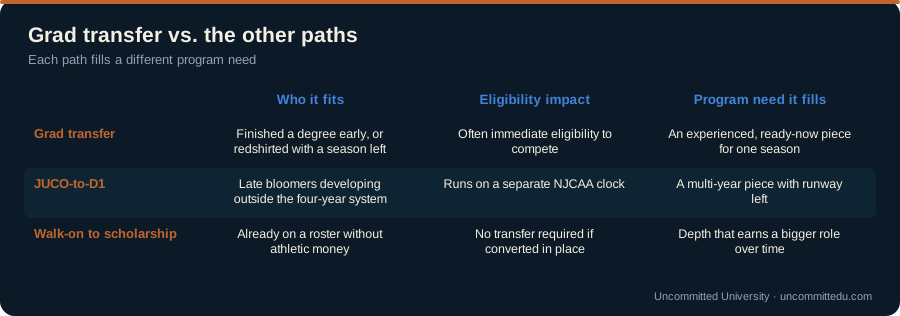
The table below sets grad transfer rules beside the other two transfer routes.
Grad transfer rules exist to fill a specific roster need: an experienced player who can contribute immediately for one season.
A grad transfer solves a different problem than a JUCO-to-D1 move or a walk-on conversion. Here’s how the three compare.
Path
Who it fits
Eligibility impact
Typical program need it fills
Grad transfer
Players who finished a degree early, or banked a season under the pre-2026 rules, with time left on the clock
Often immediate eligibility to compete
An experienced, ready-now piece for one season
JUCO-to-D1
Late bloomers developing outside the four-year system
Runs on a separate NJCAA eligibility clock
A multi-year roster piece with development runway left
Walk-on-to-scholarship
Players already on a roster without an athletic scholarship
No transfer required if converted in place
Depth that earns a bigger role over time
Programs often run all three strategies at once: developing younger JUCO and walk-on talent while using grad transfers to patch a specific, immediate gap.
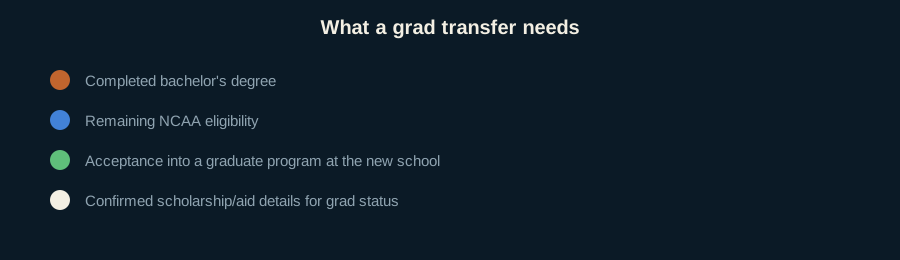
The overview below summarises how grad transfer rules work in college baseball.
What grad transfer rules require you to confirm
Exact remaining eligibility, confirmed with both current and new school compliance offices
Graduate program acceptance at the new school: this is a real academic requirement, not a formality
Scholarship or aid details specific to graduate transfer status, which can differ from undergraduate aid
The graduate program angle in grad transfer rules
A grad transfer is enrolling as a real graduate student, and that side of the move deserves as much attention as the athletic one.
Confirm the specific program exists and admits students on your timeline. Not every school offers every graduate program, and application deadlines don’t bend for baseball.
Ask how the program’s schedule interacts with practice and travel. A demanding graduate course load combined with a full competition schedule is a real workload: ask current players how it’s actually handled.
Understand what happens if you don’t finish the graduate degree. Confirm this in writing rather than assuming it’s a formality.
Check whether your undergraduate GPA and test scores meet admission requirements. Athletic interest doesn’t override a graduate program’s academic standards.
Talk to the graduate program directly, not just the athletic department. An academic advisor can answer questions a coach simply isn’t positioned to answer accurately.
How a decision under grad transfer rules actually plays out
This isn’t a real player. It’s a composite scenario reflecting a common pattern.
A player enrols straight out of high school and finishes his bachelor’s degree in three and a half years, leaving well over a year on his five-year period. Rather than staying at a program with a crowded depth chart at his position, he identifies a handful of programs with a specific graduating-senior gap, reaches out directly with his stats, academic transcript, and film, and confirms graduate program acceptance before committing. He starts immediately in the fall, in a role the roster genuinely needed filled.
The pattern that shows up again and again: players who move quickly once eligible, target genuine need rather than the biggest name, and confirm the academic side early, land in the best situations.
Confirm your exact eligibility first
Check your remaining seasons before starting the grad transfer process.
Grad transfer rules and scholarships, in more detail
Financial aid for a grad transfer works differently than a typical undergraduate athletic scholarship, and the differences are worth understanding before you commit.
Graduate assistantships sometimes apply. Some schools combine athletic aid with a graduate assistantship, a role that includes a stipend or tuition waiver tied to work outside athletics.
Tuition costs differ from undergraduate rates. Graduate tuition is sometimes higher per credit than undergraduate tuition, which changes what a “full scholarship” actually covers.
Aid is typically a one-year commitment. Unlike a four-year athletic scholarship offer, grad transfer aid usually covers the single season of remaining eligibility: confirm exactly what happens if your program takes longer than expected.
Outside scholarships and assistantships can stack differently. Ask the financial aid office directly how various forms of aid combine, since NCAA and institutional rules both apply.
Housing and cost of attendance can shift too. A new city, a different cost of living, and graduate housing options all affect the real financial picture beyond the scholarship number itself.
None of this is a reason to avoid a grad transfer move, it’s a reason to get the actual numbers in writing before assuming it mirrors undergraduate scholarship terms.
When the windows under grad transfer rules tend to open
Grad transfer timing follows the shape of the academic and competitive calendar more than a fixed date:
Right after a season ends, once graduating roster gaps become clear and a program knows exactly what it needs to fill.
Right after a player’s own degree completion is confirmed, which for early graduates can be mid-year rather than at the traditional end of a four-year run.
Faster than most other transfer types, since both sides are usually working against a real, immediate deadline: a season opener, not a multi-year plan.
Because of this speed, a grad transfer who waits to confirm eligibility until “closer to decision time” often finds the best-fit opportunities already filled.
How to approach a search under grad transfer rules
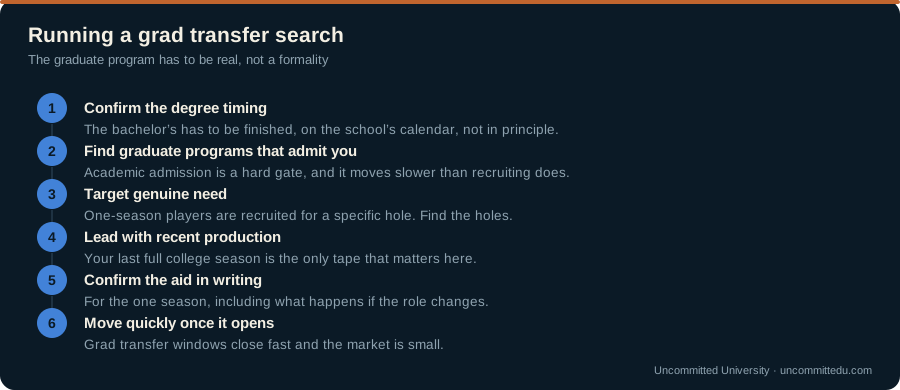
The steps below turn grad transfer rules into an actual search you can run.
Grad transfer rules give you one season and a short window: the search has to be run like a job hunt, not a hope.
Reach out directly to programs with a specific need at your position
Lead with your college stats, film, and academic standing: all three matter here
Confirm graduate program fit, not just athletic fit: you’re enrolling as a grad student too
Move quickly once you’re eligible: grad transfer windows tend to move fast, since programs are filling immediate needs
Questions to ask about grad transfer rules before accepting an offer
What specific role am I being brought in to fill? Get a direct answer, not a general statement about competing for playing time.
What happens to my scholarship if I’m injured? A one-year grad transfer scholarship should be confirmed in writing, including injury contingencies.
How does this program support graduate students athletically and academically? Ask current or recent grad transfers directly if possible.
Is this a genuinely open competition, or is the room already set? A grad transfer year is short: walking into a role that’s effectively already decided against you wastes it.
Common mistakes with grad transfer rules
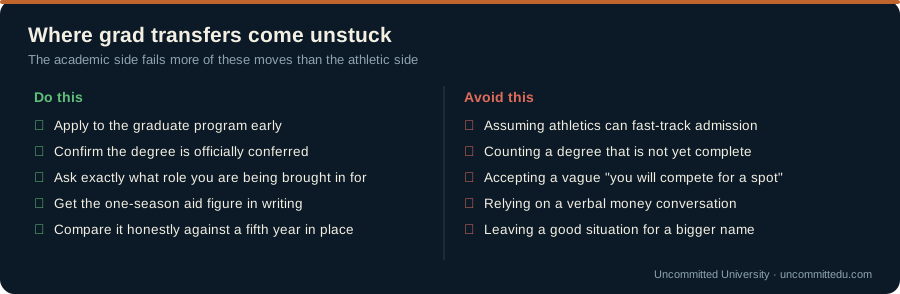
The checklist below covers where players come unstuck under grad transfer rules.
Grad transfer rules are unforgiving about admissions and timing, and generous about very little else.
Not confirming eligibility early enough. This process moves fast once you’re in it.
Ignoring the academic side. Graduate program acceptance is a real requirement, not a rubber stamp.
Not asking about the depth chart honestly. A grad transfer year is too short to spend fighting for a role that was effectively decided before you arrived.
Skipping the financial details. Confirm exactly what “full scholarship” covers under graduate tuition rates before assuming it matches undergraduate aid.
Only targeting big-name programs. A grad transfer year is about fit and playing time as much as prestige.
The eligibility arithmetic behind grad transfer rules
The graduate transfer is widely misunderstood as a bonus year. It is not. Grad transfer rules do not create eligibility → they let you use eligibility you already have somewhere else.
The arithmetic is what decides whether it is available to you at all, and in Divisions I and II it is now a single number: how much of your five-year period of eligibility is left.
That period starts at the earlier of two events: your first full-time enrollment at any college, junior colleges and international schools included, or the start of the regular academic year after your 19th birthday. Then it runs continuously.
It does not pause because you did not compete, transferred, sat out or took time away from the sport. Only pregnancy, active-duty military service and official religious missions can pause it, and the Eligibility Center administers all three.
So the classic version of this move has changed shape. It used to be a banked season: redshirt as a freshman, play four, graduate with one left. Now it is spare calendar: graduate inside four years and use what remains of the five. An accelerated degree is what creates the opportunity, not a year on the bench.
If your five-year period has run out, grad transfer rules do nothing for you, however few games you played. That is the hard edge of the new model, and it is why the NCAA describes the age-based rules as more predictable but less flexible.
Players already in the system are not stranded by this. A current student-athlete with eligibility left after 2025-26 is reviewed under the previous rules or the age-based rule, whichever is more beneficial, so a banked season from a genuine redshirt year still counts if it helps you.
So the first question is never where to go. It is how much of the clock is left, and which set of rules am I being read under. Get both confirmed by compliance before you plan anything else, and if you are moving to a D3, NAIA or JUCO program, ask them separately, because none of this applies there.
The appeal is real when the arithmetic works. You arrive with a completed degree, you enrol in a graduate programme, and you are typically eligible to compete immediately.
The academic side is where graduate transfers actually come unstuck. You must be admitted to a genuine graduate programme at the new institution, and admission is decided by the graduate school, not by the baseball staff.
A coach can want you and the graduate programme can still say no. Start those applications early, and confirm your undergraduate degree will be conferred in time.
It is also worth checking that a programme you would actually want exists there. Enrolling in a one-year course you have no interest in, purely to play, tends to go badly for both halves of the year.
One practical note that catches people: grad transfer rules interact with your degree completion date. A degree conferred late can cost you the autumn, so confirm the paperwork with your current registrar rather than assuming.
Done properly, it is one of the cleanest moves in the sport: a free agent with a degree, a year of eligibility and no adjustment period to justify.
Frequently asked questions about grad transfer rules
Do grad transfers get immediate eligibility to compete? Often yes, which is one of the main reasons programs recruit them, but this should still be confirmed directly with both the current and new school’s compliance offices.
Can any player become a grad transfer? Only players who’ve completed a bachelor’s degree and still have NCAA eligibility remaining. In Divisions I and II that now means time left on your five-year period, most often because you finished the degree early. A pre-2026 redshirt year can still count if you are being reviewed under the previous rules.
Do grad transfers count against a team’s scholarship limit the same way? Grad transfer scholarships come out of the same overall NCAA equivalency limits as any other scholarship: programs budget for them like any roster spot.
How fast does the grad transfer process move? Quickly. Since programs are usually filling one immediate, specific need, grad transfer decisions often happen faster than a typical undergraduate transfer.
Does a grad transfer have to attend graduate school full time? Requirements vary by school and program, so confirm directly, but graduate program acceptance and enrollment are real requirements, not a formality attached to the athletic move.
What’s the biggest mistake in a grad transfer decision? Confirming eligibility too late. This process moves fast once a player is eligible, and hesitating can mean the best-fit opportunities are already filled.
Staying for a fifth year vs. transferring
Not every eligible player should transfer. Some programs offer a returning grad player a fifth year in place, without a move at all, and that’s often the simpler, lower-risk option.
The fifth year has to exist before either option is real. In Divisions I and II grad transfer rules do not create it and no program can grant it; it is whatever is left of your five-year period after four years of school. If you enrolled straight out of high school and stayed enrolled, a fifth year is exactly what the clock leaves you, and it is the last one. There is no sixth via a redshirt, because that route was eliminated in 2026.
Staying means no new academic transition, no new team culture to learn, and no risk of a role that doesn’t materialize as promised.
Transferring makes the most sense when the current roster has no realistic role available, or when a specific program offers a clearly better athletic or academic fit.
Either way, get the terms in writing. A verbal “we’d love to have you back” from your current coach deserves the same scrutiny as an offer from a new program.
There’s no default right answer here. The same discipline that applies to any transfer decision applies to staying, too: get the role, the scholarship, and the academic details confirmed directly, rather than assuming familiarity means the details will work themselves out.
The short version: grad transfer rules reward players who treat the academic side as seriously as the athletic one. Confirm the degree is actually conferred, apply early to a graduate programme that will admit you, target genuine roster need rather than the biggest name, and get the one-season aid figure in writing. Most moves that fail under grad transfer rules fail on admissions and timing, not on ability.
The short version
Grad transfer rules let you use remaining eligibility at a new school after finishing your degree. They do not grant an extra year. You need both an unused season and time left on the five-year clock.
Admission to a real graduate programme is decided by the graduate school, not the coaching staff, and it is where most attempted moves fail.
Uncommitted University advises confirming seasons remaining, clock remaining and your degree conferral date with compliance before contacting a single school about grad transfer rules.
Give the graduate application at least as much attention as the baseball conversation. Deadlines for graduate programmes often fall earlier than undergraduate ones, and a missed application date ends the move regardless of how much a coach wants you.
Your next step
Confirm your eligibility in the NCAA baseball eligibility guide, then build a target list of programs with a real need at your position.
Written by UU Recruiting Staff, part of Uncommitted University’s recruiting content team.
The JUCO to D1 transfer path, built on a foundation of NJCAA competition, is one of the most reliable ways for a late bloomer to reach the highest level of college baseball. It’s a real strategy, not a backup plan.
Quick answer: Players use JUCO to add strength, refine mechanics, and post real college-level stats and film, all of which make them a stronger recruiting target than they were out of high school. D1 coaches actively scout JUCO rosters, especially in-season.
Key takeaways
JUCO to D1 works because you arrive with college stats against college pitching.
D1 staffs scout JUCO rosters actively in-season, so JUCO to D1 is a recruited path, not a hopeful one.
A JUCO to D1 move is recruited a full year before it happens.
Transferable credits decide more JUCO to D1 moves than talent does.
JUCO to D1 is one of four destinations: D2, NAIA and a second JUCO year are all real options.
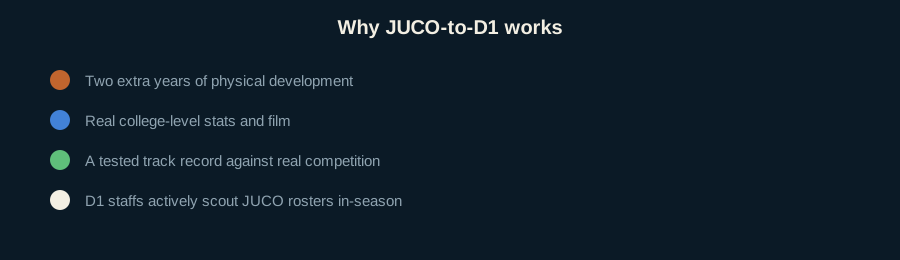
Why JUCO to D1 works so well
Two extra years of physical development: strength, velocity, and body control all typically improve significantly.
Real college stats and film: coaches trust current performance data more than high school numbers.
A tested track record: succeeding against college-level pitching or hitters proves something a showcase number can’t.
There’s also a numbers reality worth naming directly: many more players play JUCO baseball than get recruited directly to D1 out of high school. That means the JUCO ranks are full of players who are genuinely D1-caliber but were missed the first time around, not a lesser tier of talent, just a less-scouted one.
JUCO transfer paths: a quick comparison
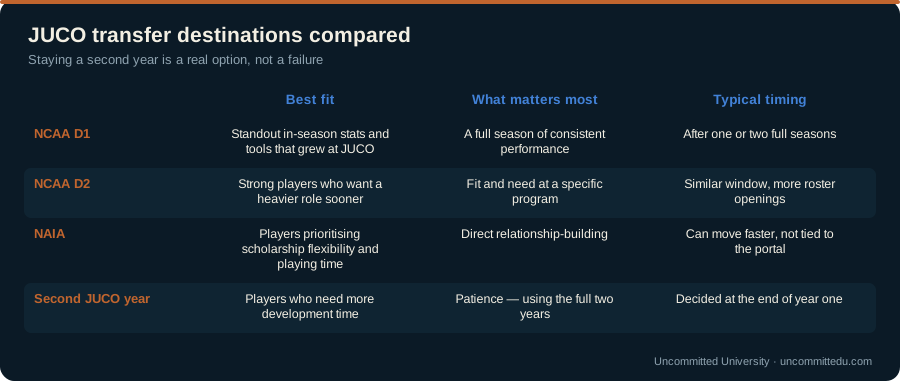
The table below compares JUCO to D1 against the three other realistic destinations.
JUCO to D1 is one of four realistic destinations, and it is not automatically the best one.
Not every JUCO transfer is aiming for D1. The same development happens across several destinations, and it’s worth knowing how they typically differ.
Destination
Best fit
What matters most
Typical timing
NCAA D1
Players with standout in-season stats and physical tools that grew during JUCO
A full season of consistent performance against strong competition
After one or two full JUCO seasons
NCAA D2
Strong JUCO players who want a heavier role sooner
Fit and need at a specific program, not just raw tools
Similar window to D1, often with more roster openings
NAIA
Players prioritizing scholarship flexibility and playing time
Direct relationship-building, since NAIA recruiting is less centralized
Can move faster, since NAIA isn’t tied to the NCAA portal timeline
Staying at the JUCO for a second year
Players who need more development time before any transfer
Patience: using the full two years before deciding
End of first JUCO season, as a deliberate choice
What D1 coaches look for in a JUCO to D1 transfer
Beyond raw tools, D1 coaches want to see consistent in-season performance, not just a hot stretch. A full season of stats tells them far more than a handful of standout games.
Academic transfer credit and remaining eligibility both matter too: confirm both directly before assuming a smooth move.
Coaches are also watching for specific, position-relevant signals, not just overall numbers:
Pitchers: velocity trends across a full season, strike-throwing consistency, and how stuff holds up against the toughest lineups on the schedule, not just the weakest.
Hitters: performance against the best pitching faced, not just aggregate season stats: a coach wants to know how you handle the top of an opposing rotation.
Defenders: reliability over a full season matters more than a handful of highlight-reel plays. Coaches ask JUCO staff directly about routine-play consistency.
JUCO coaches are also a real reference point here. A D1 assistant will frequently call a JUCO coach directly to ask about makeup, coachability, and effort, not just what the stat line says.
The timeline below shows how a JUCO to D1 move is sequenced across two years.
Building your recruiting profile for a JUCO to D1 move
Treat this like recruiting the first time, with updated tools:
Lead with your current college stats and video, not high school numbers
Build a real target list of D1 and D2 programs with an actual roster need
Email coaches directly: the same outreach approach that works in high school still works here
Ask your JUCO coach for direct introductions where he has relationships
Where showcases fit in a JUCO to D1 move
Showcases matter differently at the JUCO level than they did in high school. A handful are worth the investment; most aren’t necessary if your in-season stats are strong and visible.
Check who’s actually scouting. A JUCO-specific showcase with real D1 and D2 assistants in attendance is worth far more than a general event.
Don’t skip your season to chase an event. A full, healthy JUCO season is the strongest recruiting asset you have. Protect it.
Use events to supplement outreach, not replace it. Direct emails with your stats and film still do most of the work.
Financial realities of a JUCO to D1 move
Scholarship money can change significantly with a transfer, in either direction. Confirm this early rather than assuming it mirrors your JUCO situation.
D1 scholarships are equivalency-based, meaning the total scholarship budget is split across a roster: a spot on the team doesn’t always mean full funding.
Ask directly what’s actually being offered (full ride, partial scholarship, or preferred walk-on) before you commit emotionally to a program.
Compare total cost, not just scholarship percentage. A partial scholarship at a lower-cost school can be a better financial outcome than a similar percentage at an expensive one.
Questions to ask a D1 coach recruiting you for a JUCO to D1 move
A JUCO transfer should be asking as many questions as he’s answering. Before committing, get direct answers on:
What’s the specific roster need at your position? “We like your tools” is different from “our starter graduated and we need a replacement.”
What does the coach’s JUCO track record actually look like? Ask for names of past JUCO transfers and how their time there went.
How does the staff plan to use you in year one? Get specifics, not just general encouragement.
What happens academically if your JUCO credits don’t fully transfer? Get this answer from an academic advisor, not just the coaching staff.
Keep your profile current through your JUCO season
Update your stats and video as your season goes, so it’s always ready for a coach to check.
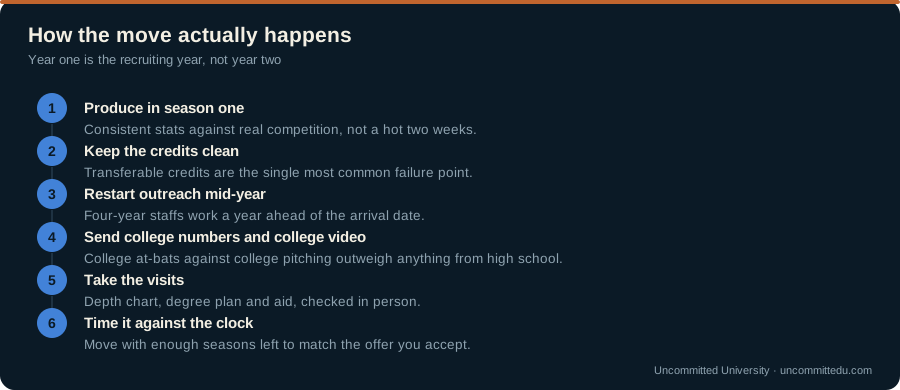
The steps below are how a JUCO to D1 move actually happens, in order.
A JUCO to D1 move is recruited a full year before it happens: the timeline is tighter than most players expect.
This isn’t a real player: it’s a composite scenario reflecting the pattern that shows up across programs.
A player goes unrecruited out of high school, or gets a single low-level offer he turns down to develop further. He enrolls at a JUCO, redshirts or plays limited innings as a freshman while adding strength, then has a full sophomore season with real, consistent stats. His JUCO coach makes a few direct calls to D1 assistants he knows. Combined with the player’s own outreach (email, stats, and film sent directly to programs with an actual roster need), he lands a D1 opportunity that never existed for him at 18.
The pattern holds across most successful JUCO-to-D1 moves: physical development, a full season of proof, a coach’s direct relationships, and the player’s own outreach, all working together, not any single one alone.
What to confirm with a JUCO program before you even enroll
If you’re choosing a JUCO with an eventual D1 move in mind, not every program offers the same path. Ask directly, before committing:
What’s the program’s actual transfer track record? Ask for real names and destinations, not a general claim of “we send guys up.”
Does the coaching staff have real D1 and D2 relationships? A coach who’s worked the phones for past players is worth more than facility upgrades.
What does the schedule look like? Playing a schedule with strong competition gives your stats more credibility with a D1 evaluator.
How does the program handle academics? Confirm which four-year schools have a track record of accepting this JUCO’s credits smoothly.
Timing the transfer right
Most JUCO-to-D1 moves happen after a full season of stats are available, giving coaches real data to evaluate. Enter the transfer conversation with updated numbers in hand, not projections.
The JUCO eligibility clock, in practical terms
There are two clocks running, they are set by different rulebooks, and mixing them up causes real problems on a JUCO to D1 move.
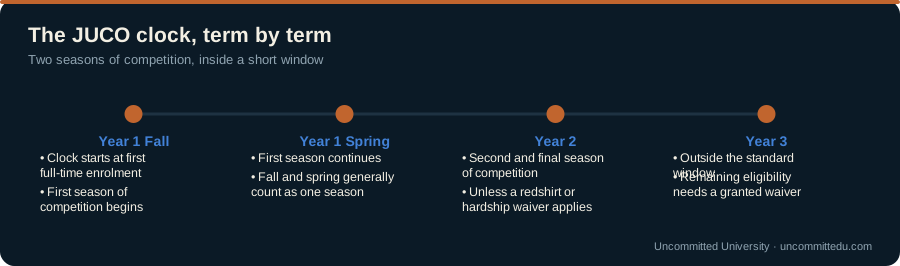
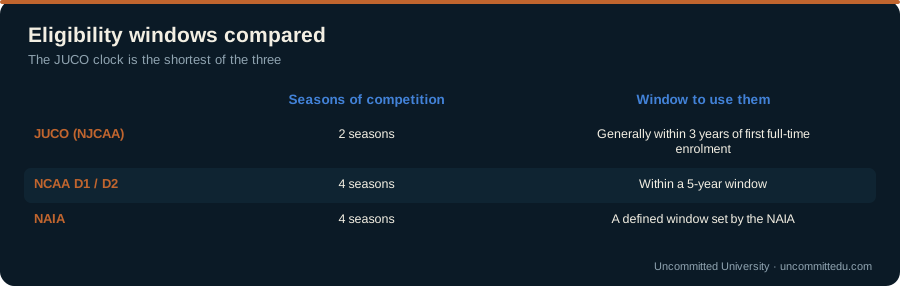
NJCAA eligibility is typically limited to two seasons of competition at the JUCO level, though redshirt and hardship situations can affect this. NJCAA rules are its own and were not part of the 2026 NCAA change.
Your NCAA clock starts at the JUCO, not at the four-year school. This is the biggest change to a JUCO to D1 move in years. NCAA Divisions I and II adopted an age-based eligibility model in 2026 (Division I in June, Division II in August) under which a five-year period of eligibility begins at your first full-time enrollment at any college. Both NCAA sources name junior colleges explicitly.
And that clock never pauses. It does not stop because you did not compete, transferred, sat out or took time away from the sport. Two years at a JUCO therefore spends two of the five, so a player arriving at a four-year school usually has about three calendar years left rather than four.
Credits matter as much as seasons. An NCAA school will evaluate your JUCO transcript directly; not every course transfers the way you expect.
Redshirting at the JUCO level is worth a direct conversation with your coach too. Sitting out a year to add strength and refine mechanics can turn a marginal prospect into a real D1 target, but it also uses up part of your limited JUCO eligibility window, so it’s a decision worth making deliberately, not by default.
Since 2026 it costs you twice. A redshirt year still exists under NJCAA rules, but it also spends a year of the NCAA five-year period that started the day you enrolled full time, and there is no NCAA redshirt left to recover it with. Divisions I and II eliminated athletics redshirt rules and medical hardship waivers along with seasons of competition. Only pregnancy, active-duty military service and official religious missions can pause that period now.
Common mistakes in a JUCO to D1 move
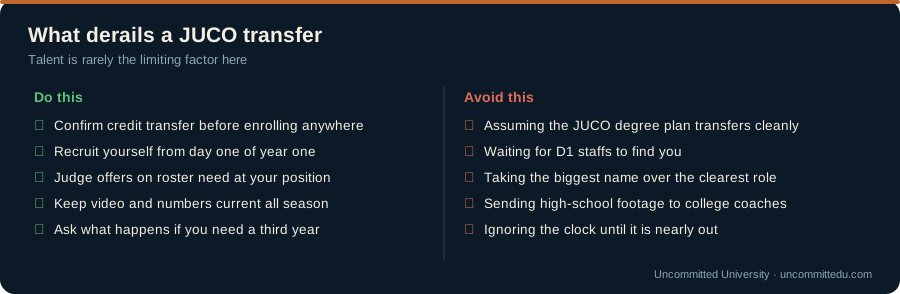
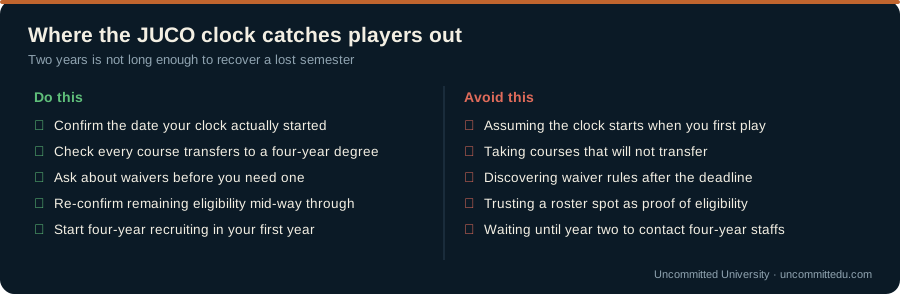
The checklist below covers what derails a JUCO to D1 move, and it is rarely the talent.
Most failed JUCO to D1 moves fail on paperwork and timing, not on talent.
Assuming one good stretch is enough. A full, consistent season matters more than a hot month.
Not confirming academic credit transfer early. This can affect both eligibility and your actual graduation timeline.
Waiting for coaches to find you. Direct outreach still matters as much as it did in high school.
Ignoring fit for the sake of a bigger name. A D1 program with no real need at your position leaves you buried on the depth chart. A D2 or NAIA program with a genuine need and real playing time is often the better move.
Underselling the JUCO coach’s role. His direct relationships and willingness to make calls can matter more than another highlight video.
The academic requirements that decide a JUCO to D1 move
Almost every conversation about going JUCO to D1 is about baseball. Almost every failure is about credits.
The move is governed by NCAA transfer requirements, and they turn on what you completed, not what you hit. A player putting up numbers with a transcript that will not transfer is not a Division I recruit, however he is playing.
The cleanest route is finishing your associate degree. A completed AA or AS at the junior college satisfies the most demanding version of the requirements and removes most of the argument.
Without the degree, you are into partial-qualifier and credit-count territory, where the specifics depend on your own status coming out of high school. That is exactly the situation where you need the compliance officer, not a forum thread.
The credits also have to be the right credits. Courses have to transfer into the receiving institution and count toward a degree there. A full transcript of courses that do not apply to any major at your target school is worth very little for a JUCO to D1 move.
This is why the advice to meet an academic adviser in your first month at junior college is not filler. By the time a Division I coach is genuinely interested, your transcript is largely written.
The recruiting timeline runs earlier than players expect too. Division I staffs are typically evaluating junior college players well before their sophomore season concludes, which means your first-year performance and your first-year transcript are both doing work.
A blunt point on level. The JUCO to D1 path is real and it is well travelled, but not every junior college player is a Division I player, and a good NJCAA Division I programme will tell you honestly where you sit.
Ask your junior college staff directly which level they see for you and which schools have actually called. A coach who has moved players before will answer specifically, with names.
And keep the four-year conversation going during the season rather than after it. The JUCO to D1 window is short, and the players who land well were already talking in the autumn.
Frequently asked questions about the JUCO to D1 transfer path
How long does a JUCO-to-D1 transfer usually take? Most moves happen after one or two full JUCO seasons, once a player has a real, current sample of stats and film for a D1 coach to evaluate.
Do D1 coaches actually watch JUCO games? Yes, especially in-season. Many D1 programs actively track JUCO rosters and stats, particularly at positions where they anticipate a roster need.
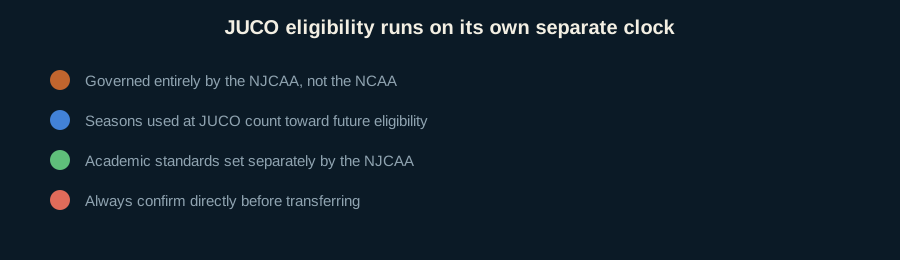
Does JUCO eligibility count against NCAA eligibility? JUCO competition runs on its own NJCAA clock, separate from the NCAA’s. Confirm your specific situation with both institutions before assuming how the two interact.
Is it better to transfer after one JUCO season or two? It depends on development and opportunity. A full season of strong, consistent stats is generally more valuable than transferring early on a partial or unproven sample.
Can a JUCO player transfer directly to a D2 or NAIA program instead of D1? Yes. The same JUCO development path leads to D2 and NAIA opportunities as often as D1, the right level depends on fit, not just ambition.
What’s the biggest mistake in a JUCO-to-D1 transfer? Waiting for coaches to find you. Direct outreach with current stats and film, backed by your JUCO coach’s relationships, matters as much here as it did in high school recruiting.
The short version: JUCO to D1 is a two-year plan with a hard deadline. Produce across a full season rather than a hot fortnight, keep every credit on a four-year degree track, and restart your own recruiting in year one. Time the move so the seasons you have left match the offer you take, and JUCO to D1 becomes a straightforward transfer rather than a scramble.
The short version
A JUCO to D1 move is decided by transferable credits and degree progress at least as much as by performance. Completing the associate degree is the cleanest route; without it, the requirements depend on your status out of high school.
Division I staffs evaluate junior college players earlier than most expect, so the first year counts on both the field and the transcript.
Uncommitted University tells JUCO players to meet the academic adviser in month one, because the JUCO to D1 path closes on paperwork far more often than on ability.
Knowing how to enter the transfer portal matters, because it is a formal process, not just a decision you make quietly. Get the steps wrong and you can lose time, eligibility, or both.
Quick answer: How to enter the transfer portal starts with notifying your current school, which triggers your name being entered into the NCAA’s database. This opens a contact window with other programs, governed by specific rules and timing that vary by situation.
Key takeaways
How to enter the transfer portal, in short: tell your staff, then compliance enters your name.
You cannot enter yourself: the compliance office does it.
How to enter the transfer portal differs by level; the NAIA and NJCAA do not use the NCAA portal.
Other programs generally cannot contact you before your name is in, and doing so is tampering.
Confirm what happens to your current aid before learning how to enter the transfer portal in practice.
Withdrawing is possible in some cases, so how to enter the transfer portal is not always a one-way door.
How to enter the transfer portal, step 1: talk to your coaching staff
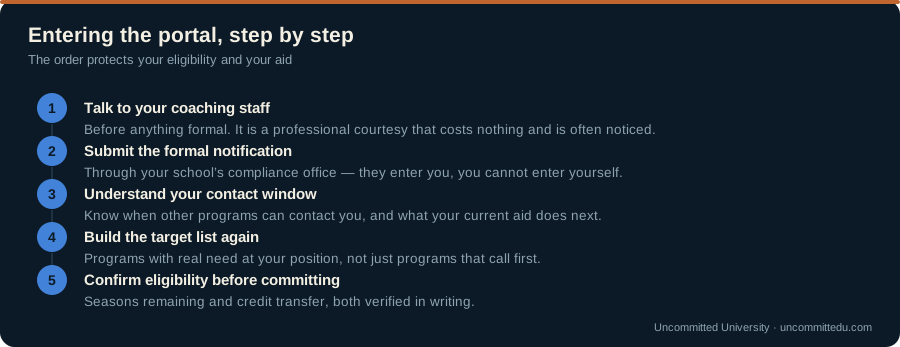
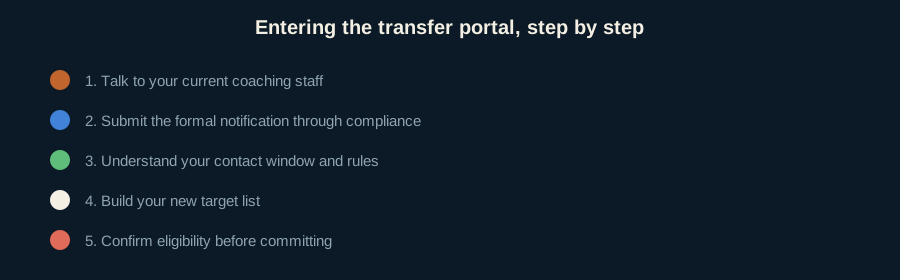
The diagram below summarises how to enter the transfer portal from first conversation to commitment.
The five steps below are how to enter the transfer portal, in the order they must happen.
How to enter the transfer portal in five steps: the formal notification is step two, not step one.
Most programs require or strongly expect a conversation before you enter the portal. This isn’t always comfortable, but it’s the normal first step and keeps the process professional.
Some players worry this conversation burns a bridge. In practice, coaches see transfers constantly and usually handle it professionally too.
Before that conversation, get clear on your own reasons: playing time, fit, a coaching change, or a development need somewhere else. A coach can help you more (with an honest reference, a direct introduction) if you’re straight with him about why you’re leaving.
Ask what a good landing spot looks like, in his opinion. Coaches often know programs and staffs personally, and can point you toward a real fit.
Ask whether he’ll speak to other coaches on your behalf. A coach-to-coach reference carries more weight than almost anything else in this process.
Ask about the actual process at your school. Some compliance offices move fast, others take longer: knowing this up front sets realistic expectations.
How to enter the transfer portal, step 2: submit the formal notification
Your school’s compliance office handles the formal step of entering your name into the transfer portal. This is an official NCAA process, not something you can do informally on your own.
How to enter the transfer portal, step 3: understand your contact window
Once entered, other programs can begin contacting you, within rules set by the NCAA. Specific windows and rules can vary by situation: confirm current details directly with a compliance office rather than relying on outdated information.
Before your name is in the portal, other schools generally can’t contact you directly: that’s considered tampering, and it’s taken seriously. Once you’re entered, that restriction lifts, and coaches or their staff can reach out.
Entering doesn’t happen instantly at the moment you ask. Your compliance office processes the paperwork, then your name appears in the database, typically within a short window, often a few business days, though this varies by school and time of year. Ask your compliance office for a specific timeline rather than guessing.
How the transfer process differs by level
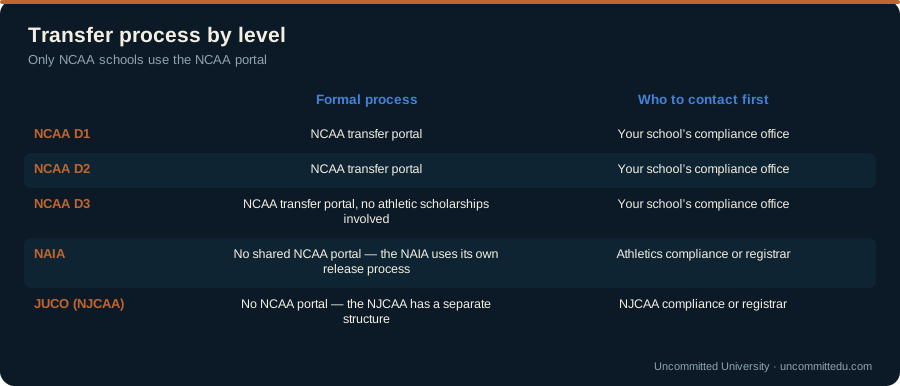
The table below shows how to enter the transfer portal at each level, including the two that do not use it.
How to enter the transfer portal depends on the level: the NAIA and NJCAA do not use the NCAA portal at all.
“The transfer portal” specifically refers to the NCAA’s database, which covers D1, D2, and D3. NAIA and JUCO programs handle transfers differently.
Level
Formal process
Immediate eligibility norm
Who to contact first
NCAA D1
NCAA transfer portal
Common via the one-time transfer exception
Your school’s compliance office
NCAA D2
NCAA transfer portal
Common via the one-time transfer exception
Your school’s compliance office
NCAA D3
NCAA transfer portal (no athletic scholarships involved)
Common, with no scholarship funds to negotiate
Your school’s compliance office
NAIA
No shared NCAA portal: NAIA schools use their own release and eligibility process
Rules differ from the NCAA: confirm directly with the NAIA school
Athletics compliance or registrar
JUCO (NJCAA)
No NCAA portal: NJCAA has a separate transfer and eligibility structure
Governed by NJCAA rules, on a distinct eligibility clock
NJCAA compliance or registrar
If you’re moving between levels (JUCO to NCAA, or NCAA to NAIA) you’re dealing with two different systems, not one. Confirm both sides directly rather than assuming the NCAA portal process applies everywhere.
This matters most for players considering a JUCO-to-D1 move or a shift toward NAIA for more scholarship flexibility: the paperwork, timing, and even the vocabulary (“release” versus “portal entry”) differ enough that assuming your first experience applies the second time around is a common, avoidable mistake.
How to enter the transfer portal, step 4: build your target list again
Treat this like recruiting the first time: build a real target list, not just a handful of dream schools. Use your current college stats and film, which now carry real weight.
Research programs with an actual roster need at your position
Confirm academic transfer credit before assuming a smooth transition
Reach out directly with your updated profile and film
What to actually say when you reach out to a coach
The same direct-outreach approach that worked in high school recruiting works here, with a few portal-specific adjustments:
Lead with your status. Say clearly that you’re in the transfer portal and eligible to be contacted: coaches get a lot of outreach and need this upfront.
Lead with current-level stats, not high school numbers. A coach evaluating a transfer wants to know how you performed against college pitching or hitters, not what you did at 17.
Name the specific need you’d fill. “I saw your program lost a starting middle infielder” reads very differently than a generic “I’m interested in your program.”
Keep it short. One clear paragraph with stats, position, and a link to video and your profile beats a long story about why you’re leaving.
Follow up once, professionally. Coaches are busy during the portal window. A single, polite follow-up after a week or two is normal, repeated messages aren’t.
What a new coach will actually want to know
Beyond stats and film, coaches recruiting a transfer are evaluating things a highlight reel doesn’t show:
Why you’re actually leaving. Be honest and specific. “I wasn’t getting consistent innings” is a fair answer. Vague or negative answers about a previous program raise questions.
How you’ll fit the current roster and culture. A coach is thinking about chemistry, not just talent, especially adding a player mid-career.
Your academic standing. Grades and credits matter for a transfer just as much as for a freshman recruit, sometimes more, since credit transfer can be complicated.
Whether you’ll actually commit if offered. Coaches recruiting transfers are often filling one specific need fast, and want a realistic read on your interest level, not a player weighing five offers indefinitely.
Update your profile before you enter the portal
Make it easy for a new coach to evaluate you fast with current stats and film.
Yes. Entering the portal isn’t a one-way door. A player can withdraw and return to their original team, though the exact process and deadlines depend on the school and the specific circumstances.
Withdrawing doesn’t always mean a smooth landing back on the same roster: scholarship money and roster spots can already be committed elsewhere in the meantime. Talk to your current coaching staff directly and as early as possible if withdrawal becomes a real option, rather than assuming your old spot is guaranteed to still be there.
What happens to your scholarship when you enter the portal
Entering the portal by itself doesn’t automatically cancel a current athletic scholarship, but the details depend heavily on your specific school’s policy and the timing relative to the academic year.
Ask directly, before you enter, what your current school’s policy is on scholarships for players who enter the portal.
Get any agreement in writing. A verbal assurance from a coach isn’t the same as a signed document from the financial aid or compliance office.
Confirm the timing. Some scholarship decisions are tied to specific dates in the academic calendar, not just the moment you enter the portal.
How to enter the transfer portal, step 5: confirm your eligibility
Before accepting anywhere new, confirm exactly what eligibility you have left and how your credits transfer academically. Both your current and new school’s compliance offices should confirm this in writing.
In Divisions I and II that is no longer a count of seasons. It is a date. The NCAA adopted an age-based eligibility model in 2026 (Division I in June, Division II in August), replacing seasons of competition with a single five-year period. It starts at the earlier of your first full-time enrollment at any college, junior colleges included, or the start of the regular academic year after your 19th birthday.
That matters to a transfer more than to anyone else, because the clock does not stop while you move. The NCAA is explicit: the five-year period runs continuously and does not pause because a student-athlete does not compete, transfers, sits out, changes teams or takes time away from participation. A sit-out year is not free any more, and there is no redshirt left to spend: athletics redshirt rules and medical hardship waivers went with the same legislation. That one fact should shape how to enter the transfer portal and, more importantly, when.
So plan how to enter the transfer portal around a calendar rather than a seasons tally. Division III, the NAIA and the NJCAA were not part of the change and still count seasons their own way, which is exactly the mismatch a cross-level move creates.
Academic credit transfer: what to actually check
Eligibility and academic credit are related but separate questions, and it’s easy to confirm one and assume the other is fine.
Which specific credits transfer. Not every course transfers one-to-one between schools, especially between different degree programs.
How transferred credits affect your graduation timeline. Losing credits in a transfer can add a semester or more you didn’t plan for.
Whether your new major is even offered. A transfer that doesn’t support your intended major creates problems well beyond baseball.
Who at the new school owns this conversation. Ask for a specific academic advisor or registrar contact, not just a general assurance from the coaching staff.
None of this is a reason to avoid transferring. It’s a reason to get it confirmed by the people who actually handle it, before you commit.
Common mistakes with how to enter the transfer portal
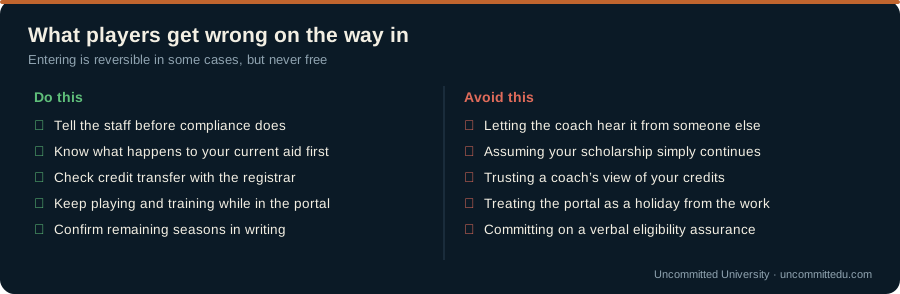
The checklist below covers what players get wrong about how to enter the transfer portal.
Knowing how to enter the transfer portal includes knowing what it costs you the moment you do.
Entering without a plan. Have a realistic target list ready, not just an exit strategy.
Assuming interest equals an offer. Contact from a program doesn’t guarantee a roster spot or scholarship.
Skipping the eligibility check. Confirm your remaining seasons before committing anywhere.
Burning a bridge unnecessarily. An unprofessional exit follows you: college baseball is a small world, and coaches talk to each other.
Going public before it’s official. Posting about a transfer before your name is actually entered can create confusion and put your current coach in an awkward spot.
What your school can and cannot do when you enter the portal
The fear that stops most players is the same one: what if my school blocks me, or punishes me for asking?
Here is the reassuring half. Your school cannot refuse to enter you. Once you submit a written notification of transfer, the institution is required to enter your name into the database within two business days. There is no approval step, and a coach does not get a veto.
That was the entire point of the portal replacing the old permission-to-contact system. Learning how to enter the transfer portal is now an administrative process, not a negotiation.
Now the half that people do not tell you. Your school is not required to keep holding your roster spot or your athletic aid beyond the current term.
That is the actual risk, and it is why how to enter the transfer portal is a decision to make with information rather than in frustration after a bad weekend.
Entering does not oblige you to leave. Players withdraw and stay every year. But the relationship rarely returns to exactly what it was, and you should assume your spot is genuinely in play.
Entering also does not mean anybody will call. The portal is a list, not a marketplace with buyers waiting. Hundreds of names appear at once, and coaches work it with the same limited time they give everything else.
The players who land well almost always did the work before entering, not after. They had conversations, they knew of real interest, and the portal entry was the formality that unlocked it.
There is also a timing dimension. Transfer windows are specific periods rather than a year-round option, and they are set by sport. Missing your window can cost you a year, so confirm the current dates for baseball with your compliance office before you plan anything.
Practical sequence, then. Talk to people you trust. Find out whether real interest exists. Understand what happens to your aid at the end of the term. Confirm the window. Then submit the written notification.
Doing it in that order is the whole difference between a transfer and a gap year.
Frequently asked questions about how to enter the transfer portal
Do I need my coach’s permission to enter the transfer portal? No formal permission is required to enter, but most programs expect a conversation first, and skipping it can create unnecessary friction with a coach whose reference you may still want.
How long does it take to actually enter the portal? The compliance paperwork itself is usually quick, but processing time varies by school. Ask your compliance office for a specific timeline rather than assuming it happens the same day.
Can I talk to other coaches before I officially enter the portal? Generally no: contact from other schools before your name is entered is treated as tampering under NCAA rules. Confirm the exact boundaries with your compliance office.
Does entering the portal cancel my scholarship? Not automatically. Scholarship policy for players who enter the portal varies by school: get your specific school’s policy confirmed in writing before you enter.
Can I change my mind after entering the portal? Yes, withdrawing is possible, though your original roster spot and scholarship aren’t guaranteed to still be available depending on timing and what’s already been committed elsewhere.
What’s the most common mistake players make entering the portal? Entering without a real target list ready. Having a plan for where you actually want to land matters as much as the decision to leave.
Does entering the transfer portal pause my eligibility clock? No. In Divisions I and II the five-year period runs continuously and does not pause because you transfer, sit out, change teams or stop competing. Only pregnancy, active-duty military service and official religious missions can pause it. Plan how to enter the transfer portal around that calendar: a year spent moving is a year spent.
The short version: how to enter the transfer portal is five steps, and the order protects both your eligibility and your aid. Talk to your staff first, let compliance submit the notification, understand your contact window, rebuild your target list properly, and confirm eligibility and credit transfer in writing before committing anywhere. Done in that sequence, how to enter the transfer portal stops being the risky part of a transfer and becomes the administrative part.
The short version
How to enter the transfer portal: submit written notification to your compliance office, and the school must enter you within two business days. It cannot block you, but it can stop holding your roster spot and your aid after the current term.
Entering does not guarantee interest. The portal is a list, not a recruiting service.
Uncommitted University advises establishing real interest before you learn how to enter the transfer portal in practice, because the players who land well had those conversations first.
Confirm the current baseball transfer window with your compliance office before anything else. Knowing how to enter the transfer portal is of no use in a month when the window is shut.
And keep playing well while you wait. The most common mistake after deciding how to enter the transfer portal is mentally leaving before the season ends, which costs you exactly the film a new school wants to see.
The college baseball transfer portal isn’t just for players who made a mistake picking a school. It’s become a normal, legitimate part of how rosters get built at every level.
This guide covers exactly how it works, the rules, the paths, and the real routes players actually use to end up somewhere better.
Quick answer: The college baseball transfer portal is a formal process for entering your name as available to transfer, with specific windows and NCAA rules governing contact and eligibility. JUCO-to-D1, grad transfers, and walk-on-to-scholarship moves are all common, legitimate paths, not signs something went wrong.
Key takeaways
The college baseball transfer portal is an NCAA database recording your intent to transfer.
Entering the baseball transfer portal starts a process, it does not guarantee a new home.
Three routes run through the baseball transfer portal conversation: JUCO-to-D1, grad transfer and walk-on conversion.
The baseball transfer portal has specific windows, and the timing shapes every option.
Credits that do not transfer cost a year the depth chart never will.
What the baseball transfer portal actually is
The baseball transfer portal is a formal NCAA database where a player’s intent to transfer gets recorded, opening the door for other programs to contact them. Entering the portal doesn’t guarantee a new home, it starts the process.
Rules on timing, contact, and eligibility are set by the NCAA, and specific windows apply depending on your sport and situation.
Two separate clocks matter here: your NCAA eligibility clock and your transfer portal window, the specific period your sport allows for entering. Missing your window can mean waiting for the next one, so timing matters as much as the decision itself.
The first of those two changed in 2026, and it changed in the way that matters most to a transfer. NCAA Divisions I and II replaced seasons of competition with a single five-year period of eligibility: Division I in June 2026, Division II in August. It starts at your first full-time enrollment at any college, junior colleges included, or the academic year after your 19th birthday, whichever is earlier.
Then it runs continuously. The NCAA is explicit that it does not pause because a student-athlete does not compete, transfers, sits out, changes teams or takes time away from participation. So a year spent in the baseball transfer portal is a year off the clock, and there is no redshirt left to buy it back, athletics redshirt rules and medical hardship waivers were eliminated by the same legislation. Division III, the NAIA and the NJCAA still count seasons their own way.
Contact rules also depend on who initiates. Once a player enters the portal, other coaches can generally reach out, but a coach contacting a player who hasn’t entered yet, or outside the allowed window, can create real compliance problems for both sides.
The one-time transfer exception
Most undergraduate players get one transfer where they can compete immediately at their new school, without sitting out a year. This is commonly called the one-time transfer exception.
A second undergraduate transfer can still work, but it typically requires a waiver, and approval isn’t automatic. Rules here have shifted more than once in recent years. Confirm your specific situation with both your current and prospective compliance offices before assuming a second move is free.
This is one more reason a rushed, undisciplined transfer decision is risky. Using your one clean transfer on the wrong fit leaves a much harder path if you need to move again.
Why players enter the baseball transfer portal
Playing time. A deep roster at one program can mean a bigger role somewhere else.
Fit. Academic, social, or coaching-style fit sometimes doesn’t work out as expected.
Development path. A JUCO player who’s grown physically may be ready for a bigger opportunity.
A coaching change. New staff sometimes means a different system or a different role for existing players.
None of these are failures. They’re normal parts of how careers actually progress.
Common baseball transfer portal myths, debunked
Myth: entering the portal means you’re leaving no matter what. Not true. Entering starts the process; a player can still return to the original program in many cases, depending on scholarship and roster decisions already made.
Myth: coaches only want portal players with big numbers already. Fit, role, and roster need matter as much as stats. A player who fills a specific gap can beat a bigger name who doesn’t fit the need.
Myth: the portal is only for players who are unhappy. Plenty of transfers are about opportunity, not conflict: a bigger role, a better academic fit, or a coaching change that opens a new door.
Myth: once you’re in the portal, offers show up automatically. They don’t. Programs still have to notice you, and direct outreach from the player matters as much as it did in high school recruiting.
Myth: transferring always costs a year of eligibility. For most undergraduate players using their one-time exception, that’s no longer the case. Confirm your own situation directly rather than assuming an old rule still applies.
Is the college baseball transfer portal the same at every level?
Short answer: no, and eligibility is where the differences bite hardest. If D2 is on your list, read the D2 eligibility rules before you enter the portal, not after.
No. What most people mean by the college baseball transfer portal is the NCAA’s system, and it covers Division I, Division II and Division III. The NAIA and the NJCAA are separate governing bodies that run their own transfer processes instead.
That distinction decides which rules apply to you. Before you assume a window or a waiver is relevant, confirm which body governs your current school and which one governs the school you want.
NCAA D1, D2 and D3: the college baseball transfer portal proper. You notify your current school, and its compliance office enters your name into the database.
NAIA: no shared NCAA portal. NAIA schools run their own release and eligibility process, so start with that school’s compliance office or registrar.
JUCO (NJCAA): separate again, on its own eligibility structure. A JUCO player moving up to a four-year program follows NJCAA release rules, not NCAA portal windows.
One thing holds across all three systems: nobody is obligated to recruit you because you entered. The paperwork only makes you available. The next roster spot still comes from fit, need and film.
Entering the portal involves notifying your current school, which triggers your name being entered, and generally opens a specific contact window with other programs. Rules and timing details matter, and specifics shift. Confirm the current process directly with your compliance office before starting.
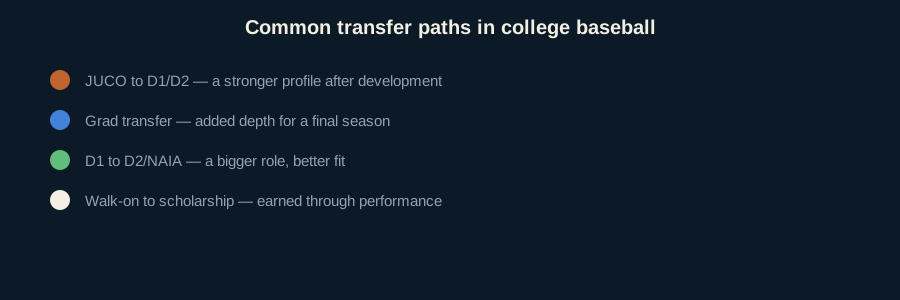
The diagram below maps the routes through the baseball transfer portal.
JUCO-to-D1 transfers
One of the most common and successful transfer paths in college baseball. A strong JUCO season with real stats and film often makes a player a more attractive recruit than they were out of high school.
A player who’s completed their undergraduate degree with remaining eligibility can transfer as a grad transfer, often with immediate eligibility to compete, a path used to add experienced depth for a final season.
Not every transfer story starts with a scholarship. Plenty of players walk on, earn a role through performance, and get scholarship money later, sometimes at the same school, sometimes after transferring to a program that noticed.
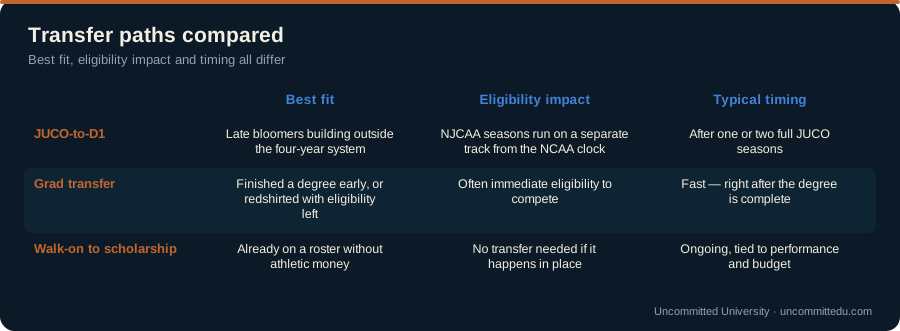
The table below compares the three baseball transfer portal paths on fit, eligibility and timing.
Three routes run through the baseball transfer portal conversation, and they suit very different players.
JUCO-to-D1, grad transfer, and walk-on-to-scholarship solve different problems. Here’s how the three stack up side by side.
Path
Best fit
Eligibility impact
Typical timing
Key requirement
JUCO-to-D1
Late bloomers building strength and stats outside the four-year system
NJCAA seasons run on a separate track from the NCAA clock
Usually after one or two full JUCO seasons
Consistent in-season stats and film, academic credits confirmed
Grad transfer
Players who finish a degree early, or banked a season under the pre-2026 rules, with time left on the five-year clock
Often immediate eligibility to compete at the new school
Fast-moving, typically right after the degree is complete
Bachelor’s degree finished, accepted into a grad program at the new school
Walk-on-to-scholarship
Players already on a roster without an athletic scholarship
No transfer needed if it happens in place
Ongoing | tied to performance and roster or budget openings
Sustained performance over a season or more
None of these paths is “better” in the abstract. The right one depends on where a player actually is: physically, academically, and on the roster.
How each path actually plays out
These aren’t real players: they’re composite scenarios reflecting how each path typically works, based on patterns that show up across programs.
JUCO-to-D1 example: A player goes unrecruited out of high school, plays two seasons at a JUCO program, adds real velocity and strength, and posts a full season of solid stats. A D1 program with a roster need at his position reaches out directly after seeing his in-season numbers.
Grad transfer example: A player finishes a four-year degree in three and a half years. That leaves well over a year on his five-year period, so he transfers to a program that lost a starter to graduation and steps into an everyday role immediately. Under the age-based rules, finishing the degree early is what creates this move, not a year on the bench.
Walk-on-to-scholarship example: A player walks on, doesn’t see the field much as a freshman, but keeps grinding in practice. By his sophomore year an injury opens a spot, he takes it and performs, and the program moves him onto scholarship the following year.
The common thread in all three: the player kept performing and stayed ready before the opportunity opened, rather than waiting for it to show up first.
Baseball transfer portal timing considerations that affect every path
Every timing call here sits on top of your five-year clock, and under the 2026 age-based rules that clock starts the academic year after you turn 19. The full breakdown is in our NCAA age limit guide.
Every one of these paths is sensitive to timing, even though the details differ:
JUCO-to-D1 moves are strongest after a full, completed season of stats, not mid-season, when the sample size is too small to trust.
Grad transfers tend to move fast once eligibility is confirmed, since programs are usually filling an immediate, specific need rather than planning years ahead.
Walk-on-to-scholarship conversions happen on a slower, ongoing timeline, tied to a full season (or more) of proof, not a single standout outing.
Whichever path applies, the same rule holds: decisions made with a full season of real data behind them hold up better than decisions made on a hot week.
The calendar matters too, not just your own readiness. Grad transfers and walk-on conversions tend to cluster right after a season ends, when roster gaps become clear. A JUCO-to-D1 opportunity can open earlier, if an NCAA roster loses a player mid-cycle and a coach is scouting JUCO stats to fill the hole fast. Watching program news, not just your own stat line, can put you ahead of the timing.
Where NIL fits into baseball transfer portal decisions
Name, image, and likeness deals have added a real factor to transfer decisions at the highest levels, but they matter far less for most baseball transfers than headlines suggest.
For the large majority of players moving through JUCO, grad transfer, or walk-on paths, the actual value is playing time, fit, and development, not NIL money. Treat any NIL conversation as a bonus on top of a good roster fit, not the reason to pick a school.
If NIL does come up, confirm any agreement in writing and understand how it connects (or doesn’t) to your athletic scholarship, since the two are handled separately under NCAA rules.
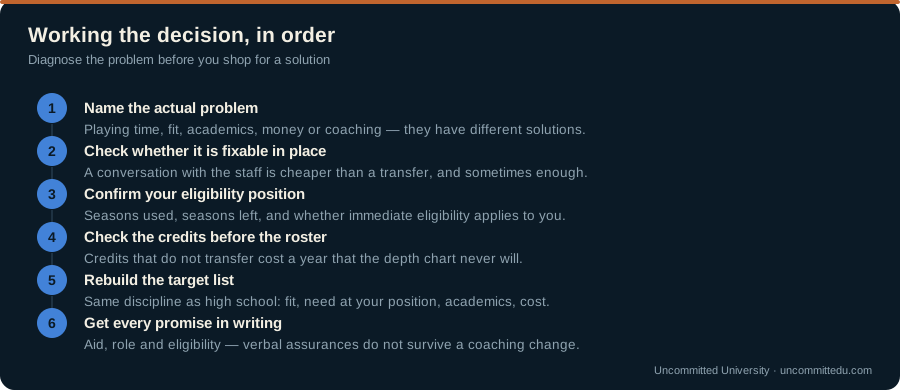
How to approach a baseball transfer portal decision
The steps below are the order to work a baseball transfer portal decision in.
Working the baseball transfer portal decision in this order keeps a bad season from turning into a worse move.
Get honest with yourself about why you’re transferring: playing time, fit, or opportunity
Build a target list the same way you did in high school, matched to your current level
Reach out directly to coaches, with your current stats and film front and center
Confirm your eligibility and academic transfer credit before committing anywhere
What to confirm before you commit
Before saying yes to a new program (through the portal or otherwise), get these confirmed in writing, not just in conversation:
Exact remaining eligibility. Get this from your current school’s compliance office, then have the new school confirm it independently.
Academic credit transfer. Ask specifically which credits transfer and which don’t: this affects both your eligibility clock and your actual graduation timeline.
Scholarship terms in writing. A verbal number in a phone call is not the same as an official offer. Get the real terms before you commit publicly.
Your actual role on the roster. Ask directly where you fit depth-chart-wise, not just whether there’s “a spot.”
The coaching staff’s stability. A coaching change can reset the exact reasons you transferred in the first place. Ask how long the current staff has been in place.
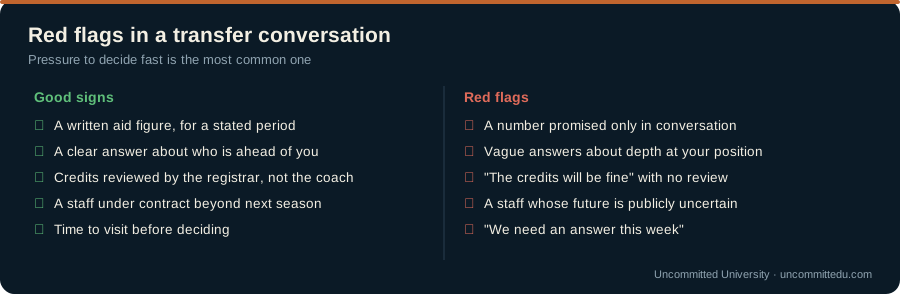
Red flags during a baseball transfer portal decision
The checklist below covers the baseball transfer portal signals worth slowing down for.
The baseball transfer portal rewards preparation and punishes urgency: these are the signals worth slowing down for.
A program recruiting you as a transfer wants you to say yes fast. A few warning signs are worth slowing down for:
Vague answers about playing time. “We’ll see how camp goes” isn’t the same as an honest depth-chart conversation. Push for specifics.
Pressure to commit before you’ve confirmed eligibility. A program that discourages you from checking with compliance first is asking you to skip a step that protects you, not them.
No clear answer on academic credit transfer. If the coaching staff can’t connect you with someone who can answer this, that’s a gap you’ll be stuck untangling later.
A roster that’s already deep at your position. Interest doesn’t mean need. Ask directly how many players you’re actually competing with.
Reluctance to put scholarship terms in writing. Any hesitation here is a reason to slow down, not speed up.
None of these automatically rule out a program. They’re just signals to ask more questions before you commit, the same discipline that served you well the first time you were recruited.
Frequently asked questions about the baseball transfer portal
When does the college baseball transfer portal open? It runs on defined windows rather than staying open year-round, and the NCAA sets those dates by sport. They can change from year to year, so confirm the current baseball window with your compliance office before you build a timeline around a date you read somewhere.
Does your coach have to approve a transfer portal entry? No. A coach does not get a veto. Once you submit a written notification of transfer, your school is required to enter your name, the permission-to-contact era ended when the portal replaced it. What a coach can still decide is your roster spot and your athletic aid for the following year.
How many times can a baseball player use the transfer portal? Most undergraduates get one transfer with a clear path to immediate eligibility. A second undergraduate transfer is possible but typically needs a waiver. Confirm your specific case with a compliance office.
Does entering the transfer portal guarantee a scholarship? No. Entering the portal opens the door for contact. A roster spot and scholarship money still have to be earned through fit, need, and performance.
Is the JUCO-to-D1 path different from a regular transfer? Yes. JUCO players fall under NJCAA rules and a separate eligibility structure than a player transferring between two four-year schools.
Do walk-ons need to use the transfer portal to earn a scholarship? No. Walk-on-to-scholarship conversion usually happens at the same school, without transferring, though a walk-on who isn’t getting a real shot may transfer elsewhere.
Can a grad transfer play immediately? Often yes, which is one of the biggest reasons programs recruit grad transfers, but this should still be confirmed directly with both compliance offices.
What’s the biggest mistake players make in the portal? Entering without a real target list ready. Contact from a program is not the same as an offer, and a rushed decision can use up a one-time transfer exception on the wrong fit.
The short version: the baseball transfer portal rewards preparation and punishes urgency. Name the actual problem before you shop for a solution, check whether it is fixable where you are, confirm your remaining seasons, and have the registrar (not a coach) review your credits. Get aid, role and eligibility in writing before you commit, because a verbal promise in the baseball transfer portal does not survive a coaching change.
The short version
The baseball transfer portal is an administrative database, not a recruiting service. You tell your school in writing that you want to transfer, and it has two business days to enter your name. Nobody is obligated to call you after that.
Entering the baseball transfer portal does not end your eligibility and does not force you to leave, but it does let your current school stop holding your roster spot or your aid, which is the risk nobody explains up front.
Uncommitted University advises players to have at least one real conversation with an interested program before entering the baseball transfer portal, not after.
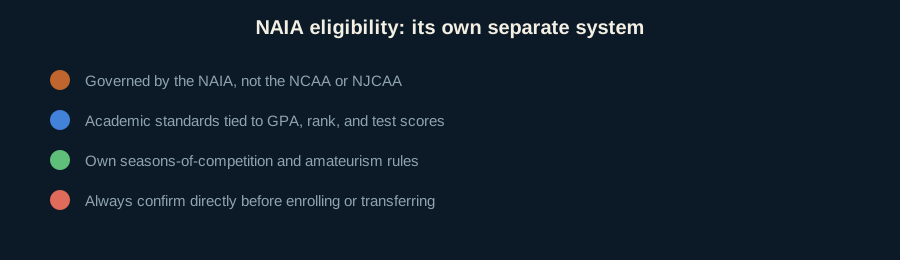
NAIA eligibility rules run on a separate system from both the NCAA and NJCAA. Assuming one set of rules applies across all three is one of the most common recruiting mistakes.
Quick answer: NAIA eligibility rules are governed entirely by the NAIA, with its own academic standards, amateurism rules, and seasons-of-competition system, separate from both the NCAA and NJCAA.
Key takeaways
NAIA eligibility rules use a two-of-three standard: GPA, class rank or test score.
NAIA eligibility rules are administered by the NAIA, not the NCAA Eligibility Center.
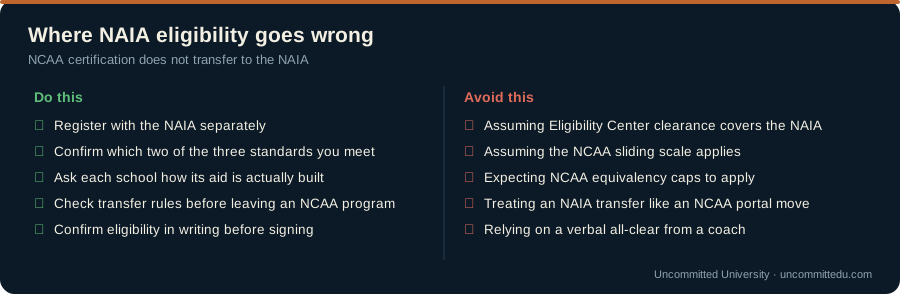
NCAA certification does nothing for you under NAIA eligibility rules. Register separately.
NAIA eligibility rules allow earlier, more direct coach contact than the NCAA.
NAIA eligibility rules include their own redshirt and amateurism provisions.
NAIA eligibility rules: how they are structured
The NAIA sets its own academic eligibility requirements, generally tied to a combination of high school GPA, class rank, and test scores, evaluated somewhat differently than the NCAA’s core-course system.
Confirm current specific requirements directly with the NAIA, since exact thresholds can shift and vary by circumstance.
The NAIA’s two-of-three eligibility rule, explained
NAIA freshman eligibility is commonly built around meeting at least two of three specific standards, rather than a single sliding scale like the NCAA uses.
A minimum GPA: commonly a 2.0 or higher on a 4.0 scale
A minimum class rank: commonly finishing in the top half of your graduating class
A minimum standardized test score: an ACT or SAT score at or above a set threshold
Meeting two of these three generally satisfies the initial academic eligibility standard. Exact thresholds are set and updated by the NAIA: confirm the current numbers directly rather than relying on an older chart.
Seasons of competition under NAIA eligibility rules
NAIA athletes have a set number of seasons of competition available within a defined window after enrolling, and that window is counted in terms of attendance, not in years. Those are two separate counters running at the same time, and they are pulled apart in full further down this page. The specifics (including redshirt-style provisions) are set by the NAIA, not the NCAA, and should be confirmed directly with a program’s compliance staff.
This is the point where NAIA eligibility rules and the NCAA stopped working the same way. NCAA Divisions I and II adopted an age-based eligibility model in 2026 (Division I in June, Division II in August) and that legislation deleted seasons of competition outright, replacing them with one continuous five-year period. Division III was not part of it. The NAIA still counts seasons and terms, so a remaining-seasons answer from a D1 or D2 compliance office no longer converts into an NAIA number.
The overview below shows how NAIA eligibility rules are structured.
Amateurism under NAIA eligibility rules
NAIA amateurism standards cover similar ground to the NCAA’s (professional contracts, prize money, and agent relationships can all affect eligibility) but the specific NAIA rules aren’t identical. Confirm your status through official NAIA channels rather than assuming NCAA rules transfer over.
NAIA redshirt rules: the redshirt provisions in detail
The NAIA allows redshirt-style development years, similar in concept to the NCAA version but governed by its own separate rules.
A player can typically practice and train with a team for a year without using a season of competition, as long as they don’t appear in official contests that count under NAIA rules. Medical hardship provisions also exist separately, following their own approval process.
Confirm the specific redshirt process directly with your program’s compliance office: the concept is familiar, but the NAIA’s specific rules aren’t identical to the NCAA’s.
The practical differences between NAIA redshirt rules and the NCAA version come down to three things.
What counts as using a season. Appearing in an official contest is what spends a season of competition. A year of practising, training and travelling with the team does not, and that is the whole mechanic behind NAIA redshirt rules.
What is actually being counted. NCAA Divisions I and II now run a single five-year calendar clock and count no seasons at all: the 2026 age-based model deleted seasons of competition, athletics redshirt rules and medical hardship waivers together. The NAIA still counts terms of attendance, so a redshirt year and a year away from school do not land the same way, covered in full further down this page.
Who approves it. In the NAIA, a medical hardship year has its own application and its own evidence requirements, a route D1 and D2 no longer offer at all. A standard development year is a roster decision. Do not assume an injury automatically converts into a preserved season.
The question worth asking a coach is not “will I redshirt?” It is “what would have to be true for me to compete as a freshman?” A staff with a real answer to the second question has a plan for you. A staff with only the first is managing a roster.
Then get the season count in writing each year. Under NAIA eligibility rules the record that matters is the school’s, not a recollection of what was said in the fall.
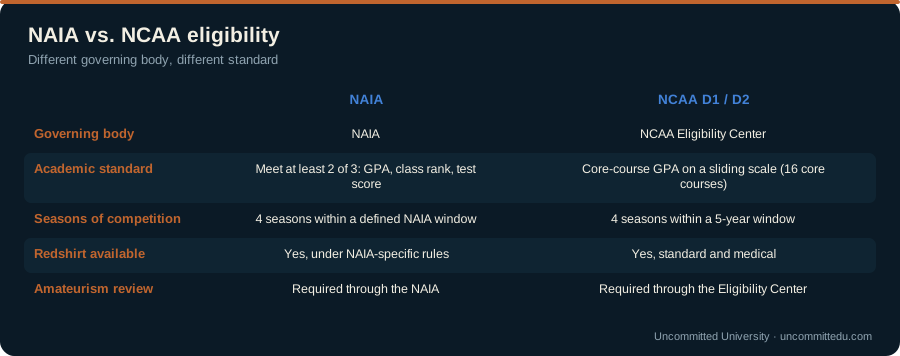
NAIA eligibility rules at a glance vs. NCAA
The table below sets NAIA eligibility rules against the NCAA equivalents.
NAIA eligibility rules and NCAA rules ask for different things → the two-of-three standard is the clearest split.
Feature
NAIA
NCAA D1 / D2
Governing body
NAIA
NCAA Eligibility Center
Academic standard
Meet at least 2 of 3: GPA, class rank, test score
Core-course GPA on a sliding scale (16 core courses)
Seasons of competition
4 seasons of competition, plus a separate cap on terms of attendance (10 semesters, 12 trimesters or 15 quarters) | two counters, neither of them a calendar clock
No seasons counted in D1/D2 | one continuous five-year period of eligibility under the age-based model (D1 June 2026, D2 August 2026). D3 was not part of that change.
Redshirt available
Yes, under NAIA-specific rules
No | the 2026 age-based model eliminated athletics redshirt rules and medical hardship waivers in D1 and D2
Amateurism review
Required through the NAIA
Required through the Eligibility Center
The two systems overlap in spirit but run entirely separately. Confirm your status directly with each governing body if you’re keeping both paths open.
Check your eligibility across every level
Confirm your standing under NCAA, NAIA, or JUCO rules in minutes.
Transfers between NAIA and NCAA schools are common, but eligibility doesn’t automatically transfer cleanly. Both the sending and receiving school’s compliance offices need to confirm exactly how seasons and academic standing carry over.
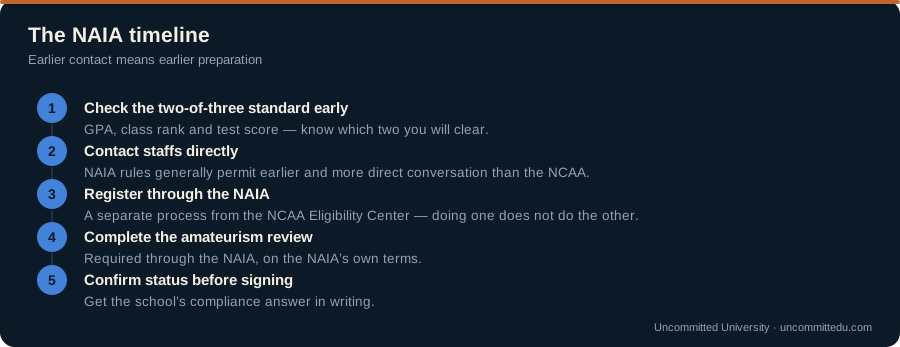
NAIA eligibility rules: transfer checklist
Confirm these directly with both the sending and receiving school’s compliance offices before transferring into or out of an NAIA program:
How many seasons of competition you have remaining under NAIA rules
Whether academic credits from your previous school transfer as eligible credit
Whether a redshirt year at your previous school affects your window under NAIA eligibility rules
Any NAIA-specific transfer waiting period that might apply to your situation
None of this carries over automatically just because you’re moving between two athletic programs. Confirm every point directly before assuming your eligibility transfers cleanly.
NAIA and JUCO: how the two interact
Players moving between JUCO and NAIA programs need to confirm eligibility both directions: seasons used at a JUCO generally count against total NAIA eligibility, the same way they count against NCAA eligibility.
See the JUCO eligibility clock rules guide for how that system’s shorter window works, and confirm directly with an NAIA program’s compliance office exactly how JUCO seasons transfer into their system.
NAIA scholarships and NAIA eligibility rules
Scholarship money at NAIA programs isn’t automatically tied to eligibility status the way some families assume: a redshirt year or a still-pending amateurism review doesn’t necessarily threaten aid already offered.
NAIA scholarship rules and limits vary by sport and by conference more than some families expect. Confirm directly with your specific program how aid is structured, and whether anything about your eligibility timeline affects it.
Common misconceptions about NAIA eligibility rules
“NAIA eligibility is easier than NCAA.” It’s different, not necessarily easier, the two-of-three standard has its own real thresholds.
“My NCAA core-course GPA automatically satisfies NAIA requirements.” The two systems evaluate academics differently: confirm both separately if you’re keeping multiple paths open.
“NAIA doesn’t have amateurism rules.” It does, administered separately from the NCAA’s.
“Redshirting works exactly the same as in the NCAA.” The concept is similar, but NAIA redshirt rules are its own.
Most of these misconceptions come from assuming NCAA rules simply apply everywhere. They don’t. Confirm NAIA-specific requirements directly.
How coaches at NAIA programs evaluate recruits and transfers
NAIA coaches, like coaches at any level, look past the two-of-three academic standard to build a full eligibility picture before recruiting seriously.
Whether a recruit’s academic record clearly satisfies at least two of the three NAIA standards, not just one
How many seasons of competition a transfer has remaining, and from which level
Whether amateurism status has already been confirmed, or is still pending review
A recruit or transfer who can answer these questions immediately moves faster through a program’s recruiting process than one who needs to check.
This applies whether you’re a fresh high school recruit or a transfer coming from JUCO, NCAA, or another NAIA program, the specifics differ, but the expectation of a clear, confirmed answer doesn’t.
Building your timeline around NAIA eligibility rules
The steps below sequence NAIA eligibility rules across a recruiting year.
NAIA eligibility rules allow earlier contact, which moves the whole timeline forward compared with the NCAA.
Freshman/sophomore year: Track GPA and class rank alongside any standard high school academic planning: no NAIA-specific registration is required this early.
Junior year: Take standardized tests if you haven’t already, since test scores are one of the three eligibility standards.
Senior year: Confirm your final GPA, class rank, and test score picture directly against NAIA standards with any program recruiting you.
Before enrolling: Complete the NAIA’s own eligibility and amateurism paperwork through the school you’re committing to.
Because NAIA eligibility rules run through the school rather than a single national account you register for years in advance, the process is generally lighter, but it still needs to be confirmed, not assumed.
Deciding between NAIA and NCAA: what actually matters
Families sometimes treat NAIA as a fallback rather than a legitimate first choice, which isn’t accurate for every situation.
Roster size and playing time can be more favorable at some NAIA programs than at a bench role in a larger NCAA program
Scholarship distribution works differently: NAIA programs sometimes have more flexibility in how aid is divided across a roster
Competition level varies widely within NAIA, just as it does within NCAA divisions: research the specific conference, not just the level
The right level is the one that matches a player’s actual development needs and playing-time goals, not just the name recognition of the governing body.
Common mistakes with NAIA eligibility rules
The checklist below covers where NAIA eligibility rules go wrong most often.
Most NAIA eligibility rules problems start with an assumption imported from the NCAA rulebook.
Assuming NCAA eligibility rules apply. NAIA runs its own separate system entirely.
Not confirming academic requirements early with the specific NAIA school, since standards can vary.
Skipping compliance confirmation when transferring in or out of an NAIA program.
Questions to ask an NAIA program directly
What academic standards does this specific school use for eligibility?
How many seasons of competition would I have remaining here?
Does a redshirt-style option exist, and how has it worked for past players?
What does the amateurism review process look like for incoming recruits?
Getting clear answers directly from the school avoids surprises after you’ve already committed.
What to confirm before signing with an NAIA program
Before signing, confirm these directly with the program’s compliance office, not just the coaching staff:
Your specific academic eligibility status under the two-of-three standard
Your amateurism status, fully cleared rather than pending
Exactly how many seasons of competition you’ll have remaining once enrolled
Whether any prior JUCO, NCAA, or international competition affects your standing
A program that answers these clearly and specifically is also showing you how organized its compliance operation is, which matters well beyond signing day.
International student-athletes and NAIA eligibility rules
International players pursuing NAIA eligibility go through additional transcript and coursework evaluation to confirm their academic record satisfies the two-of-three standard.
Standardized test requirements and class rank documentation can look different outside the U.S. school system, so confirm directly with the NAIA and the specific school how your academic record will be evaluated. Don’t assume it maps over automatically.
Starting this evaluation early matters even more for international players, since document translation and verification steps generally take longer than a standard domestic review.
How NAIA eligibility rules count time differently
The single most useful thing to understand about NAIA eligibility rules is that they measure your career in terms of attendance, not in a five-year clock.
NAIA eligibility rules run two counters at once, and you have to clear both. Earlier on this page you read that an NAIA athlete gets four seasons of competition within a defined window. Here you are reading that the NAIA counts terms of attendance rather than years. Both are correct, because they are not the same counter:
Counter one: seasons of competition. Four of them. A season is spent by appearing in an official contest, and eligibility for each one is gated by the NAIA’s progress rule, which checks that you are still moving toward a degree.
Counter two: terms of attendance. The “defined window” is not a calendar. It is a cap on how many full-time terms you may attend: 10 semesters, 12 trimesters or 15 quarters, per the NAIA interpretations repository. A term is spent by enrolling full time, whether or not you play.
So the two can run out at different times. You can have seasons left and no terms, or terms left and no seasons, and only one of those is the answer to “how much eligibility do I have”. What consumes a season is competing. What consumes a term is enrolling full time. Neither of them is the calendar running in the background, which is the real difference from the NCAA: Divisions I and II now run a single counter and it is a calendar.
That difference matters enormously to a specific kind of player: one who took time away, started late, or had a year that went badly. Under NAIA eligibility rules, time you were not enrolled generally does not count against you the same way.
The 2026 rule change made that contrast sharper, not smaller. In NCAA Divisions I and II one five-year period now starts at the earlier of two events (your first full-time enrollment at any college, junior colleges and international schools included, or the start of the regular academic year after your 19th birthday) and then runs continuously.
It does not pause because you did not compete, transferred, sat out or stepped away from the sport. Only pregnancy, active-duty military service and official religious missions can delay or pause it, and the Eligibility Center administers all three. NAIA eligibility rules were not part of that legislation and neither was NCAA Division III, which is why the same player can now get two very different answers from two compliance offices.
The continuing-eligibility requirements are built around credit hours rather than a single admissions gate. In broad terms you must be enrolled full time to compete, accumulate a required number of credit hours before each subsequent season, and hold a minimum cumulative GPA.
Those requirements tighten as you progress, which is deliberate: the NAIA is checking that you are moving toward a degree rather than simply staying enrolled.
The entry standards are generally more flexible than the NCAA equivalents. That is the practical reason NAIA eligibility rules matter so much to players whose high school offered few NCAA-approved core courses, or whose academic record improved late.
Transfers are the other area where the NAIA is markedly less restrictive. Moving into the NAIA from an NCAA or junior college programme is typically far simpler than moving between NCAA institutions, which is why NAIA rosters absorb so many transfers each year.
One process point that families miss completely: you register with the NAIA Eligibility Center, which is a separate organisation from the NCAA Eligibility Center. An NCAA registration does nothing for you here. Different account, different fee, different determination.
And because the NAIA is a smaller association, the compliance officer at the individual school is genuinely the right person to ask. NAIA eligibility rules leave real discretion at institutional level, and the answer for your situation may not be the answer on a forum.
Get it in writing before you enrol, not after.
Frequently asked questions about NAIA eligibility
How do NAIA redshirt rules differ from NCAA redshirt rules? As of 2026 there is no NCAA redshirt left to compare against in Divisions I and II. The age-based model deleted athletics redshirt rules and replaced seasons of competition with one five-year clock that runs continuously. The NAIA kept its redshirt-style provisions and still counts terms of attendance. Confirm the specifics with the NAIA program compliance office rather than carrying an NCAA assumption across.
Does a redshirt year still count as a term of attendance? Those are two separate counters. A redshirt year preserves a season of competition, but you are enrolled full time during it, and NAIA eligibility rules track enrollment as well as competition. Ask the compliance office how a redshirt year lands on both counters before you plan around it.
What is the NAIA’s two-of-three eligibility rule? Freshman academic eligibility is generally based on meeting at least two of three standards: a minimum GPA, a minimum class rank, and a minimum standardized test score.
How many seasons of competition does an NAIA athlete get? Generally four seasons of competition, within a window defined by the NAIA. That used to mirror the NCAA. It no longer does: Divisions I and II moved to an age-based five-year clock in 2026 and count no seasons at all, so carry no NCAA assumption across.
Can an NAIA athlete redshirt? Yes. The NAIA allows redshirt-style development years under its own rules, distinct from NCAA redshirt provisions.
Does NAIA eligibility transfer automatically to an NCAA program? No. Both the sending and receiving school’s compliance offices need to confirm how seasons and academic standing carry over.
Are NAIA academic standards the same as NCAA core-course requirements? No. The NAIA uses its own GPA, class rank, and test score standards rather than the NCAA’s core-course sliding scale.
Does the NAIA have its own amateurism rules? Yes. NAIA amateurism standards cover similar ground to the NCAA’s but are administered entirely separately: confirm your status through official NAIA channels.
The short version: almost every problem with NAIA eligibility rules starts with an assumption carried over from the NCAA rulebook. Register through the NAIA separately, confirm which two of the three academic standards you clear, and get your status in writing from the school before signing. Treated on their own terms, NAIA eligibility rules are generally lighter than the NCAA process, not harder.
Because the NAIA counts terms of attendance rather than calendar years, it is the single biggest of the 11 extra eligibility paths we verified across every association.
The short version
NAIA eligibility rules run two counters (four seasons of competition and a separate cap on terms of attendance) rather than a five-year calendar clock, and they are generally more flexible than the NCAA equivalents on entry, transfer and academic history.
You must register with the NAIA Eligibility Center separately. An NCAA registration does not carry across.
Uncommitted University advises confirming NAIA eligibility rules with the compliance officer at the specific school, because the association leaves genuine discretion at institutional level.
A closing point that is easy to miss. Because NAIA eligibility rules are more forgiving on entry, players sometimes treat the continuing requirements casually, and those are not lenient at all.
Credit-hour thresholds and GPA minimums have to be met before each season, every season. More players lose NAIA eligibility in their second and third years than ever fail to gain it in the first.
JUCO eligibility clock rules trip up players who assume NCAA rules simply carry over. They don’t. The NJCAA runs its own separate system, and since 2026 the NCAA runs a second clock alongside it that starts the moment you enrol full time at a junior college.
Quick answer: JUCO eligibility runs under the NJCAA, with its own eligibility clock, academic standards and amateurism rules, separate from the NCAA, and not changed by the NCAA’s 2026 rule change. What did change is on the NCAA side: full-time enrollment at a junior college now starts the NCAA five-year period of eligibility at Divisions I and II, and that period does not pause if you sit a year out.
Key takeaways
The JUCO eligibility clock is two seasons of competition, generally usable within three years.
The JUCO eligibility clock starts at first full-time enrolment at any college, not when you first play.
A brief full-time stint at a four-year school can start the JUCO eligibility clock earlier than expected.
The NJCAA administers the JUCO eligibility clock entirely; NCAA rules do not carry across.
Confirm the JUCO eligibility clock with compliance rather than assuming when it started.
Two clocks now run at once: the NJCAA’s, and the NCAA five-year period that your full-time JUCO enrollment starts.
The NCAA age-based model did not touch NJCAA rules. It changed what your JUCO years cost you at Division I and Division II.
JUCO eligibility clock rules: how the NJCAA system works
JUCO players generally have a set number of seasons of competition to use, tied to their own enrollment timeline at the two-year school. The JUCO eligibility clock and its rules are administered entirely by the NJCAA, not the NCAA.
Players moving between JUCO and a four-year school need to confirm exactly how their JUCO seasons count toward their remaining eligibility at the next level.
How the JUCO eligibility clock breaks down, semester by semester
The timeline below breaks the JUCO eligibility clock down term by term.
JUCO eligibility clock rules in sequence: the clock starts at first full-time enrolment, whether or not you play.
The JUCO eligibility clock is generally described as two seasons of competition, usable within three years of first full-time enrollment. Here’s roughly how that plays out for a typical two-year JUCO path.
Term
Typical status
Year 1, Fall
Clock starts at first full-time enrollment; first season of competition begins
Year 1, Spring
First season of competition continues (fall/spring generally counted as one season in JUCO baseball)
Year 2, Fall/Spring
Second and final season of competition, unless a redshirt or hardship waiver applies
Year 3
Outside the standard window for using remaining eligibility, unless a waiver was granted
Exact term structure varies by conference and by how a redshirt or hardship waiver is applied. Confirm your own specific timeline directly with the program’s compliance staff rather than relying on a general outline.
Does JUCO count towards NCAA eligibility?
Yes, and since 2026 the way it counts has changed. Full-time enrollment at a junior college starts the NCAA five-year period of eligibility at Divisions I and II, and that period then runs continuously whether you compete or not.
The NCAA names two-year colleges explicitly. The period begins at the earlier of two events: full-time enrollment at any college or university, domestic or international, including junior colleges; or the start of the regular academic year immediately after your 19th birthday.
What JUCO does not do is reset anything. That was true before and it is more true now.
Here is the old answer and the new one side by side, because both are live at the same time.
The question
Previous NCAA rules
Age-based model, 2026-27 on
What competing at a JUCO costs you
Each JUCO season spent one of your four NCAA seasons of competition
Nothing directly | seasons of competition were eliminated at Divisions I and II
What enrolling at a JUCO costs you
It started the window you had to use those seasons inside
It starts the five-year period, which is now the only thing being counted
Sitting out a year
Preserved a season of competition
Preserves nothing at the NCAA level; the period does not pause for sitting out or transferring
Who each column applies to
Athletes still assessed under the previous rules in the transition groups
Anyone first enrolling full time in fall 2027 or later; earlier enrollees get whichever is most beneficial
The old arithmetic has not disappeared, it has narrowed. Two JUCO seasons leaving two NCAA seasons is still the right answer for athletes assessed under the previous rules, and current student-athletes with eligibility remaining after 2025-26, plus prospects first enrolling full time in 2026-27, are reviewed under the previous rules or the age-based rule, whichever is most beneficial.
The JUCO eligibility clock is not the NCAA clock. They start at the same event (first full-time collegiate enrollment) but the NJCAA runs its own two-season system while the NCAA now runs a five-year calendar. Both are ticking, and they measure different things.
Sitting out no longer buys NCAA time. The five-year period does not pause because you do not compete, transfer, sit out, change teams or take time away from participation.
Academic credit is still a separate question. Credits that do not transfer cost you progress-toward-degree standing even when your eligibility calendar is fine.
Redshirt years follow the host rulebook. A redshirt-style year at a JUCO is governed by NJCAA rules and is unaffected by any of this. What changed is that it no longer has an NCAA counterpart to land on, because athletics redshirt rules were eliminated at Divisions I and II.
Do one thing before you enroll anywhere: ask the compliance office at your target four-year school, in writing, which rulebook they expect to assess you under and what date your NCAA five-year period starts. Both answers are dates and numbers, and they should match what the JUCO tells you.
Why the JUCO eligibility clock matters for transfers
Your NCAA five-year period is already running from your first full-time term at the junior college, so transferring starts nothing fresh at Division I or Division II.
Seasons used at JUCO still count for the NAIA, and for NCAA athletes being assessed under the previous rules in the transition groups.
Redshirt-style provisions exist at JUCO and follow NJCAA rules. The NCAA no longer has an equivalent at Divisions I and II.
Academic transfer credit is evaluated separately from athletic eligibility, both need confirming.
The diagram below shows how the JUCO eligibility clock runs from first enrolment onward.
What the NCAA age-based model changed for JUCO players
It changed the NCAA side only. The NJCAA writes its own eligibility rules and the JUCO eligibility clock described on this page is not affected by NCAA legislation.
What the Division I and Division II age-based model did is replace seasons of competition with a five-year period of eligibility, effective immediately for 2026-27. Division I adopted it in June 2026; the Division II Executive Board adopted matching emergency legislation in August 2026.
Four consequences land specifically on junior college players:
Your NCAA period starts at the JUCO, not at the four-year school. Full-time enrollment at a two-year college is named in the rule as a trigger.
Two JUCO years are two of the five. Not two of four seasons: two years of a calendar that does not stop.
Age can start it before you enrol anywhere. The period also begins at the start of the regular academic year immediately after your 19th birthday, if you turn 19 before Sept. 1. Turn 19 on or after Sept. 1 and it begins the following academic year instead, unless you enrol full time sooner. The NCAA age limit guide works through both cases.
Three exceptions can pause it, and none of them is a JUCO decision. Pregnancy, active-duty military service and official religious missions, all administered by the NCAA Eligibility Center.
Two guardrails on the scope of this, because they get lost quickly. Division III is not covered by the age-based legislation. The NAIA and the NJCAA are not covered either: they are separate associations that write their own rules, and the JUCO eligibility clock on this page still runs exactly as the NJCAA defines it.
And being inside the five years does not by itself make you eligible. Academic and other athletics rules still apply, so an athlete can be inside the NCAA period and ineligible for other reasons.
Academic standards at JUCO
JUCO academic eligibility standards are set by the NJCAA and typically differ from NCAA core-course requirements. Many players use JUCO specifically because its academic entry bar is more accessible, with a real path to raise standing before transferring.
What counts as “enrollment” for starting the clock
The JUCO eligibility clock generally starts at first full-time enrollment at any collegiate institution, not necessarily the JUCO program you end up competing for.
A few situations that catch players off guard:
Enrolling full-time at a four-year school, even briefly, before transferring to a JUCO can start the JUCO eligibility clock earlier than expected
Part-time enrollment generally doesn’t start the clock the same way full-time enrollment does, but the exact threshold is defined by the NJCAA, not assumed
A gap year or delayed enrollment can affect the three-year window differently depending on the specific circumstances
Confirm your own enrollment history against the JUCO eligibility clock directly with compliance staff. Don’t assume the clock started only when you first suited up for a game.
Redshirt and hardship waivers and the JUCO eligibility clock
JUCO programs can use redshirt-style and hardship waiver provisions, governed entirely by NJCAA rules and untouched by the NCAA’s 2026 change. They used to have NCAA counterparts. Those counterparts (athletics redshirt rules and medical hardship waivers) were eliminated at Divisions I and II for 2026-27, so the NJCAA versions now stand alone.
Standard redshirt-style year: A player practices and develops without appearing in official competition, preserving a season for later use, under NJCAA-specific conditions.
Hardship waiver: Available in some cases following a season-ending injury or documented hardship, following its own approval process through the NJCAA.
Because the JUCO eligibility window is shorter than the NCAA’s, using a redshirt year carries more weight, there’s less margin to make up lost time. Confirm directly with your program whether a redshirt year makes sense given your specific development needs and remaining window.
One factor to weigh that did not exist before 2026: a redshirt year at a junior college preserves an NJCAA season, but it spends a year of your NCAA five-year period regardless. The JUCO eligibility clock and the NCAA clock will disagree about what that year cost you, and both are right.
How the JUCO eligibility clock compares to NCAA and NAIA
The table below sets the JUCO eligibility clock against the NCAA and NAIA windows.
The JUCO eligibility clock rules run on a shorter, separate track from the NCAA and NAIA windows.
Level
Seasons of competition
Window to use them
JUCO (NJCAA)
2 seasons
Generally within 3 years of first full-time enrollment
NCAA D1 / D2
No season limit | seasons of competition eliminated for 2026-27
A five-year period starting at first full-time enrollment anywhere, or the academic year after a 19th birthday
NAIA
4 seasons
Defined window set by the NAIA
The shorter JUCO window is exactly why tracking seasons carefully matters so much for players planning to transfer to a four-year program afterward.
Read the rows carefully, because they no longer measure the same thing. The JUCO eligibility clock counts seasons. The NCAA now counts only years. The NAIA runs its own system and is not affected by the NCAA change. Our guide to the NCAA eligibility clock covers the middle row in detail, and the D2 eligibility rules guide covers how Division II adopted it.
Confirm your eligibility before you commit
Check your seasons and standing under JUCO, NCAA, or NAIA rules.
Steps before enrolling: protecting your JUCO eligibility clock
Confirm the specific eligibility rules with the JUCO’s own compliance staff
Ask directly how seasons used at JUCO will count if you plan to transfer later
Keep detailed academic and athletic records throughout your time there
Reconfirm eligibility with any four-year program before enrolling there too
Common misconceptions about the JUCO eligibility clock
“My NCAA eligibility resets when I go to JUCO.” It doesn’t, and under the age-based model it is worse than that. Full-time JUCO enrollment starts the NCAA five-year period, so a junior college is where the clock begins rather than a pause before it.
“I have unlimited time to use my two JUCO seasons.” The three-year window is a real limit, not a suggestion.
“JUCO academic standards are the same as NCAA core courses.” They’re set separately by the NJCAA and the enrolling college.
“A redshirt year at JUCO works exactly like an NCAA redshirt.” There is no NCAA redshirt to compare it to any more at Divisions I and II. The NJCAA provision is its own and survives the NCAA change untouched.
Most of these misconceptions come from assuming rules carry over between levels. They don’t. Confirm everything directly rather than assuming.
How four-year coaches evaluate JUCO transfers
Coaches at four-year programs look at more than raw stats when evaluating a JUCO transfer’s eligibility picture.
How many seasons of competition are actually left, not just how many years of school remain
Whether academic credits will transfer as core-course equivalent toward NCAA or NAIA certification
Whether a redshirt year was used at JUCO, and why
Coming to a conversation with a four-year coach already knowing these answers (instead of finding out together) makes a transfer conversation move much faster.
What to do if you’re not sure your clock has already started
Some players arrive at a JUCO without a clear sense of whether a previous enrollment (a summer term, a brief stint at another school) already started their eligibility clock.
Request enrollment records from every college or university you’ve attended, even briefly
Bring these records to your JUCO’s compliance office before your first semester of competition
Ask directly whether any previous enrollment counts as the start of your clock
Get the answer in writing, not just a verbal confirmation
This is a five-minute conversation that can prevent a much bigger problem discovered a year or two later.
International student-athletes at JUCO
International players face additional steps in the JUCO eligibility process, on top of the standard clock and academic requirements.
Transcript evaluation for international coursework generally takes longer, and visa and enrollment status can interact with when the eligibility clock is considered to start. Confirm both directly with the JUCO’s international student office and its athletic compliance staff, the two offices don’t always coordinate automatically.
Confirming your JUCO eligibility clock mid-way through your JUCO career
Don’t wait until your final semester to confirm exactly where you stand. A mid-point check gives you time to adjust if something’s off.
Request a written eligibility status update from your compliance office each academic year, not just when a question comes up
Confirm how many seasons of competition you’ve actually used, not just how many years you’ve been enrolled
Ask specifically whether your remaining eligibility window still lines up with your transfer timeline
A mid-point check costs almost nothing and can catch a clock discrepancy while there’s still time to address it.
This is especially worth doing before your final JUCO semester, when transfer decisions and eligibility timing tend to collide with the least amount of room to fix a surprise.
Common JUCO eligibility clock mistakes
The checklist below covers where the JUCO eligibility clock catches players out.
JUCO eligibility clock rules punish paperwork errors harder than any other level, because there is no third year to fix them in.
Assuming NCAA rules apply. They don’t. The NJCAA runs a fully separate system.
Not tracking seasons used carefully. This matters enormously once you transfer.
Skipping confirmation with a new program’s compliance office before enrolling or competing.
Questions to ask about the JUCO eligibility clock before choosing a program
How does this program’s eligibility clock actually work for my situation?
What’s the program’s track record of players transferring to four-year schools?
Will my credits transfer as core academic credit at a four-year program?
What does a realistic two-year plan look like, athletically and academically?
A JUCO program with a strong transfer track record is worth more than one with flashier facilities and no clear path forward.
Building your JUCO-to-four-year recruiting timeline
Players planning to use JUCO as a stepping stone to a four-year program benefit from mapping the transfer timing out early, not waiting until their second JUCO season to think about it.
First fall: Confirm your enrollment date and clock start directly with your JUCO’s compliance office.
First spring: Start building game film and stats that reflect your development, not just your recruiting profile from high school.
Second fall: Begin outreach to four-year programs if transferring after your sophomore JUCO year is the plan.
Second spring: Confirm exactly how many seasons of eligibility you’ll have left with any program seriously recruiting you.
A JUCO path works best when the transfer timing is planned, not improvised in the final semester.
JUCO scholarships and eligibility status
Scholarship money at the JUCO level isn’t directly tied to eligibility status the way some families assume: a redshirt season or an eligibility question doesn’t automatically threaten aid.
That said, JUCO scholarship structures vary widely by conference and by program, more so than at the NCAA level. Confirm directly with your specific program how aid is structured year to year, and whether anything about your eligibility timeline affects it.
What actually starts and stops the JUCO eligibility clock
The NJCAA does not run the same system as the NCAA, and importing NCAA assumptions is where families go wrong.
The core of it: you get two seasons of competition at the junior college level. That is the number that matters to the NJCAA, and the JUCO eligibility clock is built around seasons used rather than a calendar.
The calendar has not gone away. It has moved to the other rulebook. The NCAA five-year period is ticking in the background from your first full-time junior college term, and nothing you do at the JUCO pauses it.
A season is used when you compete, not when you enrol. Practising, travelling and being on the roster do not spend one.
That makes a redshirt year at junior college conceptually simple: you were there, you did not play, the season is intact. But it is a bigger decision than at a four-year school, because you only have two.
Spending one of two seasons is spending half your junior college eligibility. At a four-year school a redshirt costs a quarter of yours.
Where the JUCO eligibility clock gets genuinely complicated is when a player has already attended a four-year institution. Time and competition at an NCAA or NAIA school does not simply vanish when you arrive at a junior college.
If you are moving down from a four-year programme, get your specific situation confirmed in writing by the compliance officer at the junior college before you enrol. This is not a question to settle with a coach over the phone.
The other half of the picture is what happens on the way out. Transferring from a junior college to an NCAA school brings in the NCAA’s own transfer requirements, which turn on credits completed, degree progress and the courses actually transferring.
The JUCO eligibility clock and your academic progress are the same conversation. A player with two seasons remaining and credits that will not transfer is not, practically speaking, eligible to go anywhere.
So plan the degree from the first semester. Meet the academic adviser and the compliance officer in your first month, and ask specifically which of your courses transfer to the kind of school you intend to attend next.
Frequently asked questions about the JUCO eligibility clock
Does JUCO count towards NCAA eligibility if you never play a game? Yes. Full-time enrollment starts the NCAA five-year period even if you never appear in a contest, and under the age-based model there is no season of competition left to preserve at Divisions I and II. Not playing preserves an NJCAA season. It preserves nothing on the NCAA calendar.
Do JUCO seasons count towards NAIA eligibility too? Yes, though the NAIA counts them under its own system: terms of attendance rather than a five-year clock. Confirm the number with the NAIA program directly rather than assuming NCAA arithmetic carries across.
How many seasons of eligibility does a JUCO player get? Generally two seasons of competition at the JUCO level, under NJCAA rules.
How long is the window to use JUCO eligibility? Generally three years from first full-time enrollment, though specifics can vary by circumstance. Confirm directly with the NJCAA.
Do JUCO seasons count against NCAA eligibility after transferring? Under the previous rules yes, and that still applies to athletes in the transition groups and at the NAIA. Under the age-based model at Divisions I and II, seasons of competition were eliminated, so what carries across is the calendar rather than a season count.
Can a JUCO player redshirt? Yes, under NJCAA-specific redshirt and hardship waiver provisions. Those are unaffected by the NCAA’s 2026 change, which eliminated athletics redshirt rules and medical hardship waivers at Divisions I and II only.
Does part-time enrollment start the JUCO clock? Generally not in the same way full-time enrollment does, but the exact threshold is defined by the NJCAA. Don’t assume without confirming.
What happens if I enrolled full-time at a four-year school before JUCO? The eligibility clock may have already started at that point. Confirm your enrollment history directly with compliance staff before assuming your JUCO clock starts fresh.
The short version: the JUCO eligibility clock is short and it does not wait. Confirm the exact date it started, keep every course on a transferable degree track, and begin four-year recruiting in your first year rather than your second. Players who lose the JUCO eligibility clock almost always lose it to paperwork, not to performance.
Two clocks running at once also means one can expire while the other still has room. Our extra eligibility guide covers exactly what that leaves open at JUCO, the NAIA and D3.
The short version
The JUCO eligibility clock gives you two seasons of competition, and a season is spent only by competing. Enrolling, practising and redshirting do not use one at the NJCAA level, and with only two, a redshirt year costs proportionally twice what it does at a four-year school.
They do all spend NCAA calendar time, though. Your five-year period at Divisions I and II started the day you first enrolled full time, and the JUCO eligibility clock has no power to stop it.
If you attended a four-year school first, confirm your standing with the junior college compliance officer in writing before enrolling.
Uncommitted University tells JUCO players to treat credit transfer as part of the JUCO eligibility clock, because seasons remaining are worthless without credits that move with you.
Keep your own written record of seasons used, terms enrolled and credits earned each semester. Compliance offices are generally accurate, but you are the only person who follows your file from one institution to the next.
That record costs you ten minutes a term and it is the single best protection against a JUCO eligibility clock dispute at the exact moment you can least afford one.
Your next step
Two more pieces if a four-year NCAA program is the destination: how the NCAA eligibility clock starts and runs, and whether the NCAA age limit trigger applies to your birthday.