Quick answer: Watch for guaranteed offers, pressure to pay fast for a “limited spot,” and services that never ask about your real metrics or academics. No legitimate service can guarantee a scholarship: that decision always belongs to the coach.
Key takeaways
The clearest of all baseball recruiting red flags is a guaranteed offer: no service controls a coaching decision.
Manufactured urgency is one of the baseball recruiting red flags that costs families the most money.
A service that never asks for your metrics is showing you one of the loudest baseball recruiting red flags there is.
Vague promises of exposure to hundreds of coaches rank among the most common baseball recruiting red flags.
Every one of these baseball recruiting red flags can be checked in about ten minutes, before any money moves.
Baseball recruiting red flags and scams: the checklist
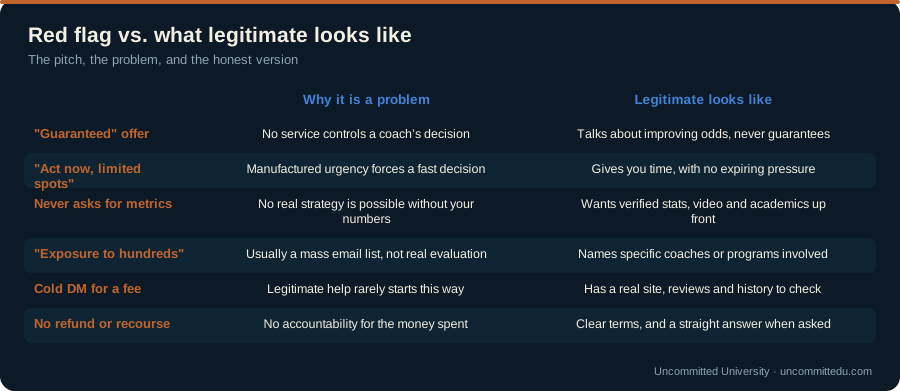
The table below puts six baseball recruiting red flags next to what a legitimate service says instead, so the contrast is easy to spot in a live pitch.
Six baseball recruiting red flags and scams, each next to what a legitimate service says instead.
Red flag
Why it’s a problem
What legitimate looks like
“Guaranteed” offer or scholarship
No service controls a coach’s decision
Talks about improving your odds, never guarantees
“Act now, limited spots”
Manufactured urgency pressures a fast decision
Gives you time to think it over, no expiring pressure
Never asks for your real metrics
Can’t build a real strategy without your numbers
Wants verified stats, video, and academics upfront
Vague “exposure to hundreds of coaches”
Usually just a mass email list, not real evaluation
Names specific coaches or programs involved
Cold DM offering to “get you seen” for a fee
Legitimate help rarely starts this way
Has a real website, reviews, and history you can check
No refund or recourse if nothing happens
No accountability for the money spent
Clear terms and a real answer if you ask about it
Guaranteed offers or scholarships
No service, no matter how expensive, can guarantee a coach will offer you a scholarship. That decision belongs entirely to the coaching staff.
Any company promising a guaranteed offer is either overpromising or planning to blame you when it doesn’t happen.
Artificial urgency: one of the loudest baseball recruiting red flags
“Limited spots,” “act now,” “prices go up tomorrow.” Legitimate camps and services don’t need fake pressure to fill seats.
Take a day to think it over. A real opportunity doesn’t disappear overnight.
Services that skip your actual numbers
A real recruiting strategy starts with your real metrics: velocity, exit velo, GPA, test scores. If a service will “get you recruited” without ever asking for these, it’s selling a mailing list, not a strategy.
The checklist below is the short version of every one of the baseball recruiting red flags covered on this page.
Baseball recruiting red flags: common scam patterns
Beyond the general baseball recruiting red flags, a few specific patterns show up repeatedly:
The fake “elite” combine. A high entry fee, a big-sounding name, and no real coaches present, just staff running drills and handing out a certificate or ranking that means nothing to an actual recruiter.
The all-star team pay-to-play pitch. An invitation to a prestigious-sounding “national team” that’s really just a roster anyone can buy a spot on, with no actual selection process behind the name.
The recruiting “guarantee” contract. A service that asks for a large upfront payment in exchange for a written guarantee of interest or offers: read any such contract closely, since the guarantee language is often written to be unenforceable in practice.
The urgent financial-information request. Any recruiting contact (real or fake) asking for banking details, a social security number, or payment information beyond a standard camp or service fee should be treated with serious caution. Legitimate camps invoice through normal payment processors, not by requesting sensitive personal or financial data directly.
The fake “coach” reaching out on social media. A profile claiming to be a college coach, contacting you directly on social media rather than through a school email address, is worth verifying independently before you respond with any personal information.
None of this means every paid camp, ranking, or service is a scam. Most aren’t. It means treating the specific pattern, not just the price tag, as the signal worth watching.
How to use a paid service the right way
Use it to speed up outreach, not replace it
Keep your own metrics, video, and target list regardless of what a service provides
Ask for references from real families who used the service
Compare the cost against what you’d spend doing the outreach yourself
A good service saves you time. It never replaces your own numbers and direct coach contact: those are what coaches actually evaluate.
Build your own recruiting profile, free
Skip the expensive packages. A free, verified profile does the same job: a link coaches can check in one click.
Comparing a service’s claims against what you can verify yourself
Before signing up for anything paid, it’s worth running a simple gut check between what a service claims and what you can confirm independently:
Claim: “We work directly with hundreds of college coaches.” Verify: ask for three specific coach names and programs, then see if you can independently confirm the relationship: a coach’s own athletics staff directory is a good starting point.
Claim: “Our players get recruited at [X] rate.” Verify: ask how that rate is calculated and whether it counts walk-on tryouts, JUCO transfers, or players who would likely have been recruited regardless.
Claim: “This ranking reflects real evaluation.” Verify: ask directly whether the rating comes from in-person measurement and film review, or from a form you filled out yourself.
Claim: “This is your best and only chance.” Verify: nothing. This is close to always false. Recruiting runs on a multi-year timeline with many entry points, not a single make-or-break event.
A legitimate service answers these questions specifically and without defensiveness. A vague or irritated response to a reasonable question is itself useful information.
Recruiting rankings and “star” services
Some services sell star ratings or national rankings. Treat these carefully.
A ranking based on self-reported numbers, with no video verification, isn’t worth much to a coach.
Ask whether the service actually watches film or measures you in person before assigning a rating.
A high ranking from an unknown service rarely moves the needle with real coaches, verified metrics and video do.
Social media “recruiters” and DMs
Watch for accounts that message players directly, offering to “get you seen” for a fee, often with urgency built into the pitch.
Legitimate recruiting help doesn’t usually start with a cold DM.
Check for a real website, real reviews, and a real business behind the account before sending any money.
If the pitch focuses entirely on payment and never asks about your actual metrics, treat it as one of the clearest baseball recruiting red flags.
Why families fall for baseball recruiting red flags, and how to stay grounded
None of this is about a lack of intelligence. Recruiting anxiety is real, timelines feel opaque, and a confident-sounding pitch that promises certainty is genuinely appealing when the process feels out of your control.
Remind yourself that the actual levers in recruiting are within your control: verified metrics, a real target list, direct outreach, and follow-through. No purchase replaces those four things.
Talk it through with your current coach before committing money to any outside service: a second, experienced opinion catches most bad pitches before they cost anything.
Slow down on any decision that has to be made “right now.” Real recruiting opportunities and legitimate services can survive a day of research.
Questions that expose baseball recruiting red flags before you pay
The fastest filter: ask an eligibility question you already know the answer to. The real rules are public, and our D2 eligibility rules guide is one place to check an answer against, free.
What exactly do I get, in specific, measurable terms?
Which coaches or programs will actually see my information?
Can you provide references from families who used this service?
What happens if I don’t get any real interest, is there a refund?
How to verify a service and avoid baseball recruiting red flags
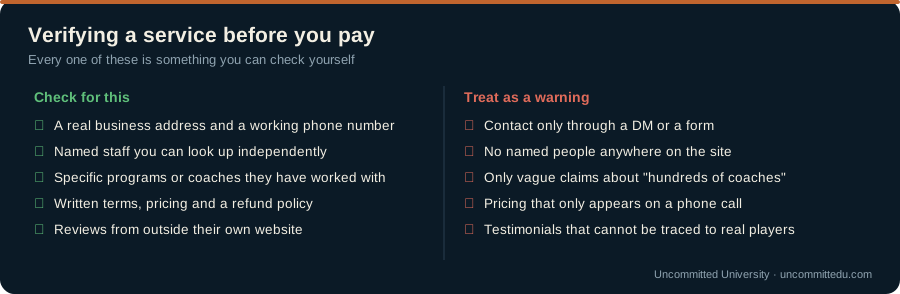
These five checks take about ten minutes and catch most baseball recruiting red flags before any money changes hands.
Five checks that take about ten minutes and catch most baseball recruiting red flags and scams before any money changes hands.
Look up the company: a real address, real staff, and a history that predates last month
Search for independent reviews outside the company’s own website, or check the Better Business Bureau
Ask if you can speak with a current or past client directly
Check whether any actual college coaches are named as references, and verify it with the coach if possible
A few minutes of checking saves families real money and real disappointment.
Spotting a fake camp invite: baseball recruiting red flags in your inbox
Not every scam is a full service. Sometimes it’s a single suspicious email dressed up as a showcase invite. A few tells:
A generic greeting instead of your name. A real invite tied to your actual profile or a coach’s interest usually addresses you directly.
A sender domain that doesn’t match the organization’s real website. Check the actual email address, not just the display name, before clicking anything.
Urgent language pushing an immediate click or payment rather than giving you time to research the event first.
No verifiable event history. A quick search should turn up the event’s past dates, location, and some independent mention of it, not just the event’s own promotional page.
When in doubt, go directly to the organization’s official website rather than clicking a link in the email itself.
Learning to tell a real offer from an “interest” pitch
Confusing genuine interest with an actual offer is one of the most common, and most emotionally costly, mistakes in recruiting, and it overlaps with how some services oversell what they’ve delivered.
A real offer comes directly from a coach, names a specific role and scholarship or financial aid detail, and is usually followed up in writing.
Genuine interest (a coach asking for more film, inviting you to a camp, or saying he “likes what he sees”) is a real and positive signal, but it isn’t a commitment.
A verbal offer from a coach is real and worth taking seriously, but it isn’t binding the way a written scholarship agreement or National Letter of Intent is. Get any real offer confirmed in writing before treating a decision as final.
Be wary of any third party (a service, an event, or a social account) claiming they can convert “interest” into an “offer” for a fee. That conversion only happens through the coach’s staff, never through a paid intermediary.
What to do if you think you’ve already been scammed
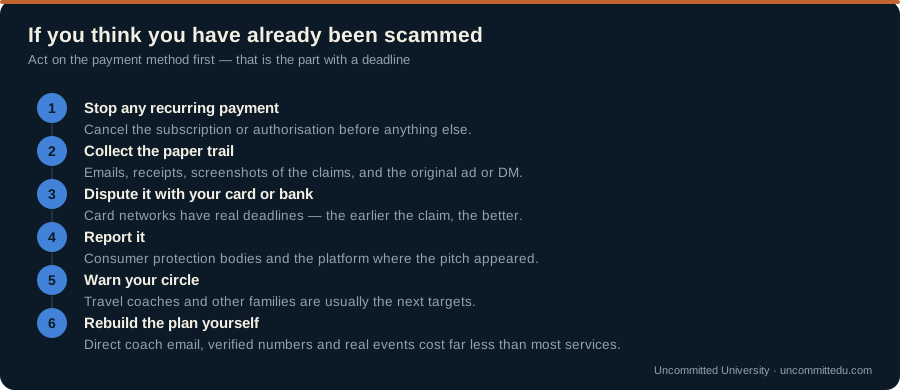
If you already missed the baseball recruiting red flags and paid, the steps below limit the damage and put the facts on record.
If money is already gone, these steps limit the damage and put the facts on record.
Stop any further payment immediately, including recurring charges: check whether the service auto-bills and cancel it directly with your bank or card issuer if needed.
Document everything. Save emails, screenshots of promises made, and payment records before a website or account disappears.
Report it. The Better Business Bureau and your state’s consumer protection office both take complaints about recruiting and combine-style services, and a paper trail helps other families avoid the same pitch.
Don’t let it stop your actual recruiting process. A bad experience with one service doesn’t reflect on your talent or your chances: refocus on direct coach outreach and your own verified metrics.
Talk to your high school or travel coach. They’ve often seen these patterns before and can tell you quickly whether a specific company or event has a real reputation.
The money-shaped baseball recruiting red flags
The costliest scams in this space are not the obvious ones. They are the services that look exactly like legitimate help and simply do not deliver anything a coach cares about.
Any guarantee of placement is the clearest of all baseball recruiting red flags. Nobody can promise a roster spot or a scholarship. The people who decide that are college coaches, and they do not sell that decision to a third party.
Be equally careful with the phrase “we have relationships with coaches”. Every service says it. Ask for three specific programs and the name of the coach they dealt with there, then email those programs and ask.
Watch the fee structure. A large sum up front, before any work is done, is one of the more reliable baseball recruiting red flags: legitimate services bill for a defined deliverable such as video editing, testing or a profile.
Treat high-pressure deadlines the same way. “This price ends Friday” is a sales tactic, not a recruiting reality. Coaches recruit for years; nothing about your future turns on a Friday.
Another of the quieter baseball recruiting red flags is a service that will not let you contact coaches yourself, or insists all communication route through them. That is a business protecting its margin, not your recruitment.
And be sceptical of testimonials with no last names, no schools and no years. Real commitments are public record: you can verify almost any of them on a college roster page in about a minute.
What legitimate help looks like, by contrast: honest evaluation you may not enjoy hearing, a defined scope of work, verifiable references, and complete transparency about the fact that outcomes are never guaranteed.
Frequently asked questions
These are the questions families ask most often about baseball recruiting red flags. Each answer points at a specific behaviour you can check, rather than at the feeling that something is off.
Can a recruiting service guarantee a scholarship offer? No. No service controls a coach’s decision. Any company promising a guaranteed offer is either overpromising or setting up to blame the player when it doesn’t happen.
Is fast-payment pressure one of the baseball recruiting red flags? Yes. Legitimate camps and services don’t need artificial urgency like ‘limited spots’ or ‘prices go up tomorrow’ to fill seats. A real opportunity gives you time to think it over.
Are recruiting star ratings and rankings worth paying for? Only if the ranking is based on verified video and in-person measurement, not just self-reported numbers. A high ranking from an unknown service with no verification rarely moves the needle with real coaches.
Should I respond to a college coach who messages me on social media? Verify it independently first. A profile claiming to be a college coach that contacts you directly on social media rather than through a school email address is worth confirming before you share any personal information.
What should I do if I think I’ve been scammed by a recruiting service? Stop any further payment immediately, document all communication and payment records, report it to the Better Business Bureau or your state consumer protection office, and keep moving forward with your own direct outreach and verified metrics.
Is it normal for a recruiting service to ask for banking details or a social security number? No. Legitimate camps and services invoice through standard payment processors for a stated fee. A request for banking details or a social security number beyond that is a serious red flag.
The short version: the baseball recruiting red flags that matter all share one trait: they ask for money before they ask about you. A legitimate service wants your verified numbers, your video and your academics up front, names the programs it actually works with, and gives you time to think. Test any pitch against those three things and most baseball recruiting red flags become obvious immediately. When in doubt, spend the money on a camp where a target-list coach is running the drills instead.
The short version
Most baseball recruiting red flags reduce to one question: is this person selling access, or selling work? Access cannot be sold, because coaches do not sell it. Work (video, testing, evaluation, organisation) legitimately can.
Uncommitted University tells families to verify one claim before paying anyone. One phone call to one named program settles most of it.
If you spot baseball recruiting red flags after paying, stop sending money, keep every message, and dispute the charge with your card issuer rather than arguing with the company.
One last filter that catches most of it: ask what happens if you do not get recruited. An honest service explains what it delivered regardless of outcome. A scam changes the subject.
Official vs unofficial visits get mixed up constantly, and the mix-up is expensive: one costs your family money, the other usually signals a staff is close to an offer.
This covers exactly what each one is, when to expect it, and how to make the most of it. For the full process, see the college baseball recruiting guide.
Quick answer: Unofficial visits happen any time, at your own expense, with no limit, a low-pressure way to see a campus early. Official visits are partly paid by the school, limited by NCAA rules, and usually happen later, once a program has real, specific interest in you.
What actually separates them: who pays, how many you get, and what accepting one tells the coaching staff. Below: the rules for each, the timeline, and the mistakes that cost players real offers.
Key takeaways
Official vs unofficial comes down to who pays and how many you are allowed.
Unofficial visits are unlimited and self-funded; official visits are capped and part-funded.
The official vs unofficial difference that matters most is what the invitation signals.
An unofficial visit signals your interest; an official visit signals theirs: that is the whole official vs unofficial distinction in one line.
Official vs unofficial rules differ by level, so confirm them with the specific programme.
Official vs unofficial baseball visits at a glance
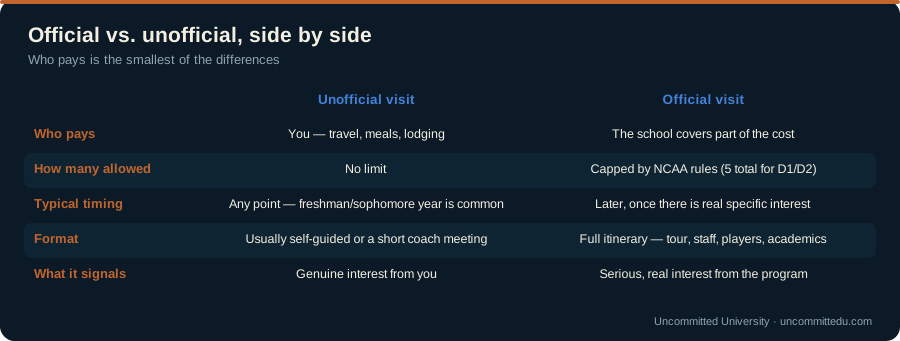
The table below sets out the official vs unofficial differences that actually affect your decision.
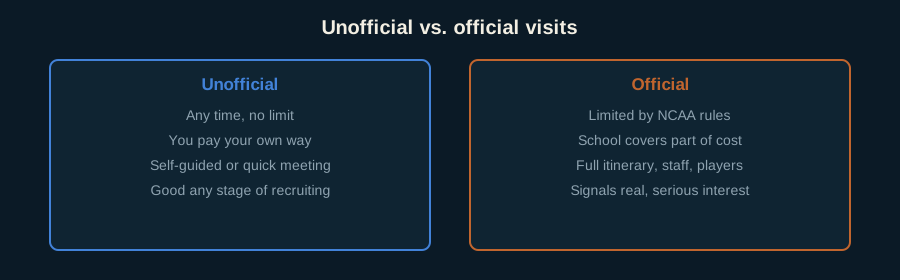
Official vs unofficial baseball visits differ in who pays, how many you get, and what the invitation actually signals.
Unofficial visit
Official visit
Who pays
You: travel, meals, lodging
School covers part of the cost
How many allowed
No limit
No NCAA cap on the number in D1 since 2023: one per school. Confirm D2 with the program
Typical timing
Any point, often early: freshman/sophomore year is common
Later, once there’s real specific interest
Format
Usually self-guided or a short meeting with a coach
Full itinerary: tour, staff, current players, academics
What it signals
Genuine interest from you
Serious, real interest from the program
Unofficial visits
Can happen at any point in the recruiting process
You pay your own way: travel, meals, lodging
No limit on how many you can take
Usually self-guided or a quick meeting with a coach, not a full program
Take these early and often, on any school you’re genuinely interested in. They’re free information, and showing up signals real interest.
Official visits
The school covers part of the cost: travel, lodging, some meals
Limited by NCAA rules: a capped number of official visits total
Usually happen once a program has specific, real interest in you
Include a full itinerary: campus tour, coaching staff, current players, academics
An official visit is a strong signal. Programs don’t spend the money and staff time on players they aren’t seriously considering.
The chart below compares official vs unofficial visits side by side.
A sample official visit, hour by hour
Official visits vary by program, but a typical two-day itinerary usually includes something like this:
Arrival afternoon: Meet the coaching staff informally, drop bags at a host player’s dorm or a hotel, casual introduction to a few current players.
Evening: Team dinner or a small group dinner with players in your position group, pay attention to how players talk about the program when coaches aren’t in the room.
Morning: Formal campus tour, academic support center, athletic facilities, weight room and training staff introduction.
Midday: Meeting with the head coach and recruiting coordinator to talk specifics: role, scholarship numbers, depth chart timing.
Afternoon: Practice observation or a workout, sometimes with you participating in a light capacity.
Before you leave: A closing conversation with the head coach, often where real numbers or next steps get discussed directly.
Every program runs this differently, but the pattern is the same: casual time to see the real culture, and formal time to get real answers. Prepare for both.
What to actually do on an official vs unofficial visit
Whether official or unofficial, come with real questions ready:
Who else is being recruited at your position and grad year?
What does the depth chart look like the year you’d arrive?
How does the coaching staff communicate with players during the season?
What’s the actual roster size at your position?
What does a normal week look like: academics, training, travel?
A coach who answers these directly is showing you exactly how the program treats its players.
Academic questions worth asking beyond the coaching staff
A visit is also a chance to evaluate the school itself, not just the program. Some questions are better asked of an academic advisor or admissions rep than a coach:
What academic support exists specifically for athletes: tutoring, study hall, travel accommodations for missed classes?
How do professors in your intended major typically handle athletic travel conflicts?
What’s a realistic four-year graduation plan for an athlete in your major?
Is need-based or academic aid available on top of any athletic scholarship, and who do you talk to about stacking them?
A program that connects you directly with academic support staff during a visit, without being asked, is usually a good sign about how it treats the “student” half of student-athlete.
Official vs unofficial: which visit should you ask for first?
Ask for an unofficial visit. Almost always. An official visit costs the program money. An unofficial visit costs it nothing, and that asymmetry should drive the whole plan.
Getting the official vs unofficial order wrong burns the scarcer of the two on a school you had not finished researching.
Use unofficial visits to shorten the list. Campus, facilities, the town, the drive home at Thanksgiving: an unofficial visit answers all of it, and a coach can say yes without spending anything.
Save official visits for programs that have shown their hand. A staff spending its own budget on you is a signal in itself, and it is the clearest official vs unofficial tell there is.
Do not ask for an official visit too early. Asking before a program has real interest puts a coach in the position of saying no, and there is no upside in that conversation.
Sequence beats volume. Five unofficial visits to schools you have actually researched will teach you more than one official visit to a school you have not.
One caution on the official vs unofficial split: what a program is allowed to pay for is governed by rules that differ by level and get revised. Confirm what a specific school can cover before you build a travel budget around an assumption.
Timing: when official vs unofficial visits usually happen
Unofficial visits can start as early as you want, freshman or sophomore year is common for players serious about a level. Official visits typically come later, once a program has moved from general interest to a real, specific offer conversation.
Don’t wait for an official visit invite to see a campus. An unofficial visit costs you a trip, not a relationship with the program.
Get on a program’s radar before you visit
A visit means more when a coach already knows your name. Build your free profile first.
Parents play a real role in visits, just not the leading one.
Do handle logistics: travel, scheduling, paperwork.
Do ask your own questions about cost, academics, and support structure.
Don’t answer questions directed at the player.
Don’t negotiate scholarship details on the player’s behalf without him in the room.
Coaches are evaluating maturity as much as talent. A player who speaks for himself stands out.
How many visits is normal, official vs unofficial
There’s no fixed number. Some players take a handful of unofficial visits total. Others visit ten or more schools before deciding.
What matters, official vs unofficial, is that each visit is to a school genuinely on your list, not a visit for its own sake. The old five-visit cap is gone: the Division I Council removed the limit on how many official visits a prospect may take, effective July 1, 2023. You still get one official visit per school, a second only if the head coach changes after your visit. Division II sets its own rules, so confirm the current position there directly.
That makes the official vs unofficial calculation about cost rather than quota. The school pays for an official visit, which is what keeps them scarce in practice, so use them on programs where the interest is real and mutual.
How official vs unofficial rules differ by level
Visit rules are written level by level and they do not carry across. Here is the official vs unofficial picture by level:
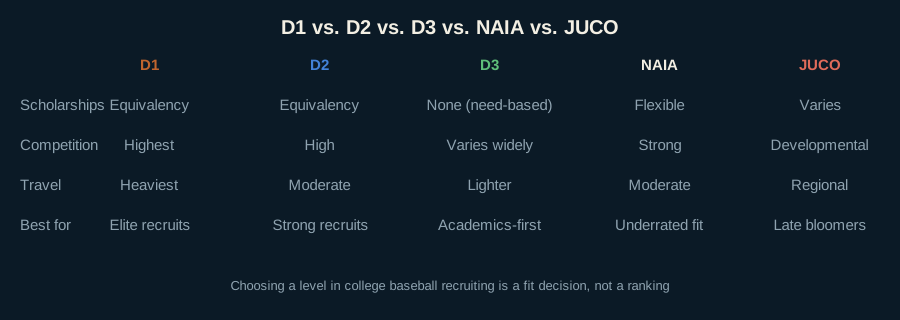
D1: No cap on how many official visits you take, the five-visit limit was removed effective July 1, 2023. One official visit per school, and a second only after a head coaching change.
D2: Governed by Division II legislation, which is separate from the Division I action above. Ask the D2 program what its current visit rules are rather than assuming the D1 answer.
D3: Since D3 doesn’t offer athletic scholarships, visits function differently: expect more emphasis on unofficial visits and admissions-related campus visits alongside any athletic conversation.
NAIA: Governed by its own visit rules, separate from the NCAA, so confirm specifics directly with each program rather than assuming NCAA limits apply.
JUCO: Visit structure tends to be far less formal, often just a direct conversation with the coaching staff and a campus look, reflecting the faster overall recruiting timeline at this level.
Always confirm the exact rule with the program or a compliance office: this is a general reference, not a substitute for checking your specific situation.
Visit etiquette and the follow-up that matters
A short, specific thank-you email within a day or two of any visit (official or unofficial) reinforces interest and shows the same attention to detail coaches look for on the field. Reference something specific: a conversation with a player, a detail about the coaching staff, an academic program you liked.
Skipping this step is one of the most common, easily avoidable mistakes players make after an otherwise strong visit.
Official vs unofficial: mistakes to avoid on a visit
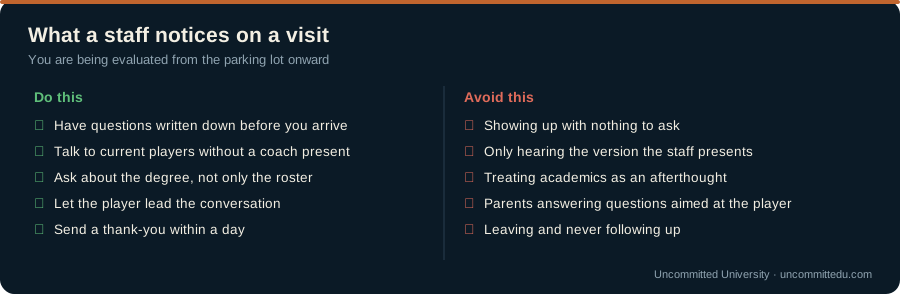
The checklist below applies to official vs unofficial visits equally: staffs evaluate the whole day.
Coaches evaluate the whole visit, not just the workout → these habits decide how official vs unofficial baseball visits are remembered.
Showing up unprepared. No questions, no knowledge of the roster or coaching staff.
Letting a parent do all the talking. Coaches want to hear from the player.
Not following up after. A visit without a thank-you email is a missed chance to reinforce interest.
Judging a program only on facilities. Ask about playing time and development, not just what looks impressive.
What earns a player an official visit: the official vs unofficial signal
An official visit rarely comes out of nowhere. It usually follows a pattern:
Verified metrics and video the staff has actually reviewed, not just a submitted profile sitting unread.
Consistent responsiveness throughout earlier calls, emails, and camp interactions: coaches invest official visit budget in players who’ve shown they’ll follow through.
A realistic scholarship or roster picture already discussed, at least in broad terms, before the visit itself.
Positive feedback from your current coach, if the college staff has reached out to him: this often happens quietly, before an invite goes out.
If you haven’t gotten an official visit invite yet, an honest look at these four points usually explains why, and points to what to focus on next.
Virtual visits
Many programs now offer virtual tours and video calls with coaches, especially early in the process or for players who live far away.
Useful for a first look before committing to travel
Not a substitute for an in-person visit once things get serious
Still worth preparing the same questions you’d ask in person
Treat a virtual visit as a step, not the finish line: an in-person visit still matters before a final decision.
What to pack for an official vs unofficial visit
Presentable, casual clothes for the campus tour and meals: you’re being evaluated on more than just baseball.
Workout gear in case a practice observation turns into a chance to participate.
A notebook or notes app for questions you want to ask and answers you’ll want to remember later.
A copy of your transcript and test scores if academics come up in detail, especially at academically selective D3 and NAIA programs.
A short list of your other visits or offers in case a coach asks where else you stand: being honest here builds trust rather than costing you leverage.
How to evaluate a program after you’ve left
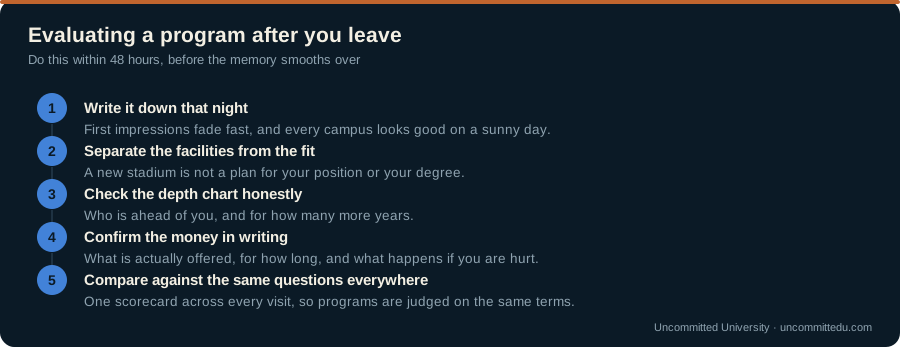
The steps below keep your official vs unofficial comparisons honest once the excitement wears off.
Judge the program after the excitement wears off → the same checklist applied to official vs unofficial baseball visits keeps the comparison honest.
The visit itself is only half the process. What you do in the days after matters just as much:
Write down your honest impression immediately, before the excitement (or disappointment) fades. Specific details fade fast within a week.
Compare against your own checklist, not against the last school you visited. Recency bias is real: a great visit right before a mediocre one can make the mediocre one look worse than it is.
Talk to current players again if you can, outside the formal visit itself. A follow-up text to a player you connected with often gets a more candid answer than anything said during the official tour.
Weigh the coach’s directness as much as his enthusiasm. A coach who gives you an honest, specific answer about depth chart timing is more useful long-term than one who’s simply upbeat about everything.
A visit that felt good in the moment but leaves you with vague, general answers to your specific questions is worth a second look before it moves up your list.
What to actually evaluate on each visit type
The official vs unofficial distinction is about who pays. What you should be doing with the day barely changes, but what you can realistically get access to does.
On an unofficial visit, you are paying your own way, and you can take as many as you like. Use them early and use them cheaply. Walk the campus, sit in on a class, watch a practice or a game as a regular spectator, and see whether you would want to be there without baseball.
Ask yourself the unglamorous questions: could I get to my major from this dorm, could my family drive here, would I be happy in this town in February.
On an official visit, the school is paying, which means the school has decided you matter. The access changes accordingly: you will typically get real time with the coaching staff, a player host, academic support, and the facilities you would actually use.
That is when the harder questions belong. Where do you see me on the roster in year one? Who else are you recruiting at my position? What happens to my aid if I get hurt? How many players in my position group transferred out last year?
The official vs unofficial question families get wrong is treating the official visit as the reward. It is not a celebration. It is the last, best chance to gather information before a decision that shapes four years.
One practical note on both: write your impressions down the same night. After a third campus they blur, and the notes are what stop you choosing on the strength of the nicest weather.
Bring a parent to the official visit and send them to different conversations than you. Players hear the baseball answers. Parents hear the money, medical and academic-support answers, and comparing the two afterwards is where the real picture appears.
Talk to a current player without a coach in the room. Ask what the fall schedule actually looks like, how playing time gets decided, and what they would change. Most will tell you honestly.
Be careful about the halo effect on a well-run visit. A great weekend tells you a program is good at hosting weekends: it does not tell you where you sit on the depth chart.
The official vs unofficial decision that matters most is what you do afterwards: go home, wait 48 hours, and see whether the school still feels right once the hospitality has worn off.
Frequently asked questions
These are the questions that come up most often on the official vs unofficial call.
What’s the difference between an official and unofficial college baseball visit? Unofficial visits happen any time, at your own expense, with no limit. Official visits are partly paid by the school, are limited to one per school, and usually happen later once a program has real, specific interest.
How many official visits am I allowed to take? In Division I there is no longer a cap on the number. The Division I Council removed the five-visit limit effective July 1, 2023, and the rule now is one official visit per school, with a second allowed only if the head coach changes after your visit. Division II, the NAIA and other levels follow their own rules, so confirm directly with each program.
Should I take an unofficial visit before an official one? Yes, in almost every case. An unofficial visit costs the program nothing to host, so a coach can say yes to it early, and it tells you whether a school is worth spending a scarcer official visit on later.
When do official visits typically happen in the recruiting process? Usually later than unofficial visits, once a program has moved from general interest to a real, specific offer conversation. Unofficial visits can start as early as freshman or sophomore year.
Should parents talk to the coach during a visit? Parents can handle logistics and ask their own questions about cost and academics, but coaches want to hear the player answer questions directed at him and speak for himself.
Is a virtual visit as good as an in-person visit? A virtual visit is a useful first look, especially for players who live far away, but it isn’t a substitute for an in-person visit once things get serious and a real decision is on the table.
Do I need to send a thank-you note after a visit? Yes. A short, specific follow-up within a day or two reinforces interest and reflects the same attention to detail coaches evaluate on the field. Skipping it is a common, easily avoidable mistake.
The short version: official vs unofficial is less about the money than about the message. Use unofficial visits early and often to learn what you actually want in a campus, and treat an official visit invitation as evidence of real interest. Either way, arrive with written questions, talk to current players without a coach present, and write your impressions down the same night: the official vs unofficial label changes the logistics, not the homework.
The short version
Official vs unofficial comes down to who pays and what it signals. Unofficial visits are yours to take early and often at your own cost. An official visit is funded by the school, which means you are genuinely on their board.
Use unofficial visits to build the list. Use the official vs unofficial upgrade as the moment to ask the questions you cannot ask by email.
Uncommitted University advises visiting at least one school you expect to dislike. The official vs unofficial comparison only becomes useful once you have something to measure a favourite against.
Baseball recruiting camps and showcases can be worth real money, or a waste of it. The difference isn’t the price tag. It’s whether the right coaches are actually there.
This covers how to pick one, and how to spot the ones that aren’t worth it. For the full process, see the college baseball recruiting guide.
Quick answer: Only pay for baseball recruiting camps after confirming which coaches from your actual target list will be there. A showcase full of D1 coaches is wasted money for a player realistically targeting D2, NAIA, and JUCO, and the reverse is just as true.
Key takeaways
Baseball recruiting camps run by a single program put you in front of that staff directly.
National showcases buy breadth; baseball recruiting camps at a target school buy depth.
An invitation to baseball recruiting camps is a real signal, open registration is not.
Never pay for baseball recruiting camps before confirming which coaches will actually attend.
The follow-up email decides whether baseball recruiting camps were worth the money.
Baseball recruiting camps and showcases: school-specific vs. national
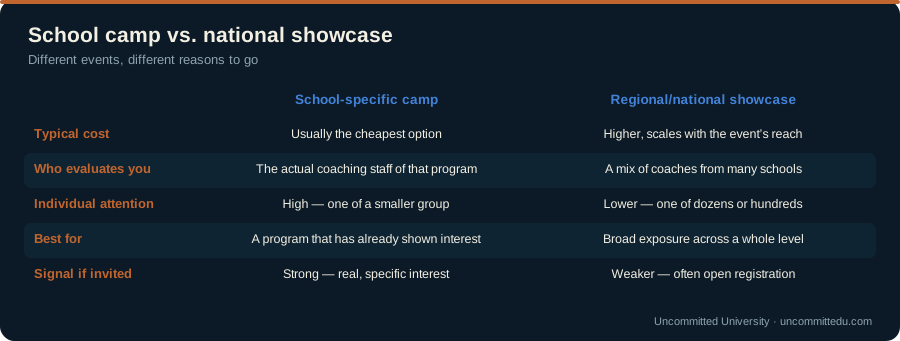
The comparison below shows where school-specific baseball recruiting camps beat a national showcase, and where they do not.
School-specific camps and national showcases both cost money, but baseball recruiting camps and showcases buy you very different things.
School-specific camp
Regional/national showcase
Typical cost
Usually the cheapest option
Higher, scales with the event’s reach
Who evaluates you
The actual coaching staff of that program
A mix of coaches from many schools
Individual attention
High: you’re one of a smaller group
Lower: one of dozens or hundreds
Best for
A program that’s already shown interest
Broad exposure across a whole level
Signal if invited
Strong: means real, specific interest
Weaker: often open registration
What baseball recruiting camps and showcases actually are
A school-specific camp is run by one program, usually on campus. Coaches from that school evaluate you directly.
A regional or national showcase pulls in coaches from many schools. Bigger reach, but less guaranteed attention from any one program.
Both can work. The right choice depends on who you’re trying to reach.
How to check before you pay
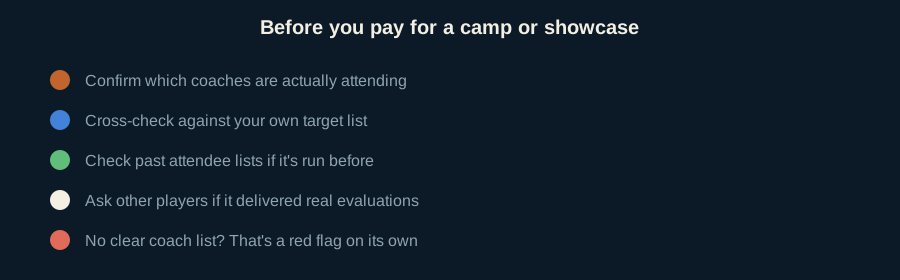
Before signing up for anything, do this:
Ask the event directly which schools and coaches are confirmed to attend
Cross-check that list against your own target schools
Search past years’ attendee lists if the event has run before
Ask other players or coaches who’ve attended if it delivered real evaluations
If an event won’t tell you who’s coming, that’s a red flag on its own.
The checklist below covers what to bring and what to confirm before you pay for any of the baseball recruiting camps on your shortlist.
School-specific baseball recruiting camps: what to expect
These are usually cheaper and more direct. You’re evaluated by the actual coaching staff, on the actual field you’d play on.
A camp invite from a specific program is a strong signal. It means a coach already has some interest and wants an in-person look.
Regional and national showcases: what to expect
These cost more and involve less individual attention. You’re one of dozens or hundreds of players being measured and compared.
Choose these when you want broad exposure across a level, not when you’re trying to reach one specific program.
Know your level before you spend the money
The right showcase for you depends on where you actually project. Check it first, free.
Guaranteed exposure or offers. No event can guarantee a scholarship. That decision belongs to a coach, not the event organizer.
Pressure to register fast for a “limited spot.” Legitimate events don’t need fake urgency to fill seats.
No clear list of attending coaches. If they won’t say who’s coming, assume the answer is fewer than advertised.
Price far above similar events with no clear reason. Compare cost against what other showcases at your level charge.
What to bring
Your recruiting profile, printed or ready to share by link
A way for coaches to scan or note your contact info on the spot
Comfortable, weather-appropriate gear, you’re being evaluated, not judged on style
A notebook or phone to record which coaches you talked to
How to make the most of the day itself
Getting to the right event is only half the job. What you do while you’re there matters just as much:
Warm up like it’s a real game, not a practice rep. Coaches often watch warm-ups too, and a sluggish first impression is hard to undo.
Introduce yourself to coaches directly when there’s a natural opening. A short, confident “Hi Coach, I’m [name], 2027 grad, [position]” costs nothing and makes you a name instead of a number.
Ask a specific question if you get a moment. “What are you looking for at my position this class?” shows genuine interest, not just a hand extended for a business card.
Compete at full effort on every rep, not just the ones you think matter. Coaches notice a player who coasts between the reps he thinks are being watched.
Track who you actually talked to. A notebook entry with a coach’s name and what he said is worth more the next morning than a memory of “a coach from some school.”
Common mistakes players make at baseball recruiting camps and showcases
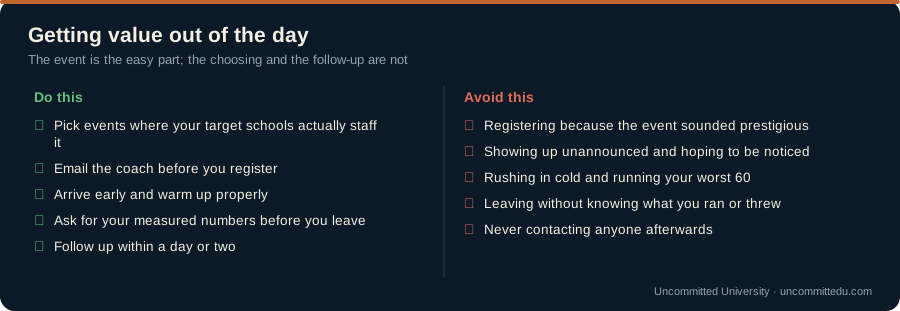
Most of the money wasted on baseball recruiting camps is lost to the habits on the right-hand side of the chart below.
Most wasted camp money is spent before the event starts, these are the baseball recruiting camps and showcases habits that separate the two outcomes.
Attending an event with no target-school coaches present. The single most common way to waste money on baseball recruiting camps.
Skipping the follow-up. A great showing with no email afterward often gets forgotten within a week.
Letting parents do the coach introductions. Coaches want to see the player initiate the conversation himself.
Chasing the biggest-name event regardless of fit. A packed national showcase full of D1-only coaches does nothing for a player realistically targeting D3, NAIA, or JUCO.
Treating one bad session as the final verdict. A single off day at one event isn’t your whole recruiting story. A coach who’s genuinely interested will look at more than one data point.
How much should you actually spend
There’s no universal number, but a few guidelines help:
School-specific camps are usually the cheapest option and often the highest-value, since you’re evaluated by the actual staff.
Regional showcases cost more, but can be worth it for broad exposure at your level, if the right coaches are confirmed.
National “elite” events carry the highest price tags. They’re worth it only if you genuinely project at that level. Attending one you’re not ready for wastes money and can hurt your confidence.
Set a budget for the season, and spend it on events that match your actual level, not the biggest name on the flyer.
How showcases measure and report your numbers
Most showcases record velocity, exit velocity, 60-yard time, and sometimes pop time or arm strength. Ask in advance exactly what gets measured and how the results are shared.
Will you get a printed or digital report with your numbers?
Is the data sent directly to coaches, or is it up to you to share it?
Can you request a copy for your own recruiting profile?
A showcase that hands you nothing usable afterward is a missed opportunity: get the data and use it.
After the event
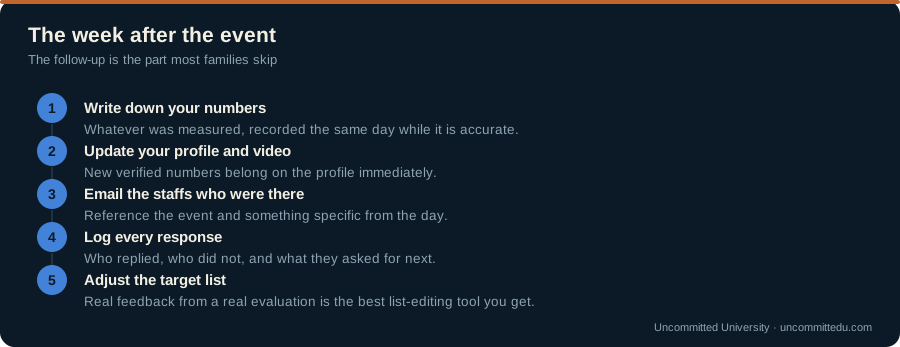
The steps below are what turn baseball recruiting camps into actual coach conversations, and they all happen in the week afterwards.
The week after the event is where baseball recruiting camps and showcases either pay off or quietly go to waste.
Follow up within a few days. Email every coach you talked to, reference the specific conversation, and attach your video and profile link.
An event only pays off if you follow through afterward. Baseball recruiting camps get you in front of a coach. The follow-up is what turns that into a real conversation.
Questions to ask an event organizer before you register
Which schools and coaches are confirmed to attend this specific date, not just “in past years”?
What exactly gets measured, and do I receive a copy of my own results?
Is data sent directly to college coaches, or is that on me to share afterward?
What’s the refund or credit policy if I get hurt or can’t attend?
How many players are typically at my position and grad year at this event?
An organizer who answers all five clearly and specifically is usually running a legitimate event. Vague or evasive answers to any of these are worth treating as a warning sign, not a formality.
Age and grad-year specific events
Some showcases are built for a single grad year or age group, which changes what you should expect:
Younger grad years (freshman/sophomore): more about exposure and early evaluation than immediate offers.
Junior/senior events: closer to real evaluation, often tied directly to a coach’s active recruiting board.
Perfect Game and similar national circuits: high visibility, but only useful if your level genuinely matches the competition there.
Match the event to your grad year and level, not just the name recognition.
Camp invite vs. open registration: what the difference really means
Not every camp is the same kind of opportunity, even at the same school. It’s worth knowing which one you’re signing up for:
An invite-only camp means a coach has already flagged your name from film, a questionnaire, or another event. Attendance is close to confirmation that you’re on the board.
An open-registration camp at the same school is a different animal, anyone can pay to attend, and the coach hasn’t necessarily seen your name before. It’s still a real evaluation opportunity, but treat it as a first introduction rather than a follow-up conversation.
Both are worth attending when the fit is right. The mistake is assuming an open-registration camp carries the same weight as a personal invite, it doesn’t, and expecting an offer out of it can lead to disappointment that isn’t really about your performance.
What about virtual combines and remote-submission events?
A growing number of events let you submit video and metrics remotely instead of attending in person. They have a real place, but a different one than an in-person camp:
Good for: players who can’t travel to every event, or want to get numbers in front of a wider set of programs without the cost of travel.
Weaker than in-person for: coaches who want to see how you move, compete, and interact live, a remote submission can’t replace an in-person read on athleticism and makeup.
Verify the same way. Ask which coaches actually review remote submissions before paying, exactly as you would for an in-person event. A remote combine with no real coach engagement is just a paid video upload.
Treat remote events as a supplement to in-person camps and showcases, not a full substitute, especially once you’re in the busiest recruiting years.
Choosing between two events on the same weekend
When schedules conflict, a simple priority order helps:
An invite from a specific target school beats a bigger open showcase almost every time: it’s a stronger, more direct signal.
An event with more of your actual target schools confirmed beats one with a bigger name but fewer of your real targets.
A closer, cheaper event with the right coaches beats a distant, expensive one with only slightly better attendance: travel cost and fatigue are real factors in performance.
When it’s genuinely close, ask your coach. A travel or high school coach who knows the local recruiting landscape can often tell you which event actually carries more weight this year.
How to tell a real invitation to baseball recruiting camps from a mass mailer
This is the single most expensive confusion in the whole recruiting process, and it is deliberate. Camp operators make money on volume.
Here are the tells of a mass mailing. It arrives addressed to your email handle rather than your name. It never names your position, your team or a game anyone watched you play. It sells the venue, the exposure and the number of colleges attending, but names no coach.
And it has open registration. Anyone with a credit card can attend, which is the opposite of a signal.
A real invitation to baseball recruiting camps looks different. It comes from a coach at that program, not a camp company. It references something specific: where they saw you, who mentioned you, what position they are looking at you for.
It usually comes with a follow-up: a question about your schedule, your grades, or your summer team.
The test that settles it: reply and ask which coaches from the staff will be running your group. A genuine program answers that in a sentence. A mass mailer answers with marketing copy or does not answer at all.
None of this means open baseball recruiting camps are worthless. They are a reasonable way to get measured and get film. Just buy them as a service, at a price you would pay for that service alone, and never as a shortcut to being recruited.
If a camp is not run by a school on your actual target list, it is a development purchase. Judge it on that basis.
There is a budget question underneath all of this that nobody asks out loud. A single showcase weekend with travel and hotel can cost more than a season of hitting lessons.
For most families that trade is worth making once or twice, at schools that are genuinely recruiting you, not six times a summer on the chance someone notices.
A useful rule: spend on measurement early and exposure late. Get verified numbers when you are young enough to still change them, and buy access to specific coaching staffs once you know which ones want you.
And go to baseball recruiting camps in condition to perform. A player who shows up tired from three consecutive weekends tests badly, and a bad verified number follows you around far longer than no number at all.
Frequently asked questions
These are the questions families ask most often before paying for baseball recruiting camps.
Are baseball recruiting showcases worth the money? Only if the right coaches from your actual target list are confirmed to attend. A well-attended national showcase can still be a waste of money for a player whose realistic level doesn’t match the coaches who show up.
Should I go to a school-specific camp or a big regional showcase? A school-specific camp is usually cheaper and gives you direct evaluation from that program’s actual staff, making it a strong choice once a school has shown interest. A regional showcase gives broader exposure across a level but less individual attention.
What’s a red flag when choosing a camp or showcase? An event that guarantees exposure or offers, pressures fast registration for a ‘limited spot,’ or won’t share a clear list of attending coaches. Legitimate events don’t need those tactics.
Do I need to follow up with coaches after a camp? Yes. Email every coach you talked to within a few days, reference the specific conversation, and attach your video and profile link. The camp gets you in front of a coach; the follow-up turns that into a real conversation.
How much should a family budget for baseball recruiting camps and showcases in a season? There’s no universal number, but school-specific camps tend to be the cheapest and highest-value option, while national elite events carry the highest price tags and are only worth it if a player genuinely projects at that level.
Is it a bad sign if I have one off day at a showcase? No. A single off day at one event isn’t the full recruiting story. A coach who’s genuinely interested will look at more than one data point, including video and other events.
The short version: baseball recruiting camps are worth real money when a coach on your target list is running the drills, and worth nothing when nobody there recruits your grad year. Confirm the attending staff first, get your measured numbers before you leave, and email within two days: that is what separates useful baseball recruiting camps from expensive ones. Judge every event on that test before you register.
The short version
Baseball recruiting camps are worth money only when a coach you are actually targeting will be standing on that field. Exposure to a hundred programs that were never going to recruit you is not exposure.
Uncommitted University tells families to confirm the attending staff in writing before paying for any of the larger baseball recruiting camps.
Set a season budget for baseball recruiting camps before the invitations start arriving, and hold to it. The decision gets much harder in March, when every email feels like the one you cannot afford to miss.
A college baseball recruiting video often decides whether a coach keeps reading your email or moves on. Coaches watch the first 15-20 seconds before deciding whether the rest is worth their time.
That means the order and structure of a college baseball recruiting video matters as much as the plays themselves. This covers exactly how to build one that holds a coach’s attention, for the full process, see the college baseball recruiting guide.
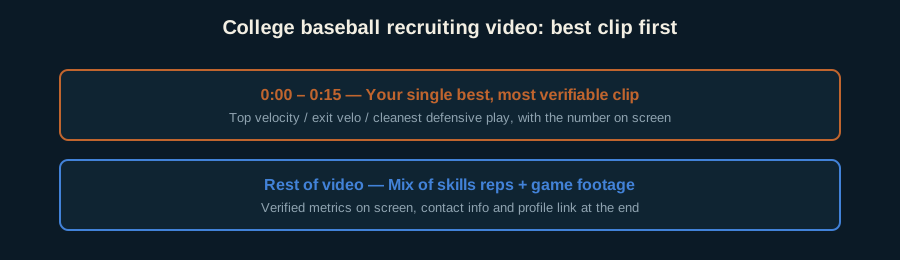
Quick answer: A college baseball recruiting video should open with your single best, most verifiable clip in the first 15 seconds, include verified metrics displayed on screen, mix skills reps with uncut game footage, and end with contact info and a link to your recruiting profile, kept short (2-3 minutes) rather than long and chronological.
The diagram below shows how a college baseball recruiting video should be ordered.
Key takeaways
Every profile needs two things: a skills college baseball recruiting video and uncut game footage.
Best clip first: a coach decides on a college baseball recruiting video in seconds, not minutes.
Put verified numbers on screen; claims without a readout get discounted.
What a college baseball recruiting video shows differs by position.
One link that opens instantly, with no login or download.
Update the college baseball recruiting video whenever your numbers genuinely move.
The two college baseball recruiting video types every profile needs
A skills video: a few reps at game speed with a measured number on screen: velocity, exit velo, a stopwatch time. A handful of clean, verified reps beats a long unverified reel.
Game video: how you actually play under real conditions. At least one full game, or a real set of uncut at-bats or innings. Shows approach, not just highlights.
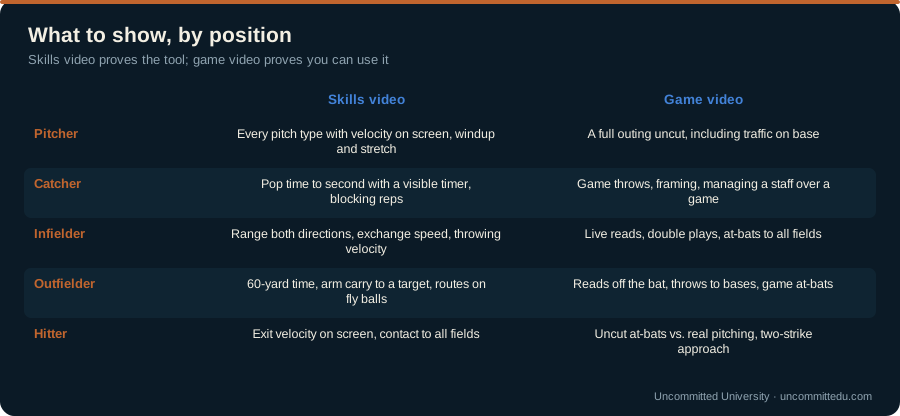
What to show, by position
The table below covers what a college baseball recruiting video needs to show at each position.
What a college baseball recruiting video needs to show at each position. The skills reel and the game reel do different jobs.
Position
Skills video should show
Game video should show
Pitcher
Every pitch type with velocity on screen, both a windup and stretch look
A full outing or several innings uncut, including how you handle traffic on base
Catcher
Pop time to second with a visible stopwatch or timer, blocking reps
Game throws, framing, and how you manage a pitching staff over a full game
Infielder
Range in both directions, exchange speed, throwing velocity across the diamond
Live game reads, double plays, and at-bats showing contact to all fields
Outfielder
60-yard time, arm strength/carry to a target, routes on fly balls
Reads off the bat in real games, throws to bases, at-bats in game context
Hitter (any position)
Exit velocity on screen, contact to all fields in batting practice or a cage setting
Uncut at-bats against real pitching, including two-strike approach
Structure: put your best clip first, always
Coaches decide whether to keep watching in the opening seconds. Put your single best, most verifiable clip in the first 15 seconds, not buried six minutes in.
A coach who isn’t hooked immediately rarely scrolls to find the good part later.
What to actually include in a college baseball recruiting video
Your name, grad year, position, and height/weight as an on-screen title card at the start
Verified metrics on screen the moment they happen: a radar reading, an exit velo number, a stopwatch time
A mix of reps: multiple pitch types for pitchers, contact to all fields for hitters, range plays in both directions for fielders
Contact info and a link to your full profile at the end
No profile to link to yet?
Create a free recruiting profile so your video, verified metrics, and contact info live at one link, the same one you’ll paste into every coach email.
Common mistakes that undercut a good college baseball recruiting video
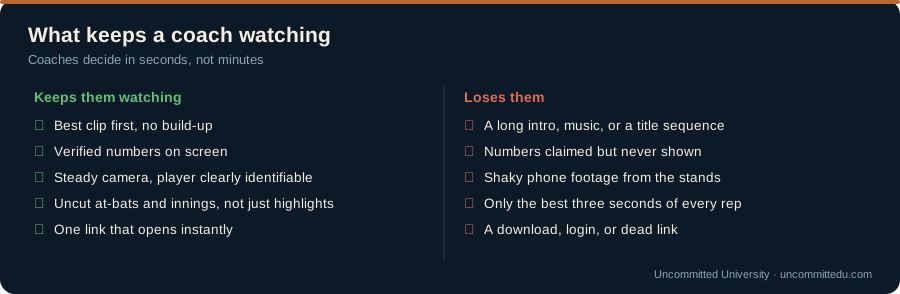
The checklist below is what keeps a coach watching a college baseball recruiting video past the first fifteen seconds.
A good player can still lose a coach in the first fifteen seconds of a college baseball recruiting video.
Burying the best clip. Chronological footage loses most viewers before they get to the good part.
Music louder than the content. A dramatic soundtrack doesn’t fix unclear footage or missing metrics.
Letting the college baseball recruiting video go stale. Re-cut it whenever you hit a new personal best.
Poor camera angle or shaky footage. A stable, well-zoomed angle beats production value every time.
How your college baseball recruiting video should change over the timeline
A freshman’s video and a senior’s video shouldn’t look the same, because the job each one has to do is different.
Freshman/sophomore: A short, simple clip is enough: a handful of clean reps with a number on screen. The goal is just to have something real behind your profile, not a polished production.
Junior year: This is when a full skills-plus-game video pays off. Coaches are actively building their board, and a thorough, current video makes you easy to evaluate quickly.
Senior year: Keep a “current form” clip up front. Coaches deciding late in the process want to see your most recent outing or at-bats, not last year’s numbers.
After any big performance: A new personal-best number or standout game is worth its own short update clip, even outside a full re-cut. It signals to coaches who already have your link that something changed.
How coaches actually watch a college baseball recruiting video
Most coaches watch on a phone, in short bursts, between other tasks. A few patterns show up consistently:
They decide within the first clip whether to keep watching, a slow intro or a highlight reel-style montage loses attention fast.
They skip ahead if the pacing drags, so front-loading your best material isn’t optional, it’s the difference between being seen and being skipped.
They re-watch a clip when a number is genuinely surprising, which is exactly why an on-screen, verifiable metric matters more than commentary or music.
They trust a game clip more than a skills clip alone, since a skills rep in a controlled setting doesn’t prove how you perform live.
Building the video around how it’s actually going to be watched (quickly, on a phone, with low patience for filler) beats building it to look impressive in isolation.
Filming setup that actually works
You don’t need professional equipment. A phone camera on a tripod or fence mount is enough. Steadiness matters more than resolution.
Film in landscape. Keep the frame wide enough to see the whole play. And make sure the radar or measuring device is actually readable on screen.
How long should a college baseball recruiting video be?
Shorter is almost always better. A tight 2-3 minute skills video with your best reps up front, paired with a link to a longer game video, beats one long video that buries the good stuff.
Think of the short video as the trailer. The full game film is what an interested coach watches next.
Where to host a college baseball recruiting video
Use a platform that loads instantly, with no login or app download required. A coach skimming dozens of recruits on his phone won’t wait through a slow load.
Hudl or a plain YouTube upload both work. What matters is a short, direct link you can paste straight into an email.
Updating your college baseball recruiting video as you improve
A recruiting video is never really “finished.” Treat it as a living asset.
After a strong showcase, a velocity jump, or a big game, re-cut the opening clip so it always reflects your current best. Coaches who look twice will notice a video that’s kept current.
Equipment checklist
Keep it simple. You need:
A phone with a good camera, most recent phones are more than enough
A tripod or fence mount to keep the shot stable
A radar gun or exit-velo device with a visible display
Basic editing app to trim clips and put your best one first
That’s it. Coaches care about what they can see and verify, not what you filmed it with.
What coaches say when a college baseball recruiting video works
The most common feedback isn’t about production quality. It’s that they could immediately tell what they were looking at.
A clean angle, a visible number, and a fast-loading link beat any transition effect. When in doubt, cut anything that isn’t a rep, a number, or contact information.
How do coaches verify a college baseball recruiting video?
They look for the things that are hard to fake. A college baseball recruiting video is a claim, and a staff working through hundreds of them has learned which claims check out.
The measuring device in frame. A radar readout or a bat-speed number visible in the same shot as the swing is worth far more than the same figure typed onto a title card.
Uncut sequences. One full at-bat, or a complete inning, shows approach, tempo and recovery. A cut between every pitch hides all three, and coaches know it.
A consistent camera angle. The same angle across several reps lets a coach compare them. Switching angle every clip reads as hiding something, whether or not it is.
Third-party footage. Event or game video a program can trace to a real date and a real opponent carries more weight than anything self-produced.
The date. An undated college baseball recruiting video gets treated as old footage. Put the month and year on it.
The practical consequence is worth stating plainly. A rougher college baseball recruiting video with verifiable reps beats a polished one a coach cannot check, which is also why editing spend is the last thing to worry about rather than the first.
Editing tips that make a real difference
Keep the edit simple. A few small choices make a big difference:
Trim dead time. Cut the walk-up, the wind-up between pitches, anything that isn’t the actual rep.
Overlay the number. If your device doesn’t show velocity on screen, add a text overlay so the coach doesn’t have to guess.
Keep clips in order of impact, not chronological order. Best first, then everything else.
Export at a normal resolution. 1080p is plenty. A huge file that loads slowly costs you more than it gains in quality.
College baseball recruiting video vs. showcase event video: not the same thing
Players sometimes assume the video a showcase or scouting service provides is the same as a recruiting video. It isn’t, and mixing the two up costs opportunities.
A showcase video is usually one uncontrolled clip (a single at-bat, a single inning) filmed by someone else, on their schedule, without your input on angle or editing.
Your recruiting video is something you control end to end: which reps go in, what order, what metrics are visible, and how current it stays.
Use showcase footage as one more clip to pull from, not as a replacement for a video you’ve built and structured yourself.
Don’t wait for an event to hand you footage. Film your own skills reps on a normal practice day. You don’t need a showcase to have something worth sending.
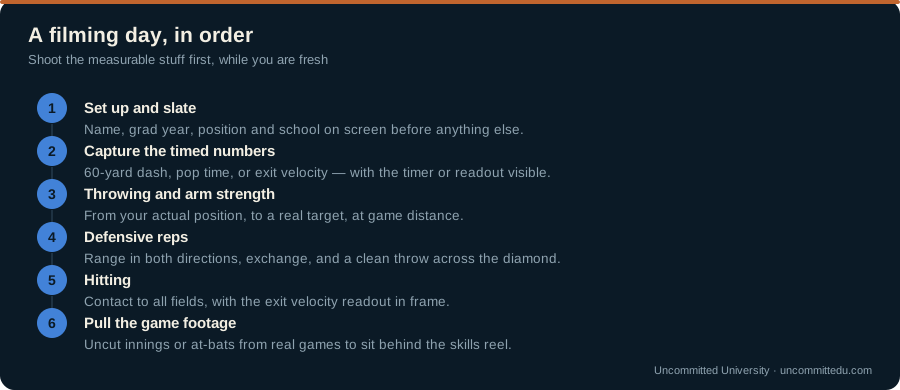
A sample shot list for a filming day
The shot list below produces both halves of a college baseball recruiting video in one filming day.
One filming day, run in this order, produces both halves of a college baseball recruiting video.
If you’re not sure where to start, this order gets you everything you need in one session:
Warm-up reps first (don’t use these). Let the first few throws or swings just be warm-up. Start recording once you’re loose.
Best-effort reps with the measuring device visible. Radar, exit velo unit, or stopwatch clearly in frame or overlaid after. Get at least five to ten clean reps to choose from.
Variety reps second. Different pitch types, different pitch locations for hitters, range plays to both sides for fielders, enough to show you’re not a one-trick clip.
A short game-context clip if possible. Even a single live at-bat or inning adds real credibility next to the controlled reps.
Review before you leave. Check that the numbers are actually readable on screen before you break down the equipment, it’s much easier to re-shoot the same day than to schedule another session.
What’s worth paying for, and what isn’t
Families sometimes assume a good recruiting video requires hiring a videographer or a paid production service. It rarely does.
Worth paying for: a radar gun or exit-velo device if you don’t have access to one through your team, since verified numbers are the single biggest driver of credibility.
Usually not worth paying for: a professional editor or cinematic production package. Coaches care about clean reps and visible metrics, not transitions or color grading.
Sometimes worth paying for: a hitting or pitching lab session that happens to include recorded metrics, useful if you get usable footage out of it, not just a report.
The honest test: if a video choice makes the metrics clearer or the footage steadier, it’s worth it. If it only makes the video look more polished, it isn’t.
The technical settings that make a college baseball recruiting video usable
A coach is not grading your camera work. But bad footage genuinely hides the things they need to see, and that costs you evaluations.
Shoot in landscape, always. A vertical phone video wastes most of the frame and crops out the ball flight that a coach is actually watching.
Film at the highest frame rate your phone offers. Mechanics happen fast. Standard frame rates smear the exact moments (foot strike, contact, release) that an evaluator freezes on.
Keep the camera still and let the play move through the frame. Zooming and panning mid-pitch is the most common flaw in a college baseball recruiting video, and it makes swing path impossible to read.
Show the whole action from a fixed angle before you show any close-up. Coaches want to see the unedited rep first, then the detail.
Include a slate at the front with your name, graduation year, position and contact details, and put the same information in the video description. A college baseball recruiting video that gets forwarded without its email loses all context otherwise.
Finally, do not add music. It does not help, and it makes a coach reach for the mute button before they reach for the play button.
Angles matter as much as settings, and they differ by position. For a hitter, film from the open side and from behind the catcher so both swing path and pitch recognition are visible.
For a pitcher, film from behind the mound at arm-side and from the side at hip height. Those two together show extension, direction and arm slot, which is most of what a pitching coach is grading.
For an infielder, shoot wide enough to keep feet, glove and the throw in one frame. Cutting the release out of the shot is the single most common framing mistake in a college baseball recruiting video.
Catchers should include pop times filmed from behind, and outfielders should include at least one full-effort throw to a base with the target in frame.
Do not edit out the misses. A reel of nothing but perfect reps reads as selective, and experienced coaches discount it automatically.
Frequently asked questions
These come up constantly once a player starts putting a college baseball recruiting video together.
Should I put my metrics on screen in a recruiting video? Yes, and show the source in the same shot wherever you can. A radar readout visible behind the pitch is a verified number. The same figure on a title card is a claim, and coaches discount claims.
How long should a college baseball recruiting video be? A tight 2-3 minute skills video with your best reps up front works best, paired with a link to a longer, uncut game video for coaches who want to see more.
What should be the very first clip in the video? Your single best, most verifiable clip. Coaches decide whether to keep watching in the first 15-20 seconds, so chronological order almost always undersells a player.
Do I need professional equipment to film a recruiting video? No. A phone camera on a tripod or fence mount is enough. Steadiness and a readable radar or measuring device matter far more than production value.
Should I include music or graphics in my recruiting video? Keep it minimal. A dramatic soundtrack or heavy graphics package doesn’t fix unclear footage or missing metrics, and can distract from the actual reps a coach needs to evaluate.
How often should I update my recruiting video? After any meaningful jump: a new velocity number, a strong showcase, or a standout game. Coaches who look twice will notice a video that’s kept current versus one that’s a year old.
Where should I host my recruiting video? Use a platform that loads instantly with no login required, like Hudl or a plain YouTube upload. What matters most is a short, direct link you can paste into an email.
The short version: a college baseball recruiting video is an evaluation tool, not a highlight reel. Lead with your best rep, keep the numbers visible, and back the skills work with uncut innings or at-bats against real pitching. A plain, well-structured college baseball recruiting video from a phone on a tripod beats an edited production that hides the things a coach is actually trying to see.
The short version
A college baseball recruiting video exists to answer one question fast: can this player do the thing at this level? Lead with your best three reps, keep it under four minutes, and make every angle honest.
Uncommitted University sees more players lose evaluations to unwatchable footage than to a lack of ability.
Refilm your college baseball recruiting video at least once a year. Coaches discount footage that is obviously two seasons old, and a body that has changed since is the whole reason they wanted the video in the first place.
Learning how to email a college baseball coach well is one of the highest-leverage skills in recruiting. It costs nothing. It takes minutes. And it’s how most players end up on a coach’s radar in the first place.
Most attempts to email a college baseball coach fail for the same reasons: too vague, too long, or too generic. This covers exactly what to send, when, and how to follow up, a companion to the full college baseball recruiting guide.
Quick answer: A recruiting email that gets a reply includes your name, grad year, position, one or two verified numbers, a working video link, and one specific reason you’re reaching out to that program, sent to your full target list, with one respectful follow-up two to three weeks later if there’s no response.
Key takeaways
When you email a college baseball coach, lead with verified numbers and a video link that opens instantly.
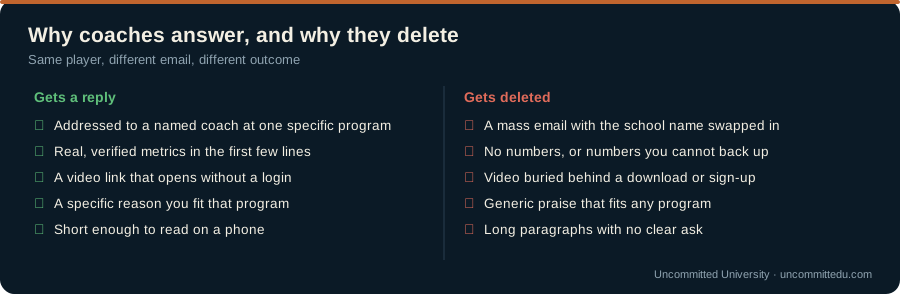
Address one named coach at one programme: mass emails are obvious and get deleted.
There are five reasons to email a college baseball coach, and each has a different job.
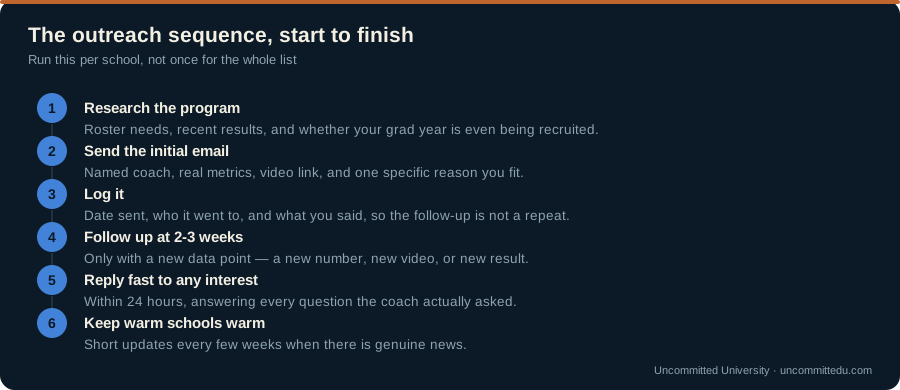
Follow up at 2-3 weeks, but only with a genuinely new data point.
Reply within 24 hours whenever a coach reaches out first.
Research the programme before you email a college baseball coach, or the specifics will not be there.
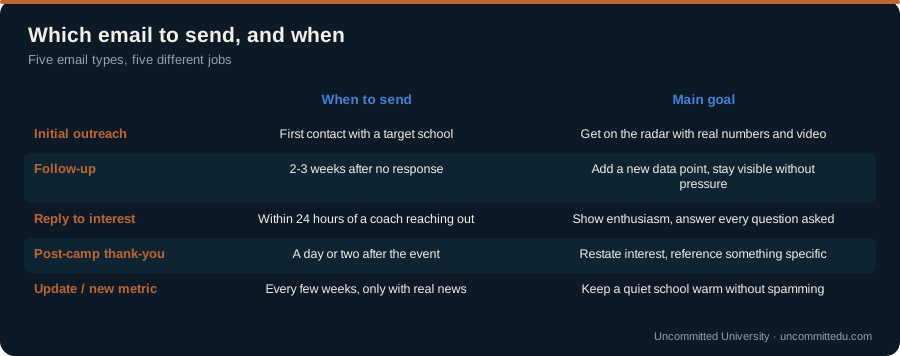
When to email a college baseball coach, and which email to send
The table below sets out five reasons to email a college baseball coach and what each is trying to achieve.
Five reasons to email a college baseball coach, and what each one is actually trying to accomplish.
Email type
When to send
Main goal
Initial outreach
First contact with a target school
Get on the coach’s radar with real numbers and video
Follow-up
2-3 weeks after no response
Add a new data point, stay visible without pressure
Reply to inbound interest
Within 24 hours of a coach reaching out
Show enthusiasm, answer every question asked
Post-camp/visit thank-you
Within a day or two of the event
Restate interest, reference something specific
Update / new metric
Every few weeks, only with real news
Keep a quiet school warm without spamming
What a coach wants to see when you email a college baseball coach
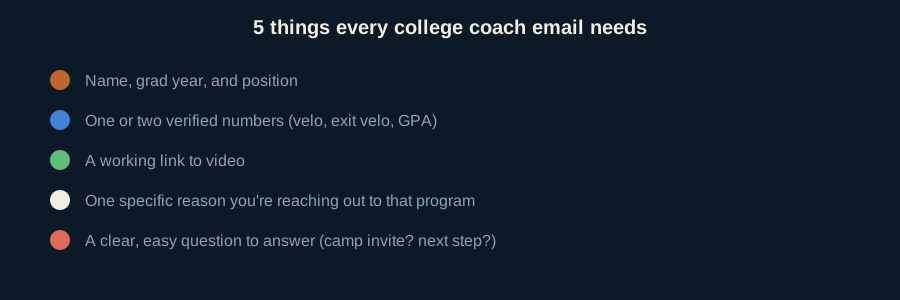
Coaches read dozens of these a week, often on their phone between practices. The ones that get a reply hit five things fast:
Name, grad year, position
One or two verified numbers
A working video link
Everything else is secondary.
Verified numbers beat adjectives. “Hard-throwing right-hander” tells a coach nothing. “88 mph fastball, 7.1 60-yard time” tells him everything.
Be specific about the program. One sentence on why you’re reaching out to that school: their conference, a need at your position, their style of play. It proves you didn’t mass-blast 200 coaches.
The breakdown below shows what belongs in the message when you email a college baseball coach.
You’ll need a link to send → get one free
Every template below has a spot for “video and recruiting profile: [link].” Create yours before you send your first email.
How to email a college baseball coach: the initial outreach
Subject: 2027 RHP – [Your Name] – [City, State]
Coach [Last Name],
My name is [Name], a 2027 right-handed pitcher at [high school/travel team] in [city, state]. I’m currently sitting at [X] mph on my fastball with a [X] curveball, and carry a [GPA] GPA. I’ve followed [Program]’s season and really like how your staff develops pitchers. I think I’d fit well in your program.
Here’s my video and recruiting profile: [link]. Would you be open to me attending one of your camps this year, or is there anything specific you’d want to see from me first?
Thanks for your time, [Name] | [phone] | [email]
The follow-up email (2-3 weeks later, no response)
Subject: Following up – 2027 RHP – [Your Name]
Coach [Last Name],
Wanted to follow up on my note from a few weeks ago. Since then I’ve [new metric, recent outing, upcoming showcase]. Still very interested in [Program] and happy to send anything else that would help: game video, a transcript, references from my current coach.
[Name] | [phone] | [email]
One follow-up is normal. Coaches are busy, not uninterested. A second attempt to email a college baseball coach rarely hurts. Two unanswered follow-ups with no new information? Move that school down your list.
How to research a program before you email a college baseball coach
The “one specific reason you’re reaching out” line is the part players skip, and it’s the part that separates a real email from a mass-blast. Ten minutes of research is usually enough:
Check the roster by grad year. Most college athletics sites list class year for every player. If a program is losing three seniors at your position next year, that’s worth naming directly.
Look at their schedule and conference. Knowing who they play, and at what level of competition, shows you understand the program instead of just its name recognition.
Watch one clip of their team playing. Style of play (small-ball and speed versus a power-heavy lineup) tells you whether your game actually fits, and gives you something real to reference.
Note the coaching staff’s background. A pitching coach who played professionally, or an assistant who recruited your region before, is a natural detail to mention.
None of this needs to be more than a sentence in the email itself. The research is for you, so the sentence sounds true instead of copy-pasted.
Responding to a coach who reaches out first
Reply within a day. Keep it enthusiastic and specific. Answer every question he asked first.
A slow, generic reply to his own outreach reads as low interest, even when it isn’t.
What happens after a coach replies positively
Getting a reply is the start of a new phase, not the finish line. What typically comes next:
A request for more film or data: usually game video rather than a showcase clip, or a specific metric they want verified.
An invite to a camp or event: treat this as a real evaluation, not just a chance to be seen. Coaches invite players they’re already considering.
A phone or video call: expect questions about your academics, your timeline, and what other schools you’re talking to. Answer honestly; coaches compare notes with each other more than players expect.
A quiet stretch: even after a great first reply, programs go quiet while they finish evaluating a full class. Don’t read silence after initial interest as a change of heart. A brief, low-pressure update every few weeks keeps you visible without being a bother.
Keep replying quickly and keep sending real updates. Momentum in recruiting fades fastest when a player stops being responsive right after getting good news.
Common mistakes when you email a college baseball coach
The checklist below is the difference between a reply and a deletion when you email a college baseball coach.
The difference between an email a college baseball coach answers and one that gets deleted is usually on this list.
The same email to every school. Coaches can tell. A program-specific line takes thirty seconds.
Unverified or exaggerated numbers. A metric that doesn’t hold up on video kills your credibility for every future email.
No video link, or one buried in a hard-to-find profile. Make the link the easiest part to act on.
Parents sending the email instead of the player. Coaches want to see the player manage his own communication.
Subject lines that get opened when you email a college baseball coach
A coach scanning his phone decides whether to open an email from the subject line alone. Keep it short and dense: grad year, position, name.
Example: “2027 RHP – [Your Name]” or “2026 SS/2B – [Your Name] – [State].” Avoid vague lines like “Interested in your program”, they’re easy to skip.
How often should you email a college baseball coach?
No fixed number, but the pattern that works when you email a college baseball coach: one solid initial email, one follow-up after two to three weeks, then lower-frequency updates every few weeks after that.
Some quiet stretches aren’t about your email: NCAA recruiting periods restrict when coaches can respond. Choosing to email a college baseball coach more than once a week without new information reads as pressure, not interest.
Etiquette when you email a college baseball coach
Use a professional email address, not a nickname. Proofread before sending: small errors undercut the same attention-to-detail coaches evaluate on the field.
Always reply, even briefly, if a coach says “not right now.” It keeps the door open for later.
What not to attach when you email a college baseball coach
Nothing. Send links, not files, every time you email a college baseball coach. An attachment is the fastest route to a spam folder or a read-later pile that never gets read.
No PDF resume. A coach reading on a phone between innings will not download and open one. Put the same information in the body of the message.
No video files. Large attachments get stripped or bounced by university mail systems. One link to hosted video is the entire point.
No images in the signature. Logos and headshots push a message toward spam filtering and add nothing a coach needs.
No link shorteners. A bare, readable URL looks like what it is. A shortened link looks like something a filter should inspect.
No group send. Several addresses in the To or CC field is the clearest possible sign of a mass-blast, and it is visible instantly.
The format rule underneath all of it: everything that matters should be readable in the body of the message on a phone, with one link to your video and one to your profile. Anything that needs a download is something that will not get opened.
Who to email, exactly
Start with the recruiting coordinator or the assistant coach for your position group. They manage the list day to day. CC the head coach only once there’s real mutual interest.
Sample ways to email a college baseball coach in specific situations
After a strong showcase performance: lead with the result: “I wanted to follow up after this weekend’s [showcase name], where I ran a new personal-best [X].”
A school with no prior contact, a long shot at the level: be direct: “I know [Program] competes at a high level; I’d love the chance to be considered.”
Thanking a coach after a camp or visit: keep it short, specific, and restate your interest.
Asking about walk-on opportunities: be upfront rather than vague: “I understand scholarship spots may be limited; I wanted to ask whether a walk-on tryout or roster spot could be possible for [grad year].”
Letting a school know you’ve committed elsewhere: a short, respectful note closes the loop professionally: “I wanted to let you know I’ve committed to [Program]. I appreciated your time and interest throughout this process.”
Should you CC your coach when you email a college baseball coach?
Usually, no. Coaches want to see the player drive his own communication. But your high school or travel coach can help in a different way:
A direct call or email from your coach to a college coach carries real weight
Ask him to send it separately, after your own email, not attached to it
Give him your target list so he knows which programs you’re talking to
A coach-to-coach conversation is one of the strongest signals in recruiting. Use it, but don’t let it replace your own outreach.
What to do if a coach never replies at all
Silence usually means one of three things: no current need at your position, the roster’s full, or the email got buried. Don’t over-analyze it.
Move that school down your list. Keep the door open with an occasional update. Put your energy into schools that are actually responding.
What if two or three programs reply at once?
This happens more than players expect once outreach picks up, and it creates a good problem: how to manage several real conversations without dropping any of them.
Don’t go silent on the others while you focus on a favorite. A slow reply reads as declining interest, even if you’re just busy juggling multiple threads.
Keep your communication honest. If a coach asks where else you’re talking, naming other levels or conferences (without over-sharing specifics) is normal and expected, coaches do the same with each other.
Use your tracker to compare, not just remember. Response speed, scholarship signals, and roster fit are easier to weigh side by side than from memory.
Set your own timeline if a decision is dragging. A polite “I’m hoping to make a decision by [date], is there anything you’d need from me before then?” is a fair question, not a pressure tactic.
Final checklist before you email a college baseball coach
The sequence below runs per school, so nothing depends on one message landing.
The sequence to run before and after you email a college baseball coach, so nothing depends on one message landing.
Subject line includes grad year, position, and your name
Coach addressed by last name, spelled correctly
One or two verified numbers included, not vague adjectives
Video link tested and working from a different device
One sentence specific to that program, not a generic line
Contact info (phone and email) included at the bottom
Proofread once, out loud, before sending
Skipping any single item on this list won’t necessarily sink an email, but hitting all seven consistently is what separates players who build a real pipeline of replies from players who wonder why nobody’s writing back.
What to do after you email a college baseball coach
Most advice stops at send. That is the part players actually get wrong.
Give it two weeks. Coaches are managing a roster, a season and a recruiting board at once, and the first time you email a college baseball coach, that message lands near the bottom of the pile.
Then follow up once, on the same thread, with something new: an updated velocity, a new video, an upcoming schedule they could see you at. A follow-up that only says “just checking in” gives a coach nothing to act on.
If the second message gets nothing either, move that school down your list and keep going. Two unanswered emails is information, not failure.
Never send the same message to two coaches at the same school. They talk, and a recruiting coordinator who sees an identical note to the head coach reads it as a mass mailing.
One more rule: when you email a college baseball coach and they do reply, answer inside 24 hours. Response speed is the cheapest signal of seriousness you will ever send, and it is the one most players waste.
Keep a simple record of it all: school, coach, date sent, date replied, what you sent. Thirty schools in, memory stops being reliable, and duplicate or contradictory emails do real damage.
Watch for the reply that is not a rejection but reads like one. Send us your summer schedule is a request, and it means you are still live. Answer it the same day with specifics: dates, locations, field numbers, and your jersey number.
And read the signature line. If a reply comes from a recruiting coordinator or a volunteer assistant rather than the head coach, that is normal and not a downgrade. At most programs those are exactly the people who run the board.
Frequently asked questions
These are the questions that come up most often before a player sits down to email a college baseball coach.
Should you attach your video file when you email a college baseball coach? No. Send a link. Large attachments get stripped or bounced by university mail systems, and a coach reading on a phone will not download anything. One hosted video link and one profile link is the format that works.
What should the first email to a college baseball coach include? Your name, grad year, position, one or two verified numbers, a working video link, and one specific reason you’re reaching out to that program.
How long should I wait before following up with a coach? Two to three weeks is typical if there’s been no response. Bring a new piece of information, like an updated metric or upcoming showcase, rather than repeating the same email.
Should my parents email the coach instead of me? No. Coaches want to see the player manage his own communication. Parents can help behind the scenes, but the email itself should come from the player.
Is it okay to send the same email to every school? No. Coaches can usually tell when an email is mass-blasted. A single program-specific sentence takes about thirty seconds and makes a real difference in response rates.
What if a coach never replies at all? Silence usually means no current roster need, a full class, or a buried email rather than a hard no. Move that school down your list and put your energy into schools that are responding.
Who should I email at a program, the head coach or an assistant? Start with the recruiting coordinator or the assistant coach who handles your position group. They manage outreach day to day. CC the head coach only once there’s real mutual interest.
The short version: when you email a college baseball coach, the message is doing one job: getting a real evaluation started. Name the coach, lead with numbers you can back up, link video that opens without a login, and give one specific reason you fit that roster. Then log it and follow up once with something new. Do that per school rather than in bulk, and you will email a college baseball coach far less often but hear back far more.
The short version
When you email a college baseball coach, the goal is not to impress → it is to be easy to evaluate. Position, graduation year, verified numbers, a video link and your schedule, in a message short enough to read on a phone between innings.
The players who get replies are the ones who make a coach’s job easier, not the ones with the best adjectives.
Uncommitted University recommends you email a college baseball coach from your own address rather than a parent’s, keep the subject line factual, and never email a college baseball coach twice in the same week.
D1 vs. D2 vs. D3 vs. NAIA vs. JUCO baseball gets treated like a single ranked ladder. D1 at the top, everything else “below” it. That framing causes more bad recruiting decisions than almost anything else in the process.
These are different environments with different tradeoffs. The right level is a fit question, not a prestige question.
Quick answer: D1 offers the highest competition and heaviest travel with limited, split scholarships; D2 is similar but smaller-budget and often underrated; D3 has no athletic scholarships and varies widely in competition; NAIA offers more scholarship flexibility than NCAA D2/D3; JUCO is a two-year developmental path many players use to transfer up to D1 or D2 with a stronger profile.
The chart below compares the five college baseball divisions side by side on the things that actually differ.
Level
Scholarships
Competition
Best for
NCAA D1
Up to 34 funded roster spots if the school opted into the House settlement; 11.7 equivalency if it did not
Highest
Elite recruits who can handle heavy travel
NCAA D2
9 equivalencies, split across the roster
High
Strong recruits, often underrated
NCAA D3
None (academic/need-based only)
Varies widely
Academics-first players
NAIA
12 equivalencies, set by the NAIA rather than the NCAA
Strong at top programs
Underrated fit, often overlooked
JUCO (NJCAA)
Varies
Developmental
Late bloomers, transfer path to D1/D2
Key takeaways
The five college baseball divisions are NCAA D1, D2 and D3, plus the NAIA and JUCO under the NJCAA.
Talent overlaps heavily across college baseball divisions: a good D2 or NAIA roster will beat a low-end D1 team on a given day.
Money is the sharpest split between college baseball divisions: D1 opt-in schools fund up to 34 spots, D2 has 9 equivalencies, NAIA has 12, and D3 offers no athletic aid at all.
JUCO is the only one of the college baseball divisions built as a two-year window rather than a four-year home.
Target three or four college baseball divisions at once, not one, recruiting outcomes move too much to bet on a single tier.
None of the college baseball divisions is a ceiling; the transfer portal moves players in both directions every year.
Roster caps, not scholarship caps, are now the binding limit at the D1 end of the college baseball divisions.
College baseball divisions: how the levels are governed
Each level has its own rulebook on scholarships, eligibility, and recruiting contact. Don’t assume a rule from one level applies to another.
NCAA D1, D2, and D3 fall under the NCAA’s recruiting rules. D3 explicitly opts out of athletic scholarships.
NAIA schools follow separate rules set by the NAIA, including its own scholarship limits.
JUCO programs fall under the NJCAA, with its own eligibility clock, separate from the NCAA’s.
NCAA Division 1 baseball
The highest competition, the deepest travel, the most national visibility. Baseball is an “equivalency” sport: programs split a fixed budget (11.7 scholarships) across the roster however the staff decides. That stopped being universally true on 1 July 2025.
Under the House v. NCAA settlement, approved by Judge Claudia Wilken on 6 June 2025, Division I programs that opted in can fund all 34 roster spots. A full ride is now possible where it effectively was not before.
Programs that opted out still split the old 11.7. Ask which side of that line a school sits on before you talk money: it is the single biggest financial variable in Division I today. True full rides are rare.
D1 fits players who project as impact contributors and can handle a heavy travel schedule.
NCAA Division 2 baseball
Still highly competitive. Same scholarship structure as D1, smaller total budget, generally lighter travel.
D2 is frequently underrated. Some conferences are stacked with players who could play D1 but chose D2 for fit, money, or academics.
NCAA Division 3 baseball
No athletic scholarships. Financial aid is academic or need-based only. Competition varies more here than any other level: some D3 programs compete with D2 talent, others are far more recreational.
D3 fits players who prioritize academics and overall experience as much as baseball.
NAIA baseball
Typically smaller schools. NAIA isn’t bound by NCAA scholarship limits, so many programs offer more flexibility than D2 or D3.
Competition at the top NAIA programs rivals D2. It’s often overlooked simply because it’s less familiar to families.
JUCO (NJCAA) baseball
A two-year path that’s consistently underrated. Many players use JUCO to add strength, refine mechanics, and raise their academic standing, then transfer to D1 or D2 with a much stronger profile.
It’s also a realistic option for players who need more development time, or a lighter budget.
JUCO vs D3: the sharpest contrast in the college baseball divisions
This is the most common fork in the road for a player who is not drawing D1 or D2 interest, and it splits the college baseball divisions in a way the level names do not. JUCO is a two-year staging post. D3 is a four-year destination.
Set the two side by side on the things that actually differ between these college baseball divisions.
JUCO vs D3
JUCO (NJCAA)
NCAA D3
Athletic scholarships
Full at NJCAA Division I, partial at Division II, none at Division III
None | academic and need-based aid only
Length of stay
2 seasons, then transfer or finish an associate degree
A four-year program you enroll in for the degree as much as the baseball
What it is built for
Development and a route up to D1 or D2
A four-year home, with academics driving the calendar
Playing time
Roster turns over every two years, so opportunity arrives fast
Varies by program; upperclassmen hold spots longer
Biggest risk
Credits that do not transfer
Assuming no athletic money means no money
The honest test is what you are trying to buy with the next two years.
Pick JUCO if the goal is to move up. Two seasons of everyday at-bats or innings against college pitching, then a transfer with recent numbers attached. Four-year staffs across the college baseball divisions recruit that route deliberately.
Pick D3 if the goal is the degree and four settled years. There is no athletic money (D3 is the only one of the college baseball divisions where that is true of the entire level) but a strong academic package at a well-funded D3 can beat a partial offer elsewhere once you compare net cost.
Get the eligibility count in writing either way. Seasons you play at a two-year school are counted by the school you transfer into, so ask that school’s compliance office for the number before you enroll anywhere, not after.
Credits decide this more often than talent does. A JUCO plan fails on credits that will not transfer far more often than it fails on performance.
Cost is where JUCO vs D3 flips most often, and it is the one comparison across the college baseball divisions where the cheaper sticker price can turn into the more expensive four years.
Eligibility clocks and redshirt rules across college baseball divisions
Eligibility clocks are where the college baseball divisions diverge most quietly: the diagram below shows how each one counts your seasons.
Eligibility windows and redshirt options across D1, D2, D3, NAIA and JUCO baseball: the clock, not just the level, shapes a transfer plan.
Beyond scholarships and competition, each level runs a different eligibility clock. This affects how many seasons you actually have left to play, and it’s a common source of confusion for transfers.
One thing changed across the college baseball divisions in 2026, and it changed only two of them. NCAA Divisions I and II adopted an age-based eligibility model (Division I in June 2026, Division II in August) that replaced seasons of competition with a single five-year period, and eliminated athletics redshirt rules and medical hardship waivers along with it. NCAA Division III, the NAIA and the NJCAA were not part of that legislation and still count seasons the way they always have.
Level
Eligibility window
Redshirt option
NCAA D1/D2 (new 2026 rule)
One continuous five-year period, no seasons counted. It starts at the earlier of your first full-time enrollment at any college or the academic year after your 19th birthday
No | athletics redshirt rules and medical hardship waivers were eliminated
NCAA D3
4 seasons within a 5-year clock. D3 was not part of the 2026 change
Available but less commonly used
NAIA
4 seasons, counted under NAIA-specific rules and unaffected by the NCAA change
Available, governed separately from NCAA
JUCO (NJCAA)
2 seasons at the junior college level before transfer
Not typical | JUCO is designed as a 2-year window
Across the rest of the college baseball divisions (D3, the NAIA and JUCO) these are general reference ranges, not official cutoffs, and prior enrollment, redshirts already used or a transfer can all change the number.
In D1 and D2 the number that matters is now a date rather than a count: when your five-year period started. Athletes with eligibility left after 2025-26, and prospects first enrolling full time in 2026-27, are reviewed under the old rules or the age-based rule, whichever is more beneficial. Anyone first enrolling in fall 2027 or later is on the age-based rule only. Either way, confirm your exact remaining eligibility with a compliance office before making a decision. The Eligibility Calculator is a fast way to get a starting estimate.
A realistic example of a spread-out target list
Take a D2/NAIA-level position player with strong academics. A well-built list might include:
3-5 D1 reach schools where the fit is plausible but competitive
10-12 D2 and NAIA programs matching his current metrics
5-8 D3 programs if academics matter as much as competition level
2-3 JUCO programs as a development path
That spread (not a stack of only “dream” schools) is what produces real offers to choose between.
How to decide which college baseball divisions to target
Use the steps below to work through the college baseball divisions in order, instead of starting from the logo you like most.
How to narrow D1 vs D2 vs D3 vs NAIA vs JUCO baseball down to a target list you can actually act on.
Compare your real, verified numbers (velocity, exit velocity, 60 time, academics) against typical benchmarks. Be honest, not optimistic.
Build a list that spans college baseball divisions: reach schools, likely fits, and at least one safety option. A 30-school list beats a 10-school list of D1 programs only.
Money matters as much as competition level. A partial scholarship at D2 or NAIA, stacked with an academic scholarship, can beat a bigger percentage offer elsewhere. See the college baseball recruiting guide for how scholarships actually work.
See where you actually project, in under two minutes
Enter your real stats, size, and academics and get an honest read across D1 through JUCO, then create a free profile to start building your target list.
What the House settlement changed across college baseball divisions
Here is the deal: the money rules changed more in 2025 than in the previous thirty years combined.
Before 1 July 2025, every Division I baseball program worked from the same 11.7 scholarships, split into fractions across roughly 35 players. Quarter and half offers were the norm. Full rides were rare enough to be notable.
The House v. NCAA settlement replaced that with a hard 34-player roster cap at schools that opted in, and removed the scholarship ceiling underneath it. Those programs can now fund every one of the 34 spots.
That cuts both ways. The money per player went up. The number of spots went down, and the developmental walk-on role that used to sit at the end of a 40-man roster largely disappeared with it.
Schools that opted out kept the old system: 11.7 equivalencies, no roster cap. Both models are running side by side right now, which is why two Division I offers can look nothing alike.
Nothing changed at the other college baseball divisions. D2 still has 9 equivalencies, the NAIA still has 12, the NJCAA allows up to 30 baseball signees for 2026-27, and D3 still offers no athletic money: only academic and need-based aid.
The practical move across college baseball divisions is simple. Ask every D1 coach whether the program opted in, and ask what the roster number is. Two questions, and they reframe every comparison you will make.
What a family actually pays, in general terms
The “sticker price” of a school rarely matches what a family actually pays, and this varies more by level than most families expect:
D1/D2: Athletic scholarships are typically partial, split across the roster. Stacking an athletic award with academic or need-based aid is normal and often the deciding factor between two offers.
D3: No athletic money at all, but merit and need-based aid at a well-funded D3 school can rival a partial athletic scholarship elsewhere. Always ask for a full net-price estimate, not just the headline tuition figure.
NAIA: Scholarship flexibility varies widely by school. Some NAIA programs fund baseball generously; others don’t. Ask directly rather than assuming based on the level.
JUCO: Generally the lowest-cost path, and often the fastest way to reduce total college cost while still developing as a player before transferring.
Compare total out-of-pocket cost across every offer on the table, not just the percentage or dollar amount of the athletic piece alone.
How recruiting contact differs across college baseball divisions
The mechanics of getting on a roster aren’t identical across levels either:
D1/D2: Rosters are built almost entirely through active recruiting: camps, direct outreach, and evaluated video. Walk-on spots exist but are limited and highly competitive.
D3: Recruiting often runs alongside the admissions process. A coach’s interest matters, but so does getting admitted independently, some D3 coaches can’t formally commit to a player until admissions signs off.
NAIA: Smaller coaching staffs often mean recruiting moves faster once a coach identifies a need, with less committee-style evaluation.
JUCO: The most open path to simply showing up. Many JUCO programs hold open tryouts alongside standard recruiting, making it realistic for a player with no offers yet to still find a roster spot.
Questions to ask a coach at any of the college baseball divisions
Where would I realistically fit on the depth chart as a freshman?
How many players at my position are in the class ahead of me and behind me?
What does a normal week look like: practice, travel, class schedule?
Is my scholarship (if any) guaranteed for four years, or renewed annually?
What happens to my aid if I get hurt or my role changes?
How many players have transferred out of my position group in the last two years, and why?
A coach who answers these directly and specifically is telling you as much about the program as the answers themselves.
Transferring between college baseball divisions
None of these college baseball divisions are a permanent ceiling. Plenty of players start at JUCO or D3 and transfer up once their metrics, academics, or maturity catch up. A strong JUCO season is often a better recruiting asset than a high school profile alone.
It works the other way too. A player who over-committed to D1 with limited playing time sometimes transfers down for a bigger role. Treat your first commitment as a real decision, not a permanent one.
What your actual week looks like across college baseball divisions
Rosters and scholarships across college baseball divisions are easy to compare. The daily schedule is what players actually feel, and it separates them more sharply than talent does.
D1: year-round structure, heavy travel, and midweek games that pull you out of class. Expect the season to behave like a job with a degree attached.
D2 and NAIA: a real competitive season with meaningfully less travel. More players report being able to hold a normal class schedule and an internship.
D3: the shortest in-season time demand of the four-year college baseball divisions, and the one where academics genuinely drive the calendar.
JUCO: often the heaviest game load of any of the college baseball divisions, by design. You are there to play every day, put up numbers, and move.
Now: ask yourself which of those weeks you would still want in year three, not just in the recruiting phase. That answer narrows the list faster than any velocity chart.
Academic fit matters as much as athletic fit
A level comparison isn’t complete without academics. Each level pulls from a different academic pool:
D1/D2: Academic standards vary widely by conference and school: some are highly selective, others less so.
D3: Often the most academically selective level, since athletics don’t drive admission.
NAIA: Ranges widely, similar to D2.
JUCO: Generally the most accessible academically, and a real path to raise your standing before transferring.
If a school’s academic bar is out of reach regardless of baseball, it doesn’t belong on your list, no matter how good the athletic fit looks.
A note on roster size and realistic playing time
Competition level isn’t the only variable. Roster size matters just as much. A D1 roster with 35+ players at your position might mean years of limited at-bats. A smaller D2, NAIA, or JUCO roster can mean real playing time as a freshman.
Ask any coach directly, during a visit, where you’d realistically fit on the depth chart. A coach’s willingness to answer honestly says a lot about the program.
Common mistakes players make when choosing college baseball divisions
These are the mistakes we see most often when players rank the college baseball divisions.
The most common mistakes families make when comparing D1 vs D2 vs D3 vs NAIA vs JUCO baseball, next to what to do instead.
Chasing the name on the jersey over the fit. A bench role at a bigger-name school is worth less developmentally than a starting role somewhere less famous.
Assuming D3 means lower quality. Some D3 conferences are genuinely strong. Dismissing a level based on the scholarship structure alone skips real information about competition and roster fit.
Ignoring NAIA entirely because it’s less familiar. Plenty of families have simply never researched it, not because it’s a worse option.
Treating JUCO as a last resort instead of a strategy. For a player who needs another year of physical development, it’s frequently the smarter path, not the fallback one.
Building a list at only one level. A list of ten D1 programs and nothing else can produce zero realistic offers, even for a genuinely good player.
Comparing scholarship percentage without comparing total cost. A smaller percentage at an expensive school can cost more out of pocket than a larger percentage somewhere cheaper.
Frequently asked questions
These are the questions that come up most often once a player starts ranking the college baseball divisions.
JUCO vs D3: which is better for reaching D1? JUCO, if that is the actual goal. The NJCAA route is built as a two-year window with a transfer at the end, and four-year staffs recruit it on purpose. D3 produces D1 transfers too, but you are spending seasons at a school you picked for four years rather than two. It is the one move across the college baseball divisions that is designed in from the start.
Is D2 baseball actually worse than D1? Not necessarily. D2 uses the same scholarship structure as D1 with a smaller total budget and generally lighter travel, and some D2 conferences are stacked with players who could play D1 but chose D2 for fit, money, or academics.
Do D3 baseball players get any scholarships? Not athletic scholarships: D3 explicitly opts out of those. Financial aid at D3 is academic or need-based only, though a well-funded D3 school’s aid package can sometimes rival a partial athletic scholarship elsewhere.
Is NAIA baseball a step down from NCAA? Not automatically. NAIA isn’t bound by NCAA scholarship limits, so many programs offer more flexibility than D2 or D3, and competition at top NAIA programs can rival D2.
Is JUCO a bad option for a serious player? No. JUCO is a legitimate two-year development path that many players use to add strength, raise their academic standing, and transfer to D1 or D2 with a stronger profile than they had out of high school.
How many seasons of eligibility do I have at each level? It depends on the level, and across the college baseball divisions the NCAA half of that answer changed in 2026. NCAA D1 and D2 no longer count seasons at all: you get one five-year period, starting at your first full-time college enrollment or the academic year after your 19th birthday, whichever comes first, and it runs continuously. NCAA D3 and the NAIA were not part of that change and still run on four seasons within their own windows. JUCO is typically 2 seasons before transfer. Confirm the exact number with a compliance office.
Can I transfer between levels after I commit? Yes. Plenty of players start at JUCO or D3 and transfer up once their metrics or academics catch up, and players who over-commit to D1 with limited playing time sometimes transfer down for a bigger role.
The short version
The five college baseball divisions differ far more in money, roster size and weekly schedule than they do in raw talent. D1 opt-in programs now fund up to 34 spots, D2 offers 9 equivalencies, NAIA 12, the NJCAA up to 30 baseball signees, and D3 none at all.
Uncommitted University recommends targeting three or four college baseball divisions at once and asking every coach two questions: what is the roster number, and did you opt into the settlement.